


Alright, let’s talk about Fogo for a minute, because this isn’t just another random Layer 1 shouting about speed. I’ve been digging into $FOGO and the more I read, the more it feels like this project was built by people who actually understand trading pain, not just blockchain theory.
Fogo is a Layer 1 that’s laser-focused on one thing: making on-chain trading feel fast, clean, and usable. Not “fast for crypto standards,” but genuinely responsive. The kind of speed traders are used to in traditional markets. Instead of trying to copy Ethereum or compete with every chain out there, Fogo picked a narrow lane and went all in on it.
What really stands out is the tech choice. Fogo runs on the Solana Virtual Machine, which already gives it a strong foundation. But they didn’t stop there. They paired it with a high-performance client inspired by Firedancer and tuned the whole system to reduce delays as much as possible. We’re talking block times measured in milliseconds and transaction finality that lands in about a second. That matters if you’re building order books, liquidations, or anything where timing decides profit or loss.
Now let’s talk about the token. $FOGO isn’t some useless governance coin with a fancy description. It’s the gas token, it’s used for staking, and it plays a role in securing the network. One interesting thing is that developers can sponsor gas fees, which means users can interact with apps without constantly worrying about paying fees. That sounds small, but it’s actually huge for onboarding normal people who don’t want to think about wallets and gas every click.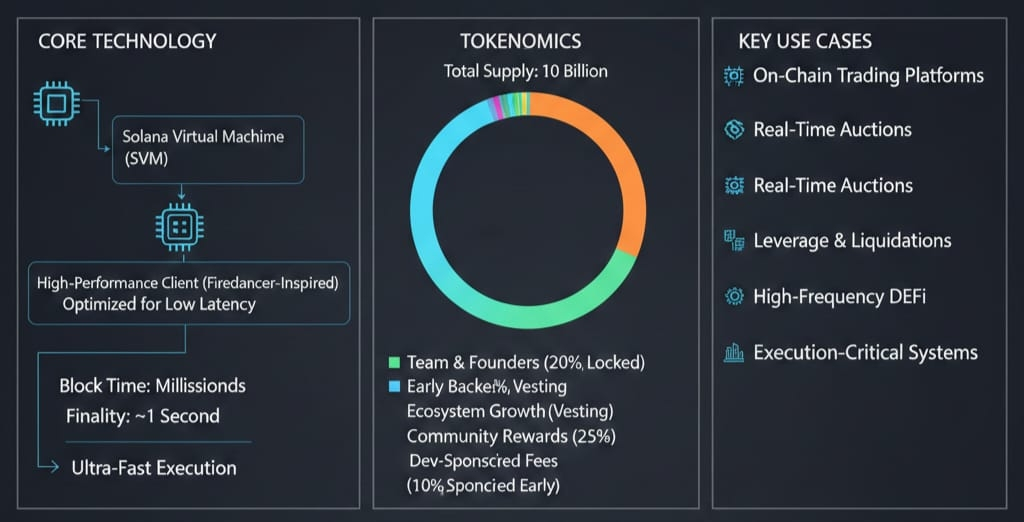
The real use cases are where Fogo makes sense. This chain is clearly built for advanced DeFi. On-chain trading platforms, real-time auctions, leverage, liquidations, and systems where execution speed is critical. A lot of chains promise this, but once things get busy, everything slows down. Fogo’s entire design is meant to avoid that problem instead of patching it later.
The team background also explains a lot. The people behind Fogo come from serious finance and engineering environments. Some have worked in high-frequency trading firms and major financial institutions. That mindset shows in the product. This feels less like a crypto experiment and more like infrastructure someone would actually trust with real money moving fast.
Tokenomics are straightforward but intentional. The total supply is capped at 10 billion tokens. Distribution covers the team, early backers, ecosystem growth, community rewards, and airdrops. What I like is that big allocations are locked with long vesting schedules. That reduces the risk of early insiders dumping on the market the moment price moves. Some tokens were even burned early to tighten supply, which shows they were thinking long-term from the start.
When mainnet went live in early 2026, $FOGO started trading on major exchanges and, as expected, price action was volatile. That’s normal for a fresh project entering the market. What matters more is that liquidity showed up and people actually started paying attention. Listings across multiple platforms gave it exposure, and activity picked up as the network went live.
Looking forward, the roadmap is pretty clear. More apps, more developer tools, better wallet support, and gradual decentralization through governance. Nothing flashy, just steady building. If Fogo can attract builders who care about performance and traders who care about execution, it has a real shot at carving out its own niche.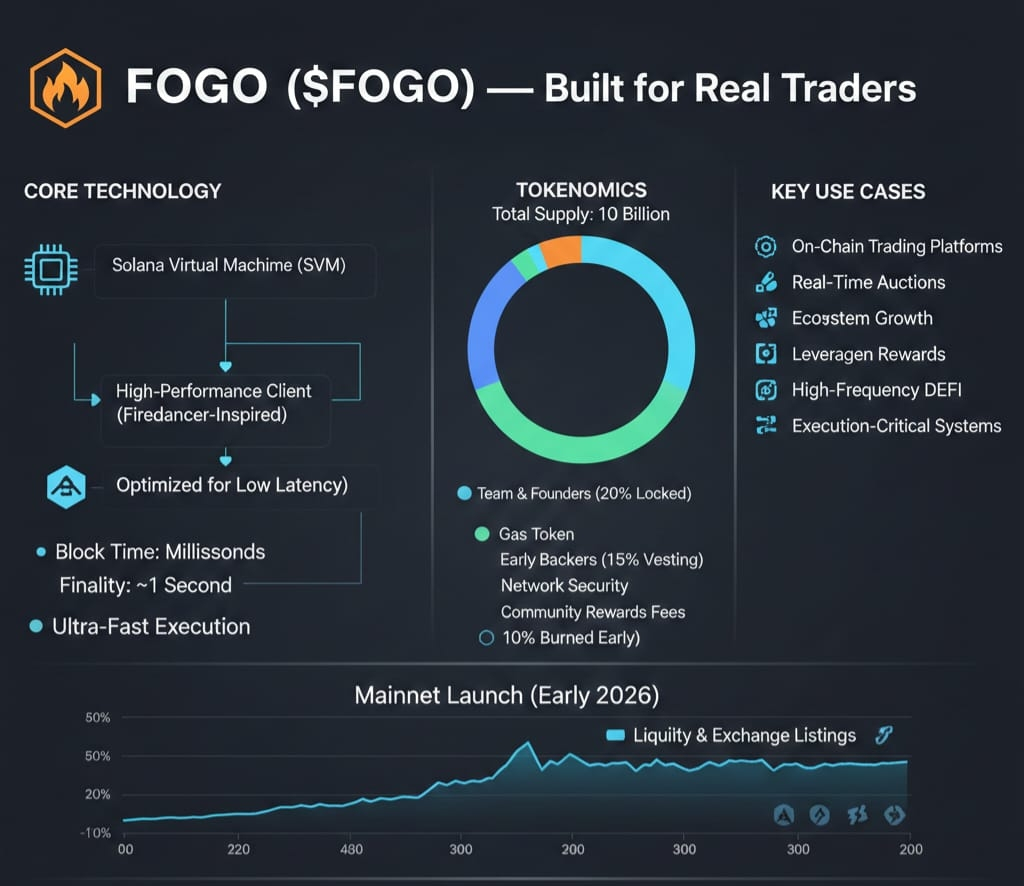
This isn’t a chain trying to replace everything. It’s trying to be really good at one thing. And in crypto, where most projects try to do too much, that focus might end up being Fogo’s biggest strength.