
I’ve been around crypto long enough to feel tired when a new chain shows up and says it will be faster, cheaper, and better than the last one. I’ve watched waves of narratives come and go, each one promising to fix the problems of the previous wave, and each one eventually running into the same messy reality of real users, real markets, and real network limits. After a while you stop getting excited by numbers on a website and you start caring more about how things actually feel when the market is moving and your screen is freezing, your transaction is pending, and your position is slowly bleeding because the network cannot keep up with what is happening in the real world. So when I first heard about Fogo, I didn’t feel hope, I felt that familiar skepticism that comes from seeing too many clever designs fall apart once real money and real stress are involved. I’ve learned to assume that most projects are solving problems that look important on paper but feel small when you are actually in a trade and the candles are moving faster than your wallet can react.
The problem Fogo is trying to face is not abstract. It comes from moments most traders recognize, even if they do not describe them in technical terms. You place an order during a fast move and the price you get is not the price you expected. You try to close a position during a spike in volatility and the transaction sits there waiting for confirmation while the market moves against you. You watch liquidations cascade not only because people made bad bets, but because the network itself could not move fast enough for them to react. Over time, these moments create a quiet kind of frustration where you stop trusting onchain execution in stressful market conditions. You start treating decentralized systems as slow back offices rather than places where serious trading can happen in real time. In traditional markets, speed and timing shape outcomes. In crypto, we talk about open access and trustless systems, but when the pipes are slow, openness does not save you from slippage, failed transactions, or the feeling that you are always one step behind the market.
What Fogo seems to be wrestling with is the idea that markets do not slow down just because the network is slow. Price moves happen whether the chain is ready or not. Volatility does not wait for confirmations. Congestion does not pause liquidations. When things get busy, that is exactly when the system is most stressed, and that is when users feel the pain the most. Instead of treating speed as a nice bonus, Fogo treats delay as a structural risk. The project seems to start from the uncomfortable thought that if a system cannot keep up with the tempo of real trading behavior, then it is not just inconvenient, it is unsafe in a practical sense. Safety here does not only mean code correctness or cryptography, but the safety of users who are exposed to execution risk because the network cannot move at the speed the market demands.
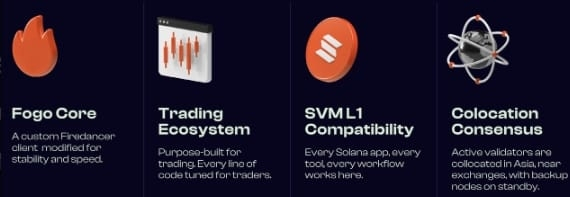
The way Fogo approaches this feels different from the usual story of just making blocks faster or increasing raw throughput. It leans into the reality that the internet is physical and messy, that data has to travel across real distances, and that delays come from geography, hardware limits, and network jitter as much as from software design. Instead of pretending these limits do not matter, Fogo’s design seems to accept them and build around them. The idea of aligning validator locations and activity with where and when trading demand is highest is less about chasing a number and more about respecting how markets actually behave across time zones and regions. When trading activity moves from one part of the world to another, the network’s center of gravity moves with it, reducing the distance between users and the systems that confirm their actions. This does not remove delay completely, but it reduces the invisible friction that users feel when their actions have to travel halfway across the world before becoming real.

The technical choices under this design are easier to understand if you stop thinking in terms of abstract decentralization slogans and start thinking in terms of real workloads. Fogo seems to assume that if you want systems to react quickly under heavy load, you cannot pretend that all hardware is equal or that performance does not matter. It accepts that running high-performance systems requires serious machines and fast storage, and that not everyone will be able to run a validator under these conditions. This is an uncomfortable trade-off in a space that often talks about maximum openness in participation, but it is also an honest one. Performance costs something, and that cost shows up in who can realistically participate in the core of the network. Instead of hiding this tension, Fogo seems to put it on the table and build with it in mind, which at least feels more grounded than claiming that high speed and low barriers to entry always come together without friction.
There are real risks in this approach. When you push for lower delay and higher performance, you often narrow the set of actors who can keep up with the system’s demands. That can tilt the balance between decentralization and speed in ways that deserve scrutiny. There is also the risk that optimizing for market execution shapes the network too strongly around traders, leaving other use cases feeling secondary or awkward. Not every onchain interaction needs to feel like a high-frequency trade, and designing around extreme market conditions can make everyday usage feel overbuilt or strangely rigid. There is also the simple reality that no matter how carefully you design around physics, you do not get to defeat it. Networks will still fail, links will still jitter, and moments of chaos will still happen when too much demand hits at once. The promise is not that these problems disappear, but that the system is shaped with them in mind rather than surprised by them.
What makes Fogo feel interesting to me is not that it claims to fix everything, but that it seems to take execution risk seriously as a first-class design problem. Instead of treating speed as a marketing line, it treats delay as something that quietly reshapes outcomes in markets, often in unfair ways that users do not fully see until they lose money because of it. By trying to price the cost of distance, timing, and hardware limits directly into the system’s design, it is at least asking a more honest question about what it means to build onchain systems for real trading behavior rather than idealized user flows. That does not make it perfect, and it does not mean it will succeed in practice, but it does make the attempt feel grounded in the lived experience of people who have watched trades slip, liquidations cascade, and interfaces lag behind reality.
I do not come away from looking at Fogo with certainty or confidence in outcomes. I’ve seen too many thoughtful designs run into unexpected human and technical limits once real money starts flowing through them. But I do come away with a cautious curiosity, because the problem it is pointing at is not imaginary. Markets really do move faster than most blockchains are comfortable admitting. If a system is meant to host serious trading, then how it handles delay is not a detail, it is part of the core of its safety. I’m not convinced any single design can fully solve that tension, but I’m interested in projects that at least stare at it honestly instead of looking away.
