

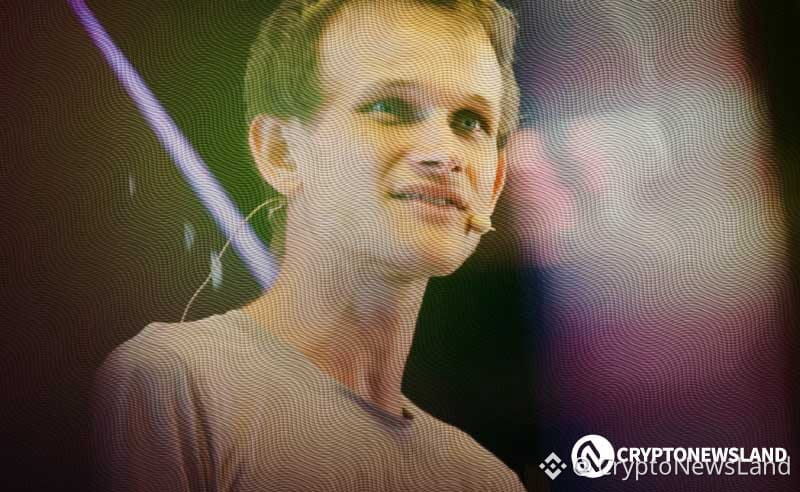
Vitalik Buterin plans a cypherpunk layer to strengthen Ethereum security and censorship resistance.
FOCIL will force validators to include valid transactions and protect public mempool access.
Ethereum developers target scaling hardening and simplification under the 2026 roadmap.
Vitalik Buterin is advancing plans to build a cypherpunk principled layer within Ethereum. He aims to integrate it tightly with the current network. Moreover, he wants the design to remain interoperable and expandable. The initiative seeks to strengthen Ethereum’s core properties without splitting the ecosystem.
https://twitter.com/WuBlockchain/status/2025021921109442645?s=20
He outlined the effort after criticism about Ethereum’s growing fragmentation. Some community voices urged a complete rebuild from scratch. However, Buterin chose integration over abandonment. He believes Ethereum can evolve while preserving continuity.
The proposal arrives as developers prepare major protocol changes. Ethereum devs recently scheduled the Fork-Choice Enforced Inclusion Lists mechanism for the Hegota hard fork. Hegota is expected in late 2026 after the upcoming Glamsterdam upgrade. FOCIL will headline the consensus layer changes.
FOCIL and Protocol Hardening
FOCIL appears under EIP-7805 and focuses on censorship resistance. It requires validators to include valid public mempool transactions. Committees of validators will enforce inclusion through fork-choice rules. Consequently, blocks that ignore valid transactions risk rejection by the chain.
The mechanism can include transactions that conflict with sanctions policies. If a validator omits such transactions, the network can fork away from that block. Therefore, valid transactions receive inclusion within a limited number of slots. Developers view this as a protocol-level safeguard.
Still, FOCIL has drawn criticism from parts of the ecosystem. Some argue it could expose validators to legal pressure. Others warn it may increase protocol complexity. Despite this, developers scheduled it for Hegota after excluding it from Glamsterdam.
Account Abstraction and Wallet Upgrades
Alongside FOCIL, developers plan to introduce EIP-8141 during Hegota. This upgrade advances account abstraction at the protocol level. It would allow native support for smart wallets and multisignature setups. In addition, it supports quantum-resistant keys and gas-sponsored privacy transactions.
Under this model, smart wallet transactions could move through the public mempool. They would reach FOCIL includers without intermediaries. As a result, users would not rely on wrappers or external broadcasters. Developers believe this pairing strengthens Ethereum’s base layer security.
These upgrades align with the Ethereum Foundation’s 2026 priorities. The foundation outlined goals to scale, harden, and simplify the base layer. The hardening track now receives dedicated focus. Leaders want Ethereum to retain its core properties as it expands. Earlier last year, Vitalik released a roadmap that outlined the use of EIP-7701 and FOCIL to support private transactions without third-party relays.
Lean Ethereum and Beam Chain Vision
At the same time, Buterin promotes a leaner Ethereum design. He wants to reduce complexity and remove unnecessary bloat. Part of this effort involves the proposed Beam Chain. This design would enshrine zero-knowledge proofs directly into layer one validation.
Developers also discuss replacing the Ethereum Virtual Machine with RISC-V. RISC-V supports broader programming languages and stronger zero-knowledge compatibility. Moreover, it could modernize the execution layer. These changes form part of a wider base layer refocus.
This shift follows months of competition from alternative chains. Buterin has also reconsidered Ethereum’s rollup-centric roadmap. Instead of relying mainly on layer two networks, he now emphasizes base layer improvements. He argues Ethereum can implement several major upgrades over time. He recently outlined a fresh view on how Ethereum and artificial intelligence should evolve together.