

Fogo shows its hand right away. Not with a TPS number, not with a “we’re the fastest chain” victory lap, but with what it chooses to obsess over: how trades actually behave when people are competing, when the market is moving, when seconds matter and milliseconds start acting like money. The project doesn’t read like it was born from a benchmark spreadsheet. It reads like it was born from watching real trades go wrong for stupid reasons—orders arriving late, fills sliding, users paying invisible taxes and being told it’s just “slippage.”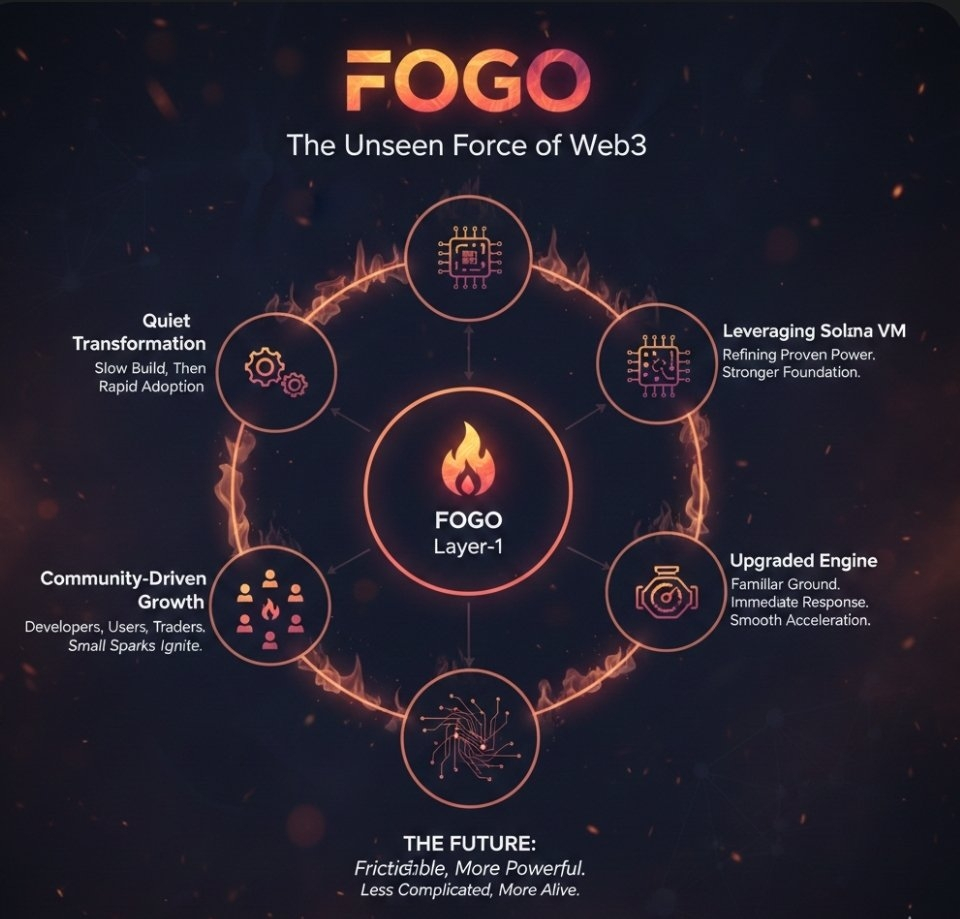
Most chains still sell speed the way a used-car dealer sells horsepower. Big number, loud promise, no mention of what happens when the road is wet and everyone’s trying to merge at once. Fogo’s angle is less flattering and more honest: speed is only meaningful if the rules around speed don’t turn the market into a rigged game. That’s what people mean when they say it’s chasing market structure. It’s not trying to win the “how many transactions can we cram in a second” contest. It’s trying to win the harder contest: “can you trade here without feeling like someone else is always one step ahead of you for reasons you can’t see?”
If you’ve ever traded in DeFi during a real move, you know the exact flavor of frustration. You hit buy. Your wallet pops up. You confirm. The price moves. Your transaction lands. You get a worse fill than you expected. You stare at the screen like you did something wrong. And that’s the part people gloss over: the system trains regular users to blame themselves for structural problems. In a lot of on-chain trading, the loss doesn’t feel like “I got outplayed.” It feels like “I got processed.”
That’s market structure. It’s the plumbing nobody wants to talk about because it’s messy and political and not as fun as showing off throughput charts. It’s who gets priority, how orders get sequenced, how information travels, how long your intent is exposed before it becomes a fill, and how much advantage someone can buy just by being slightly earlier than you. TPS doesn’t tell you any of that. TPS can be amazing while execution is still quietly predatory.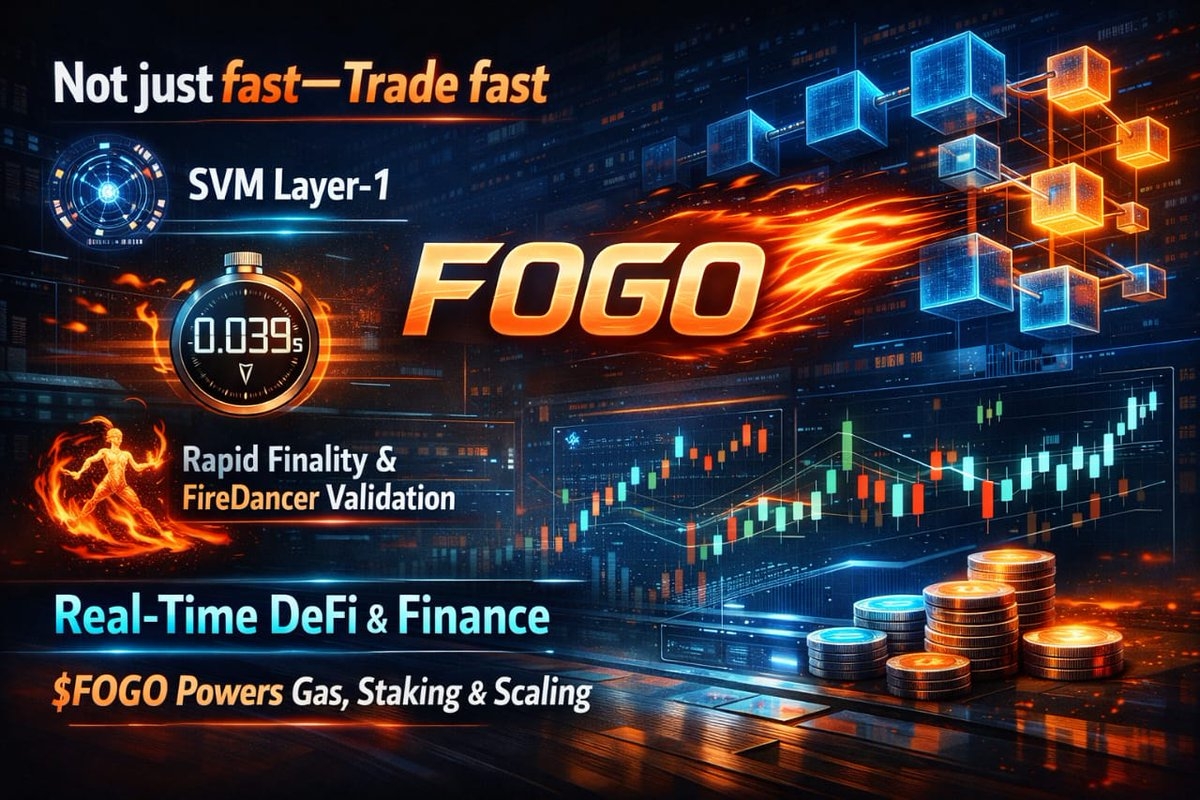
Fogo’s messaging keeps circling around trading-first design, low latency, and performance under load, which sounds boring until you realize boring is what serious trading demands. Traders don’t want “revolutionary.” They want predictable. They want the platform to behave the same way on a random Tuesday as it does during a panic candle. They want to lose because their idea was wrong, not because the venue behaves differently when the crowd shows up.
The crowd is where most systems get exposed. A chain can feel smooth when it’s quiet. It can feel “instant” when nothing is happening. But volatility is a stress test that doesn’t care about your marketing. When prices start jumping and everyone rushes in at once, that’s when you find out what your infrastructure actually is: a venue or a lottery machine. People love saying “the chain is fast.” They avoid saying “the chain is consistent when it matters.” Those aren’t the same claim. Consistency is harder. Consistency requires design choices you can’t fake.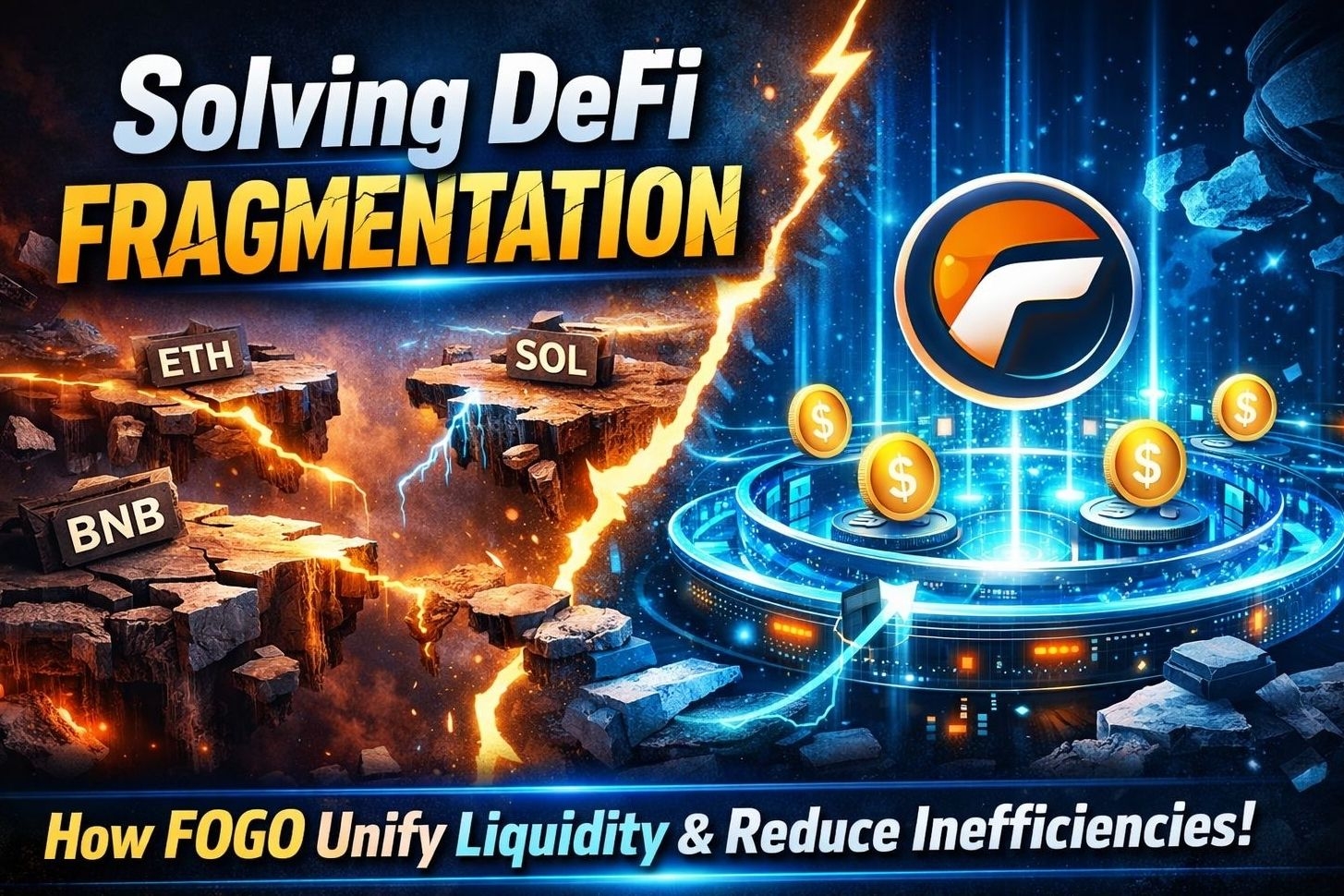
This is where the obsession with latency stops sounding like tech posturing and starts sounding like the reality of money. Distance is a trading fee. Not metaphorically—literally. If your message arrives later, you are late. If you are late, you get worse prices. If that happens repeatedly, it doesn’t just ruin one trade. It ruins the entire idea that on-chain trading can be competitive for normal participants. Traditional finance learned this decades ago and built a whole arms race around time: co-located servers, specialized networking, private routes, the whole “pay to be closer” religion. Crypto pretended it was immune, then acted shocked when MEV and priority games showed up like they weren’t inevitable.
Fogo doesn’t seem interested in pretending. It talks like a team that accepts the physical reality: information travels, time exists, and if you don’t account for that, the market will. And the market will account for it in the ugliest way possible—by rewarding whoever can buy the best position in the race. That’s how “decentralized” systems accidentally rebuild the same old hierarchy, just with different branding.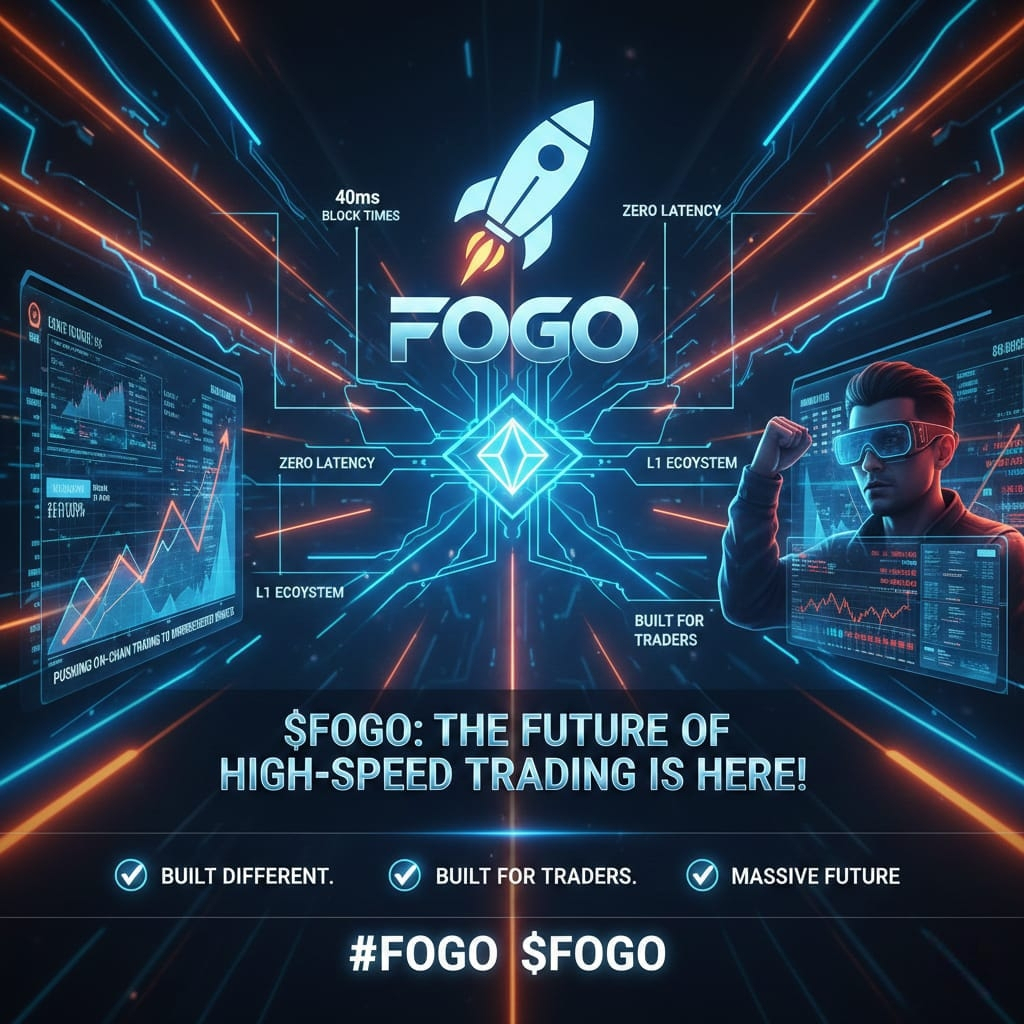
The phrase “real market structure” matters because it’s basically admitting that the fight isn’t against slowness. The fight is against invisible advantage. The fight is against the kind of advantage that doesn’t show up as a fee you can read, but as a worse fill you can’t explain. People call it slippage because slippage is socially acceptable. Slippage is a shrug. But a lot of slippage in crypto is just the cost of being the slower fish in a tank where the faster fish can see your movement before you do.
So when Fogo leans into mechanisms that reduce “micro-speed wins everything” dynamics—things like batching or auction-style approaches that compress time windows—it’s speaking a language that actual venues speak, not just chains trying to look impressive. That’s not a guarantee of fairness, and it doesn’t magically delete incentives. But it’s at least an honest attempt to change what speed can buy. The goal isn’t to eliminate competition. The goal is to force competition to happen on terms that feel less like extraction and more like trading.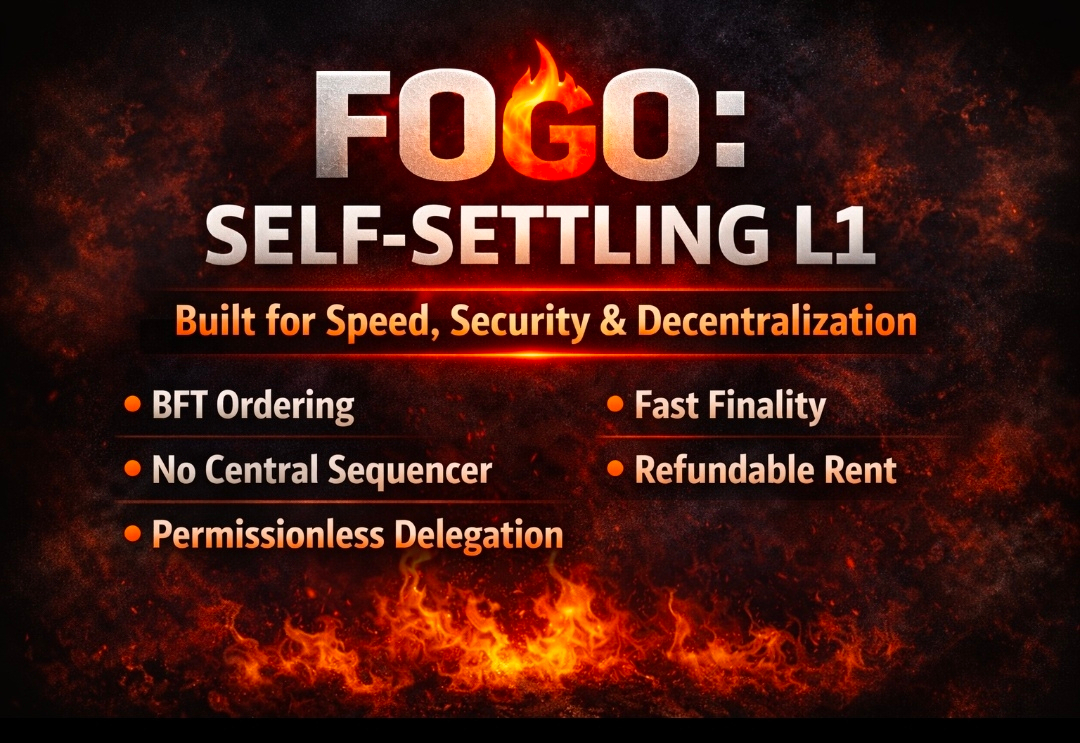
This is also why “trading-first chain” isn’t just a vibe statement. It’s a kind of threat, because traders are unforgiving. Traders don’t care about your community memes. They don’t care about your inspirational founder thread. They care about fills, downtime, and whether the platform behaves like a venue or a trap. If the experience feels rigged, they leave. If the system gets weird under pressure, they leave. If they feel like they’re paying an invisible tax to participants with private advantages, they leave. Trading-first means you don’t get to hide behind excuses.
And that’s why the TPS obsession starts looking childish next to this. Nobody asks a serious exchange for its TPS. They ask how the market behaves. They ask what happens during volatility. They ask who gets advantaged and why. They ask what the venue is doing to prevent the system from quietly privileging the people with the most money, the best infrastructure, the closest servers, the fastest pipelines. They ask whether the rules encourage honest competition or reward parasitic behavior.
If Fogo gets this right, it won’t be because it posted a bigger number on a leaderboard. It’ll be because someone places a trade during chaos and doesn’t feel that familiar DeFi nausea afterward. The kind where you got filled, technically, but you also got clipped in a way you can’t prove. The kind where the platform worked, but you didn’t feel respected by it.
That’s the real finish line. Not “fast.” Clean. Fair enough that it changes how people behave. Fair enough that you stop assuming you’re being hunted every time you click confirm.
And if Fogo fails, it’ll probably fail in the only way that still earns respect: because real market structure is brutal. It’s incentives, physics, and human behavior all colliding at once. You can’t hype your way through it. You can’t benchmark your way around it. You either build a venue that holds up when the room gets violent, or you build another hallway that looks impressive when it’s empty.
The interesting thing is that Fogo is at least aiming at the violent room. That alone separates it from most of the space.