
🧾 Major Developments
🇺🇸 US Supreme Court strikes down most of Trump’s tariffs
On February 20, 2026, the U.S. Supreme Court ruled 6–3 that many of President Donald Trump’s sweeping tariffs imposed under emergency powers (IEEPA) were unconstitutional because he overstepped his authority. That ruling invalidates a broad set of duties that generated tens of billions in revenue, sparking legal and political turmoil.
🆕 New 10% Global Tariff Signed
In response, Trump **immediately signed an order imposing a 10% global tariff on most imported goods under a different legal authority (Section 122 of the Trade Act of 1974).
This tariff is temporary — set to last 150 days, starting around Feb 24, 2026 — and is designed to keep tariff revenues similar to prior levels despite the court setback.
📌 How It Works & Coverage
The new global 10% tariff applies to imports from nearly all countries and is intended as a quick substitute while legal and procedural investigations continue.
Some products and trade agreements may still be exempted temporarily (e.g., aerospace, pharmaceuticals, goods under USMCA).
🔍 Additional Trade Moves
Trump has directed new trade investigations under other statutes (Sections 301 & 232) that could allow more or higher tariffs based on unfair trade practices and national security.
These measures are intended to restore negotiating leverage with trading partners after the Supreme Court decision.
🌍 Impact & Reactions
Domestic legal/market effects: The court decision creates uncertainty, with potential refund claim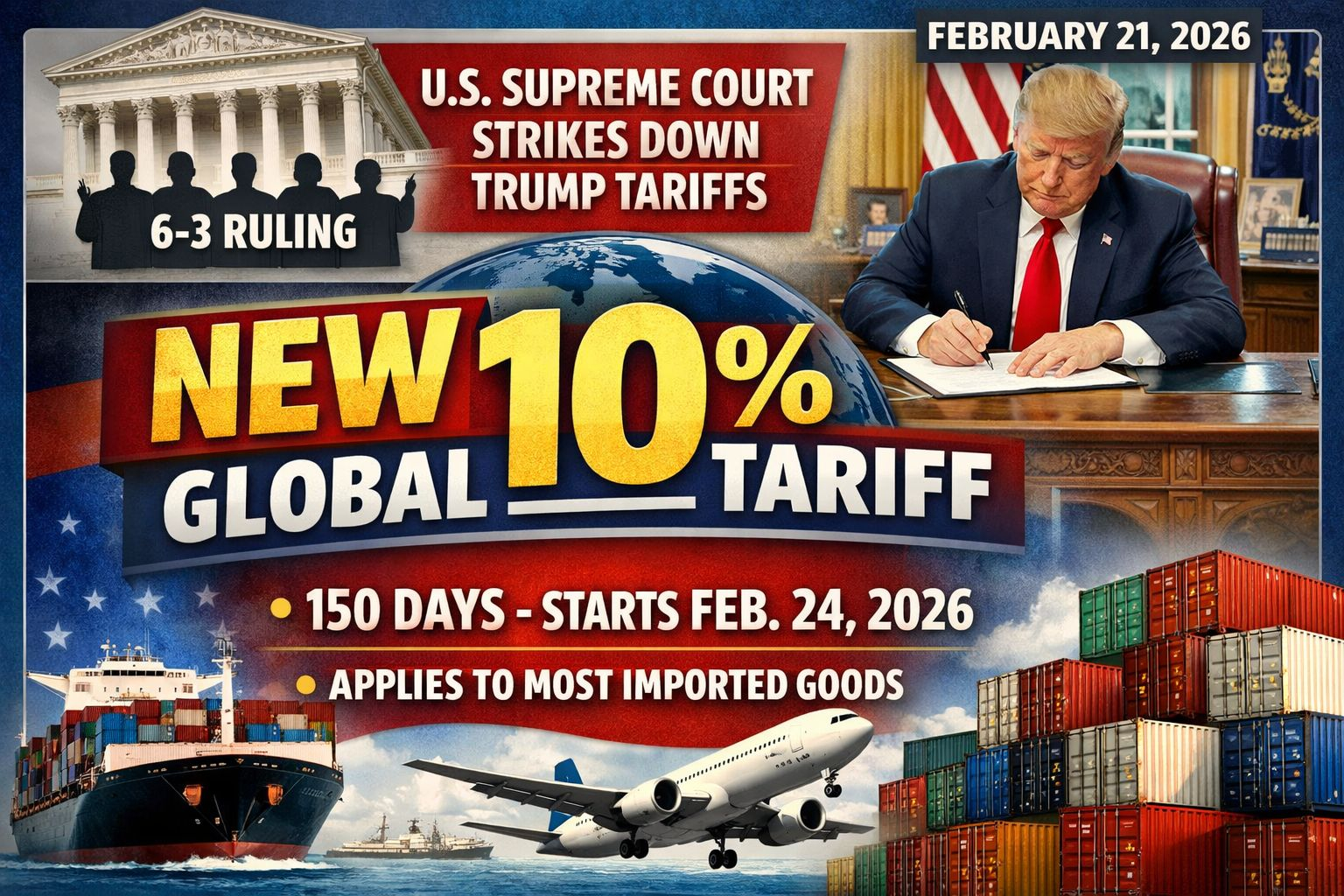 s for companies that paid prior tariffs.
International response: Some countries welcome the ruling, while others express concern over uncertainty in U.S. trade policy.
Global trade: Countries such as India, China, and EU members will be subject to the new 10% rate while negotiations continue. #TrumpNewTariffs #TokenizedRealEstate #OpenClawFounderJoinsOpenAI