
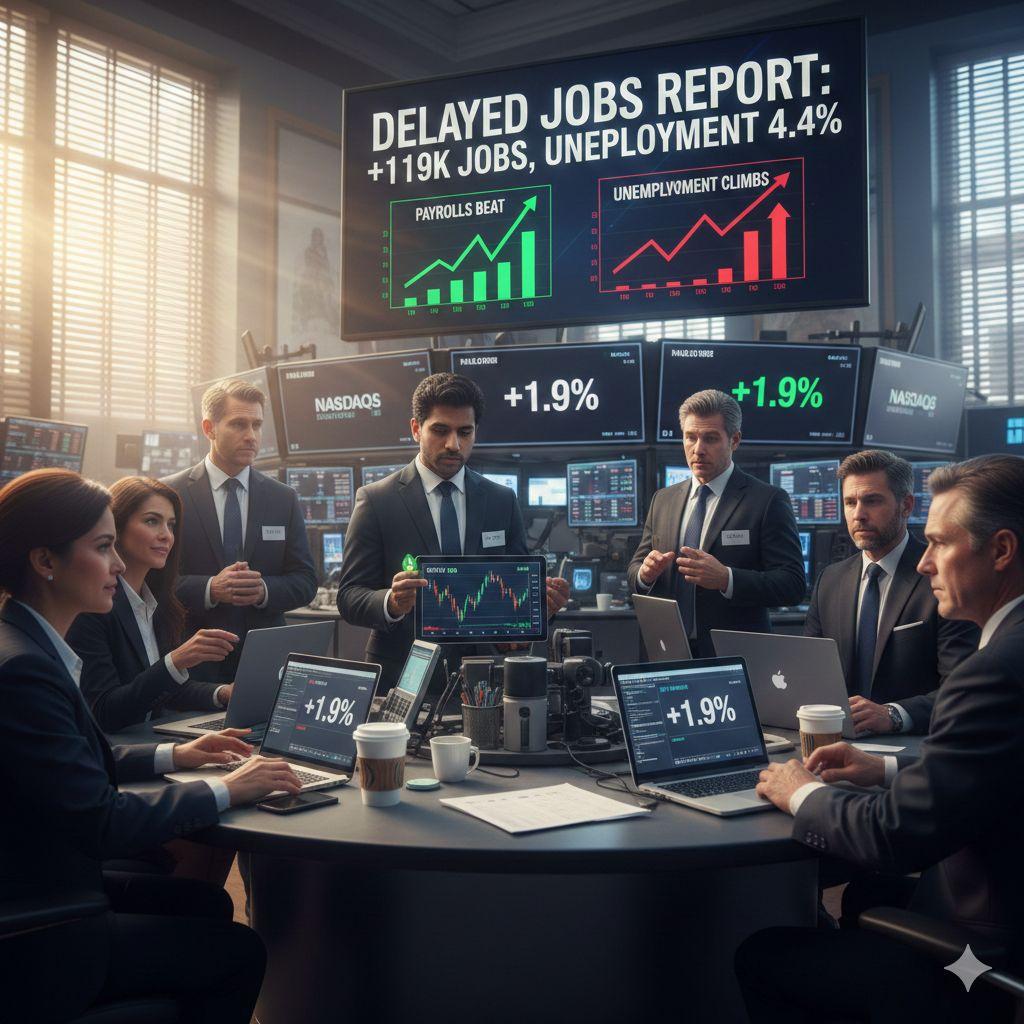
The long-awaited September jobs data is finally out after a six-week federal shutdown. While the numbers show a hiring beat, the underlying trend suggests a "cooling" phase that has kept markets on edge.
| Metric | Actual | Forecast | Status |
|---|---|---|---|
| Nonfarm Payrolls | 119,000 | 50,000 | ✅ Massive Beat |
| Unemployment Rate | 4.4% | 4.3% | ⚠️ Higher than expected |
| August Revision | -4,000 | +22,000 (Prev) | 📉 Significant Downgrade |
🔍 Key Insights: Reading Between the Lines
> The "Mixed Signal" Reality
> Even though hiring (+119k) crushed expectations, the rise in the unemployment rate to 4.4% indicates that more people are entering the workforce than there are jobs available. This suggests the labor market is resilient but definitely "softening at the margins."
>
* The August Shock: The massive downward revision of August data (from +22k to -4k) proves that the summer slowdown was deeper than initially reported.
* Data Blind Spot: Because of the shutdown, the Fed is essentially "flying blind." The next set of fresh data won't arrive until mid-December, likely after key policy decisions are already made.
💹 Market Reaction: Tech Overrides Macro
The market largely ignored the delayed jobs data, choosing instead to focus on corporate strength and the AI boom.
* Crypto Momentum: Bitcoin ($91,900) remains steady. The primary driver isn't the labor data, but the "Nvidia Effect"—strong earnings in the tech sector are providing a safety net for risk assets.
* Equities Surge: Nasdaq Futures (+1.9%) jumped as investors cheered Nvidia’s outlook, showing that earnings growth currently outweighs macro-economic uncertainty.
* Yield Watch: The 10-year Treasury yield held steady at 4.11%, signaling that the market has already "priced out" a December rate cut.
🏛️ The Federal Reserve Outlook
Traders have virtually eliminated the odds of a rate cut in December. The combination of:
* Sticky Inflation concerns
* Hawkish Fed commentary
* Missing real-time data
...means the Fed will likely stay on hold to avoid any "inflationary surprises" heading into 2026.