
New blockchains are often judged too quickly. When a project appears that shares technical similarities with an existing network, the immediate reaction is to label it a copy. That instinct is understandable in an industry filled with forks and minor variations. But describing Fogo as simply another version of Solana misses what it is actually trying to accomplish.
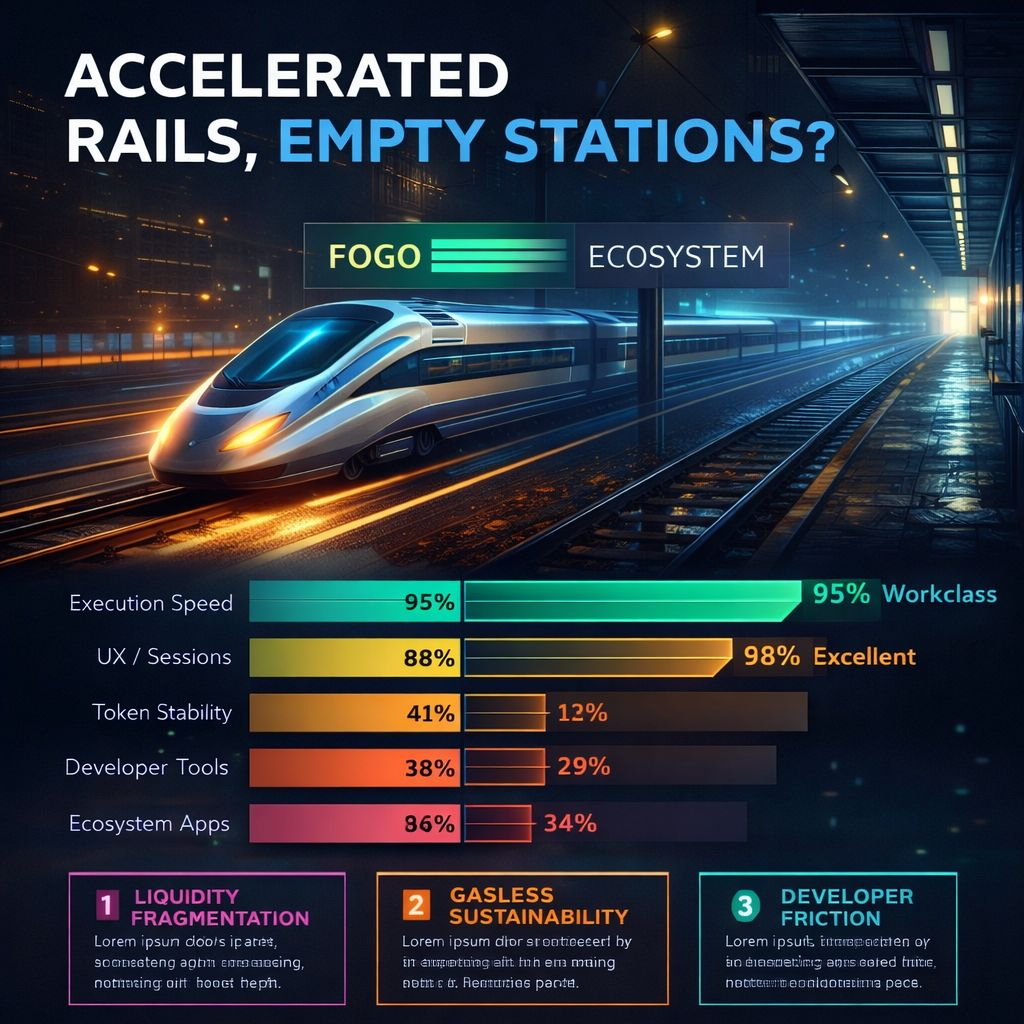
A clone usually begins with an existing structure and modifies it. The foundation remains the same; only the surface changes. Fogo’s approach feels different. Rather than inheriting a system and adjusting parameters, it attempts to redesign how high-performance infrastructure should function from the ground up while still maintaining compatibility with an ecosystem developers already understand.
At first glance, comparisons with Solana are unavoidable. Both rely on the Solana Virtual Machine, share familiar tooling, and allow similar smart contracts to operate across environments. For developers, this creates a sense of continuity. Yet similarity in execution does not necessarily mean similarity in purpose. Solana continues refining and scaling an already established network, while Fogo appears focused on building an environment optimized for performance from its earliest architectural decisions.
One of the clearest examples of this philosophical difference can be seen in how performance improvements are handled. Solana’s ecosystem has long anticipated Firedancer, an independent validator client designed to significantly increase throughput and efficiency. Fogo, instead of waiting for such improvements to mature externally, integrated comparable performance-oriented ideas directly into its protocol design from the beginning. The distinction is subtle but important: one network evolves toward higher performance over time, while the other assumes extreme performance as a starting condition.
The result is an experience that can feel noticeably different even when the underlying code remains unchanged. Applications written for the Solana environment can run on Fogo with minimal adjustment, yet execution speed and responsiveness shift the user experience. It resembles using two vehicles that technically travel the same route but operate under entirely different levels of power and efficiency.
Comparisons with newer high-performance chains like Sui and Aptos introduce another layer of context. Those networks embraced the Move programming language, prioritizing safety and parallel execution but introducing a learning curve for developers. Fogo made a different calculation. By remaining within the SVM ecosystem, it lowers the barrier for existing developers to migrate or experiment without learning an entirely new stack. Adoption, in this case, becomes a question of familiarity rather than reinvention.
However, performance rarely comes without compromise. Achieving extremely high throughput often requires powerful hardware, and Fogo is no exception. Running the network demands significant computational resources, which may limit participation to operators with access to advanced infrastructure. This creates tension with one of blockchain’s original ideals: open participation accessible to anyone with modest equipment.
That tension leads to deeper questions about decentralization itself. Should decentralization be measured by how many individuals can run a node, or by how resilient and secure the system remains under pressure? Some argue accessibility defines legitimacy, while others believe robustness and reliability matter more as blockchains begin supporting real-world scale applications.
Fogo does not attempt to avoid these tradeoffs. Instead, it openly prioritizes performance, even when that choice narrows participation at the infrastructure level. Whether this represents progress or compromise depends largely on how the industry chooses to define success in the next phase of blockchain development.
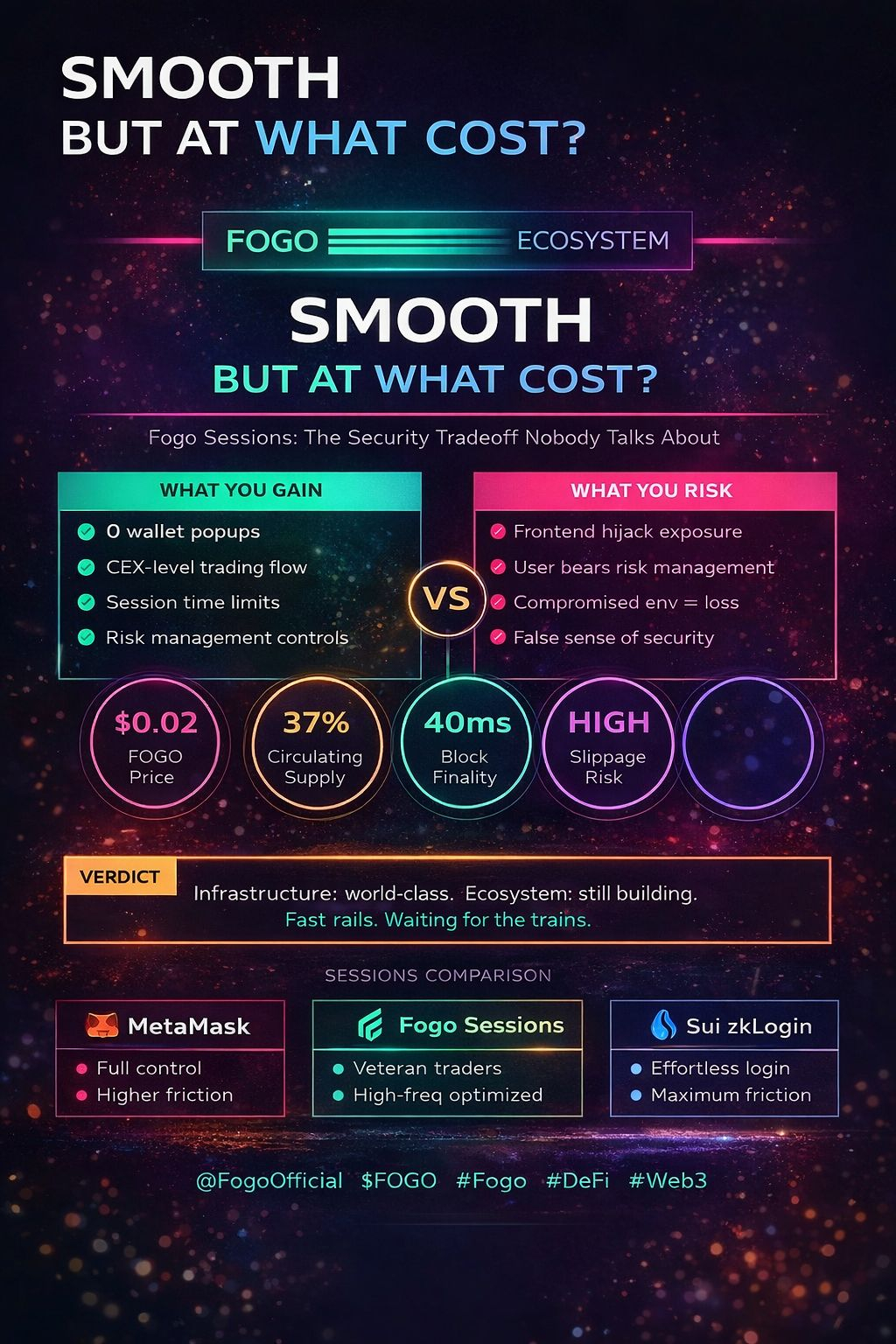
What makes Fogo worth observing is not just its technical direction, but the conversation it forces. As networks push toward higher throughput and institutional-grade performance, the balance between openness and efficiency becomes harder to ignore. Fogo stands as an experiment in that balance one that challenges assumptions about what future blockchain infrastructure should optimize for.
It may not represent the final answer. But it clearly signals that the industry is beginning to rethink its priorities, moving from theoretical decentralization toward practical performance and asking, perhaps for the first time at scale, how much of each is truly necessary.