The moment I realized “smart AI” isn’t enough
I used to think the AI world only needed bigger models and better prompts. Like, if we just upgraded the brains, we’d upgrade the truth. But the deeper I went, the more uncomfortable the reality felt: AI can sound confident while being completely wrong, and the scariest part is it doesn’t always know it’s wrong. It just keeps going.
That’s why Mira instantly caught my attention. Not because it’s another “AI project” trying to compete with the loudest narrative, but because it’s trying to fix the one thing we keep ignoring: trust. Mira isn’t focused on making AI smarter. It’s focused on making AI verifiable—so we don’t have to blindly believe a machine just because it speaks nicely.
 What Mira is really building (and why it matters)
The simplest way I explain $MIRA is this: it’s building a system where AI outputs don’t get accepted just because one model said so. Mira treats AI like something that needs to show its work.
Instead of letting one model deliver a final answer and calling it a day, Mira takes the response and breaks it into smaller pieces—individual claims. Then those claims get checked by different nodes running different models. Think of it like a debate room where multiple independent brains verify the same answer from different angles, and the system only accepts the output once there’s real agreement.
That “agreement” is the difference between AI being a helpful assistant and AI being a dangerous decision-maker.
“Break it into claims” — the smartest part of the design
What I personally love about @Mira - Trust Layer of AI approach is the granularity. It’s not just voting on the entire answer like “yes/no.” It goes deeper.
If a response has 10 claims and only 2 are questionable, Mira can isolate where the uncertainty lives. That’s how you get something way more useful than a normal chatbot response. You don’t just get text—you get confidence boundaries. You get traceability. You get a clearer “what we know vs what we’re assuming” line.
And in today’s world, where AI-generated content is everywhere and half of it is “confident nonsense,” that kind of structure feels like oxygen.
Why “verified AI” becomes non-negotiable in finance
This is where it gets personal for me.
I keep thinking about portfolio rebalancing. Markets punish emotion. Humans hesitate, chase narratives, panic, freeze, and then regret. So the idea of an AI that rebalances continuously and objectively sounds like discipline on autopilot.
But then the fear hits: what if the AI hallucinates while managing money?
That’s not a small error. A hallucination in a high-stakes environment can be brutal. It might:
see patterns that don’t exist
act on outdated or misread data
optimize perfectly… toward a false premise
And the most dangerous part? It won’t always say “I’m not sure.” It will act confident. That’s why I genuinely believe: if AI is going to touch finance, trading, execution, or capital allocation, it must be verifiable. Mira’s whole thesis fits that future.
 The product side that people overlook: APIs, SDKs, and real-time proof
A lot of crypto projects stay stuck in theory. Mira, from what I’m seeing, is pushing hard into something builders can actually use.
I like the idea of simple APIs and SDKs that let products request verification as a normal part of their workflow—like calling a reliability layer the same way we call payment rails or cloud services. And the dashboard concept matters too: verification status, claim history, and consensus signals in real time isn’t just a “nice UI feature.” It’s how you make trust visible.
Because trust isn’t just something you say. It’s something you can audit.
$MIRA is not the point… but it’s the engine
I’m going to say this the way I feel it: $MIRA should be viewed like infrastructure fuel, not a trending ticker.
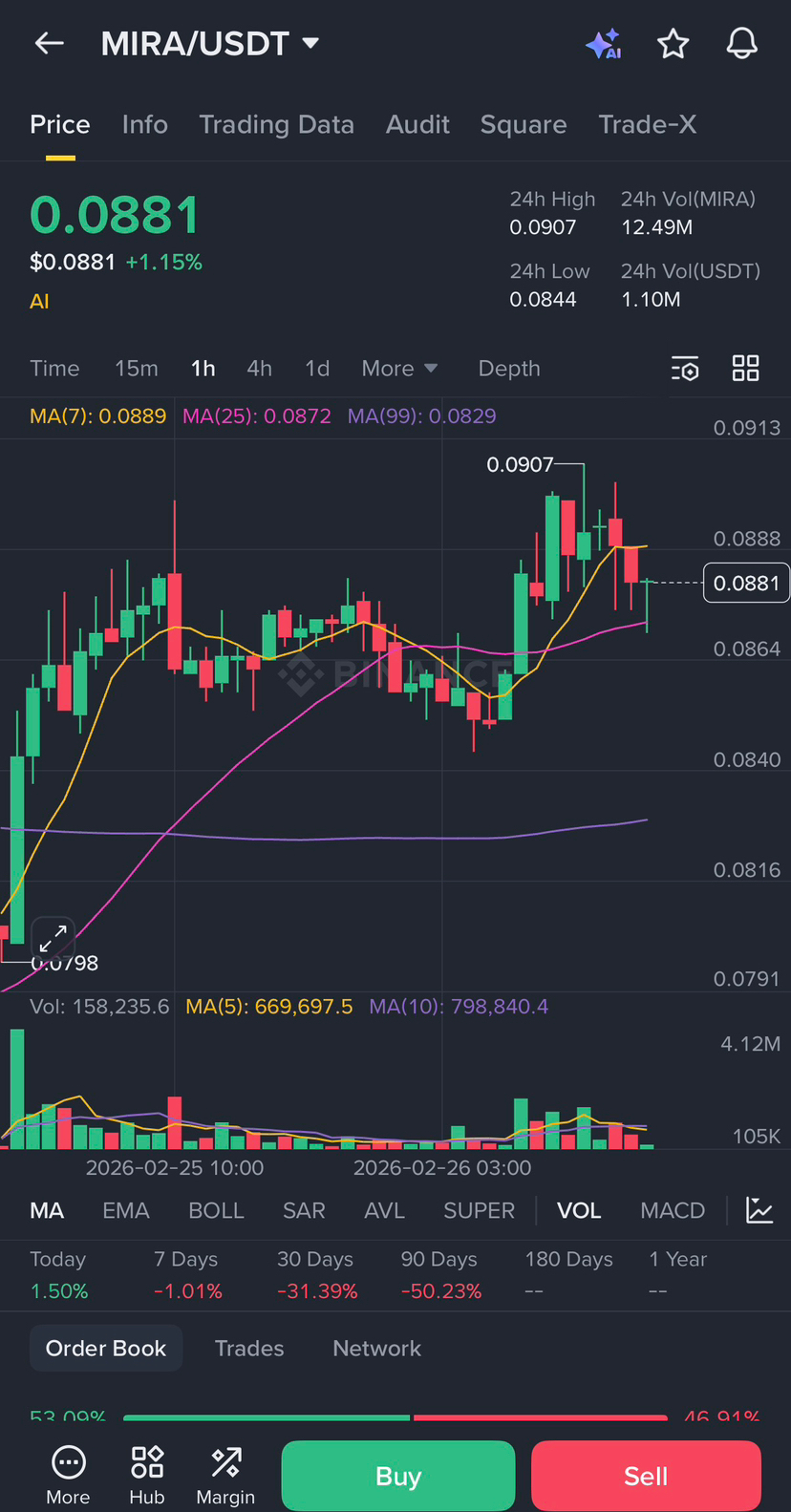
Yes, the token matters. It ties into incentives, staking, security, and coordination. But if someone is only staring at the chart and ignoring the mission, they’re missing the bigger picture. Verified intelligence is not a one-week hype cycle. It’s a multi-year demand curve.
To me, the real milestone isn’t “TGE happened.” The real milestone is: can Mira become the default layer for reliability in AI products the way we treat security layers as mandatory today?
Where I think Mira is heading next
If Mira keeps building in the direction it’s aiming, it opens doors to things we keep saying we want—but can’t fully trust yet:
autonomous agents that don’t go rogue when data is messy
AI copilots used in healthcare, compliance, and enterprise workflows
financial automation that fails safely instead of failing silently
marketplaces where verified outputs carry higher value than unverified ones
And that last part is important: once verification becomes a competitive advantage, “AI truth” becomes a market.
My honest takeaway
I’m not looking at Mira like “another AI + crypto crossover.” I’m looking at it like a necessary correction for the entire industry.
We’re drowning in AI content right now—fast, cheap, confident, and often wrong. Mira’s vision feels like the opposite of that: slower where it needs to be, strict where it matters, and designed around one simple idea:
Don’t ask people to trust AI. Make AI earn trust
That’s the kind of infrastructure that doesn’t just ride a narrative. It quietly becomes essential.