

When people first began talking about ownership in Web3, the conversation felt almost complete. Blockchains could record who owned what. Transactions were immutable. Tokens and NFTs could not be forged or erased. For a while, that felt like the end of the story. But as time passed and early assets aged, a quieter and more uncomfortable truth emerged. Ownership onchain did not guarantee meaning offchain. The record survived, but the substance often did not.
This is the moment where Walrus Protocol enters the picture, not as a flashy innovation, but as a response to something Web3 overlooked.
Walrus did not begin as an attempt to redefine finance or compete with existing storage platforms. It began with an observation that many in the ecosystem were slowly starting to notice but rarely addressed directly. A token might still exist years later, but the image it referenced could be gone. Metadata links could break. Applications that once displayed meaning could disappear. In those moments, ownership became abstract. The blockchain remembered, but the experience was lost.
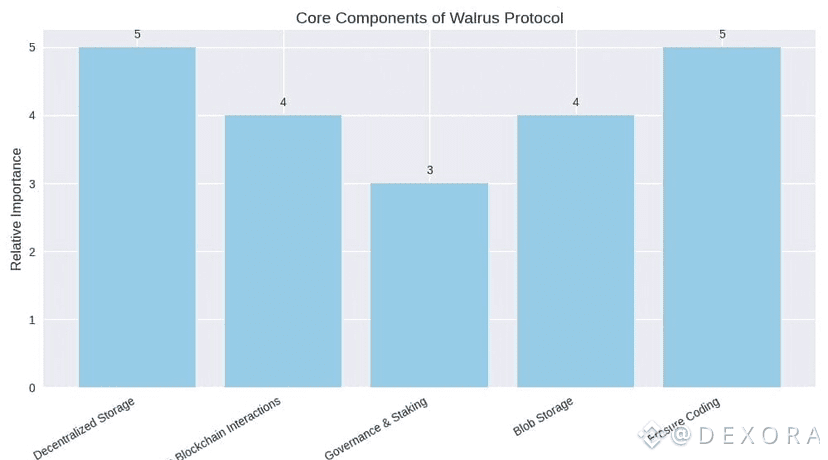
From the earliest thinking around Walrus, the problem was framed less as storage and more as durability. Data availability in Web3 was treated as a convenience rather than a responsibility. Builders assumed external services would persist. Users assumed links would keep working. Over time, those assumptions proved fragile. Walrus was formed around the idea that if Web3 is serious about long-term ownership, it must take responsibility for the data that gives assets meaning.
In its initial conceptual phase, Walrus focused on persistence rather than performance. Instead of asking how fast data could be retrieved, it asked how reliably data could survive. This is an important distinction. Speed matters for interaction, but survival matters for trust. Walrus approached data availability as a long-term commitment, not a temporary service.
As development progressed, Walrus positioned itself as a decentralized data availability network designed to support applications that cannot afford silent decay. NFTs, onchain games, social platforms, and digital identities all rely on data that must remain accessible over long periods. If that data disappears, the application may still exist onchain, but its relevance erodes.
I’m seeing Walrus as a response to Web3’s early optimism. In the rush to prove decentralization, many systems relied on centralized or semi-centralized storage solutions. These worked well enough during periods of attention and growth. But when teams disbanded or incentives faded, data often followed. Walrus attempts to break that pattern by aligning incentives around long-term availability rather than short-term convenience.
One of the defining ideas behind Walrus is that data should be treated as part of ownership itself. If an asset depends on external data to be meaningful, then that data must be protected with the same seriousness as the asset record. This reframing changes how developers think about architecture. Data is no longer an afterthought. It becomes a first-class component of the system.
As the network evolved, Walrus began emphasizing verifiable data availability. It is not enough for data to exist somewhere. It must be provably accessible. Users and applications need confidence that data can be retrieved when required, not just promised by an external provider. This focus on verification aligns with the broader Web3 ethos of reducing blind trust.
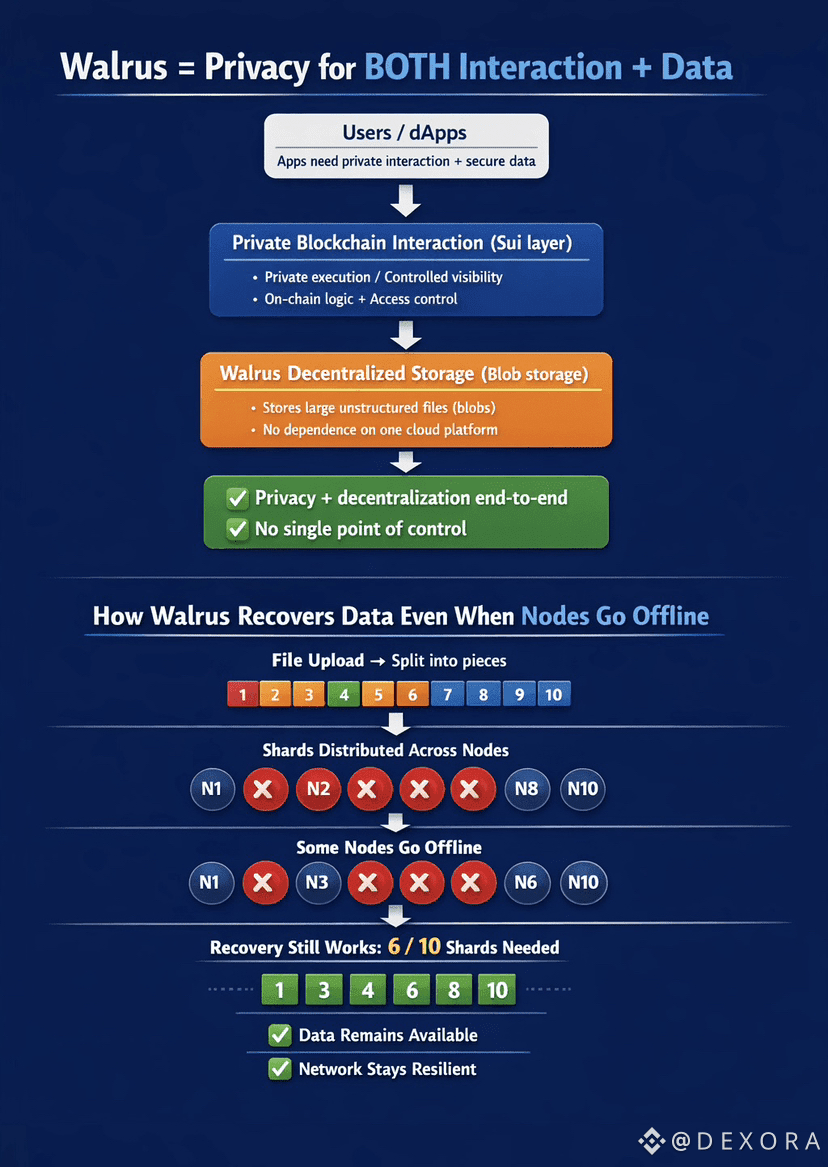
I’m noticing that Walrus does not attempt to compete directly with general-purpose storage solutions by promising unlimited capacity or ultra-low costs. Instead, it focuses on reliability for critical data. This specialization reflects a mature understanding of trade-offs. Not all data needs to live forever, but the data that defines ownership and identity should not disappear quietly.
Another important aspect of Walrus’s lifecycle is how it fits into the broader ecosystem. Rather than positioning itself as a standalone destination, Walrus integrates into existing application stacks. It supports developers who want to ensure that the assets they create remain usable long after initial deployment. This integration-first mindset reduces friction and encourages adoption without demanding radical redesigns.
As Web3 applications age, we’re seeing a shift in how value is perceived. Early excitement was driven by novelty and speculation. Now, users are returning to older assets and asking whether they still work. This is where Walrus’s relevance becomes clear. Infrastructure that only functions during peak attention is not infrastructure. It is a temporary service.
Walrus aligns incentives so that data availability does not depend on hype cycles. Its design encourages long-term participation rather than short-term extraction. This approach may not generate explosive attention, but it builds trust quietly over time.
Looking forward, Walrus occupies a critical position in Web3’s maturation. As more value is stored onchain, the cost of data loss increases. Broken links, missing metadata, and inaccessible content undermine confidence in decentralized systems. Walrus exists to prevent that erosion.
I’m also seeing Walrus as part of a broader shift toward accountability in Web3 infrastructure. It asks builders to consider not just how systems work today, but how they behave years later when teams move on and narratives change. That perspective is still rare, but it is becoming necessary.
If Web3 is to fulfill its promise of long-term digital ownership, memory must be preserved alongside records. Ledgers alone are not enough. Data availability must be treated as a shared responsibility, not an external convenience.
Walrus does not promise perfection. It does not claim to solve every storage problem. It focuses on something narrower and more important. Ensuring that what people own continues to mean something over time.
As the ecosystem evolves, projects like Walrus may not dominate headlines. But they will quietly support everything that lasts. And in the end, longevity is the strongest proof that decentralized systems were worth building at all.
Sometimes the most important infrastructure is the kind that prevents loss rather than creates excitement.
Walrus is being built for that purpose.