

In the evolving landscape of Web3, the Walrus Protocol (built by Mysten Labs) represents a paradigm shift in how we handle "blobs"—large-scale unstructured data like AI models, high-definition media, and enterprise datasets. While traditional decentralized storage often faces high latency or excessive costs, Walrus introduces a unique infrastructure that treats storage as a programmable resource. 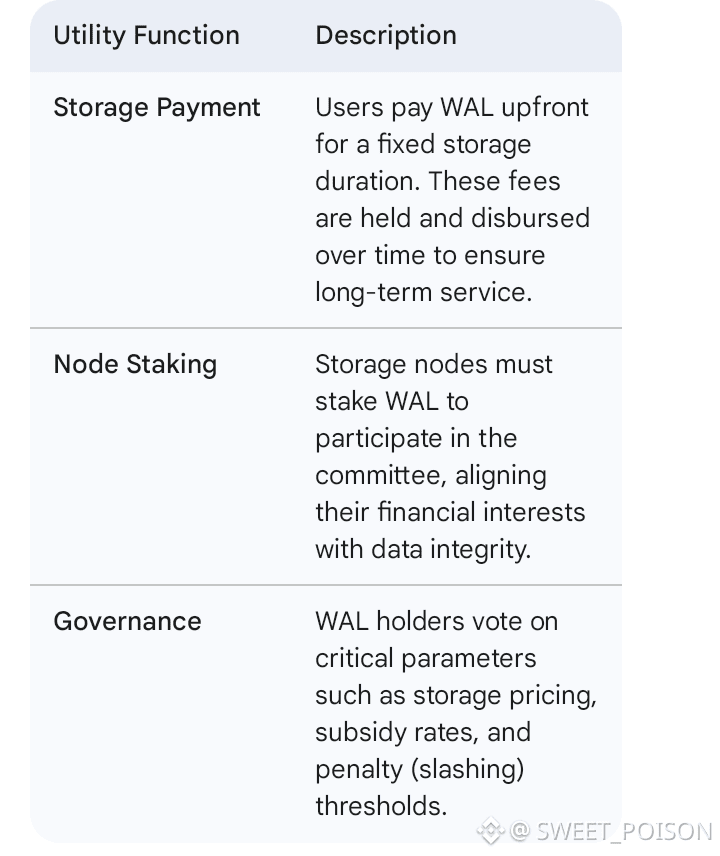
1. Unique Infrastructure: The "Red Stuff" Innovation
The backbone of Walrus is a novel encoding algorithm called Red Stuff. Unlike standard replication (which stores multiple full copies) or basic erasure coding, Red Stuff uses a two-dimensional approach:
Fragmentation Efficiency: It shards data into primary and secondary "slivers" distributed across hundreds of storage nodes.
Extreme Resilience: This architecture allows a file to be fully reconstructed even if two-thirds of the network's nodes go offline or act maliciously.
Cost Optimization: Because it avoids 10x-20x replication factors, Walrus achieves high availability with a storage overhead of only ~4-5x, making it cost-competitive with Web2 giants like Amazon S3.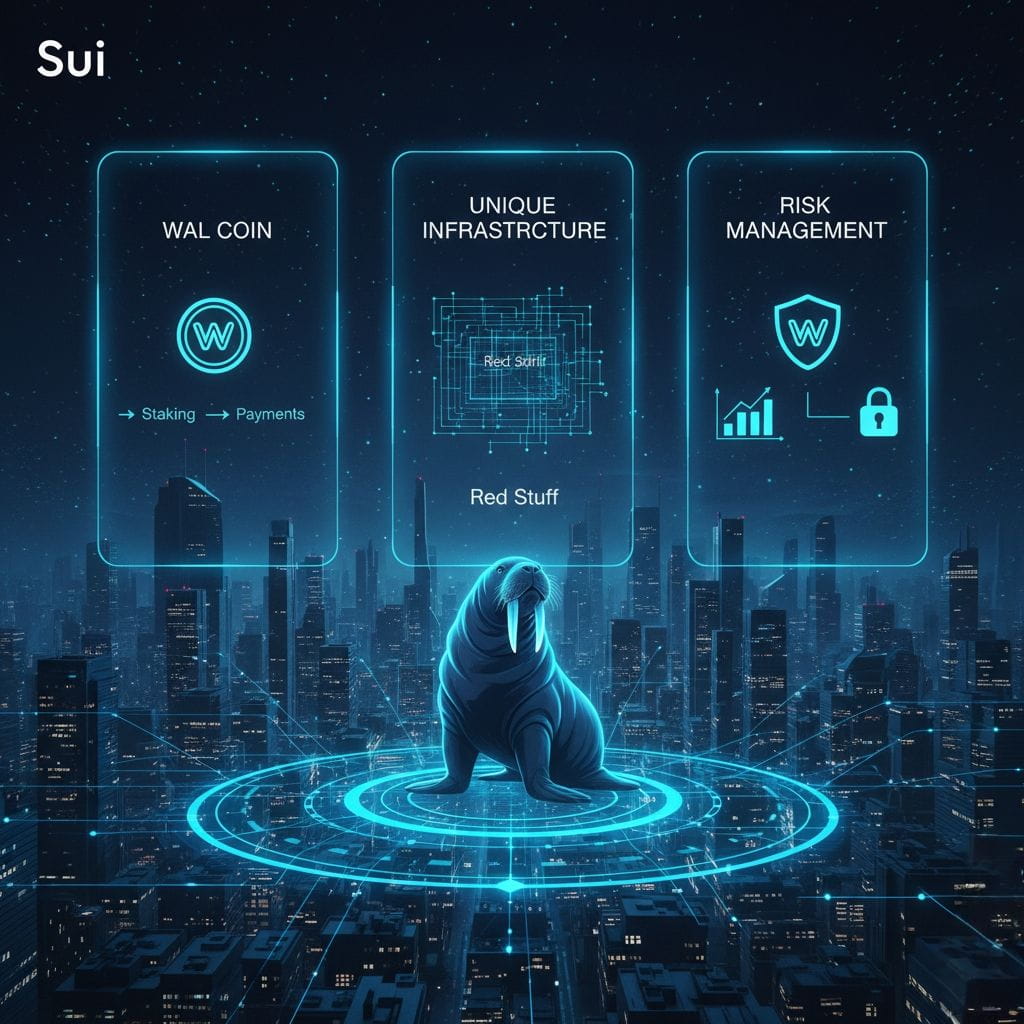
By utilizing the Sui blockchain as its coordination layer, Walrus ensures that every stored object is a "Sui object." This allows smart contracts to interact with data directly, enabling automated data markets where AI models or NFTs can be managed programmatically.
2. The WAL Coin: Economic Engine & Utility
The WAL token (5 billion total supply) is not just a medium of exchange; it is the security and governance layer for the entire ecosystem.
3. Staking Rewards & Strategic Management
Walrus operates on a Delegated Proof-of-Stake (DPoS) model, allowing any WAL holder to participate in the network's security.
The Reward Cycle: Staking rewards are calculated per epoch (typically lasting 14 days). Yield is derived from a combination of user storage fees and a dedicated 10% subsidy pool designed to bootstrap the network in its early years.
Staking Timeline: To earn rewards in epoch e, you must delegate your tokens before the midpoint of epoch e-1. Unstaking typically follows a similar 14–28 day cooldown period.
Liquid Staking: To mitigate the "locked capital" problem, protocols like Haedal (haWAL) and Winter Walrus (wWAL) allow users to maintain liquidity while earning rewards, enabling the use of staked assets in DeFi.
4. Professional Risk Management
For serious participants, managing the risks associated with decentralized storage is paramount.
Slashing Risk: While initial phases may have lighter penalties, the protocol is designed to "slash" (permanently remove) the stake of nodes that lose data or fail to provide proofs of availability. Diversification across multiple top-tier nodes is the primary defense for delegators.
Economic Sustainability: Early staking yields may fluctuate as the network transitions from subsidies to organic fee-based revenue. Investors should monitor the Burn-to-Earn ratio the rate at which storage demand consumes WAL versus the rate of reward issuance.
Sui Dependency: Since Walrus relies on Sui for its control plane, any network-wide issues on Sui could impact the accessibility of storage metadata.
Walrus is positioning itself as the "Gold Standard" for AI data sovereignty.
By moving away from static storage toward a programmable, high-resilience model, it provides the necessary infrastructure for the next generation of decentralized application.