

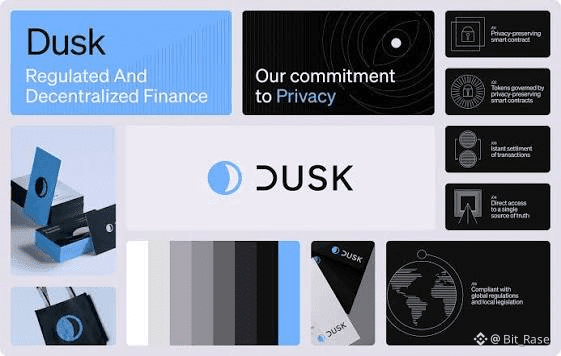
 Most RWA projects are stuck playing a dangerous game of appearances. They launch on fully transparent blockchains and try to layer “compliance” on top afterward — allowlists, denylists, committees, off-chain checks. It sounds solid in decks and blog posts, but the moment real regulators apply pressure, those add-ons start to bend. Public chains were never meant to handle institutional privacy. Trying to force them to do so is like reinforcing a cracked foundation with paint.
Dusk Network chose not to patch around the problem. It rebuilt the ground itself.
At the heart of Dusk is Piecrust, a virtual machine designed with regulation embedded into execution. Instead of storing sensitive identity or compliance data, Dusk eliminates storage entirely through zero-knowledge proofs. The system doesn’t hold private information — it only verifies that requirements are met. Audits become automatic, and privacy is preserved by design. That’s not an improvement on existing models — it’s a different category altogether.
Where Dusk really separates itself is through what it calls programmable privacy. Institutions have always faced an impossible trade-off: transparency exposes strategies and capital flows, while total anonymity breaks AML rules. Dusk dissolves that conflict. Transactions are private by default, yet disclosure can be selectively enabled when legally required. Visibility becomes intentional, not forced. Compliance isn’t a limitation — it’s baked into the logic.
The same thinking applies to users. With Citadel, identity checks happen once and are converted into reusable cryptographic proofs. No constant re-verification. No databases full of personal data waiting to be breached. Smart contracts never see identities — only proof that conditions are satisfied. Regulation becomes seamless instead of invasive.
Dusk hasn’t moved at meme-speed, and that’s intentional. Real financial infrastructure isn’t built on hype cycles. Its collaboration with regulated venues like NPEX hints at where serious capital is heading. Combined with deterministic finality via SBA consensus and compliance at the base layer, Dusk starts to resemble less a blockchain and more an operating system for digital securities.
When marketing fades and audits begin, architecture is what survives.
That’s why Dusk isn’t loud it’s ahead. Quietly, structurally, and for the long term.