

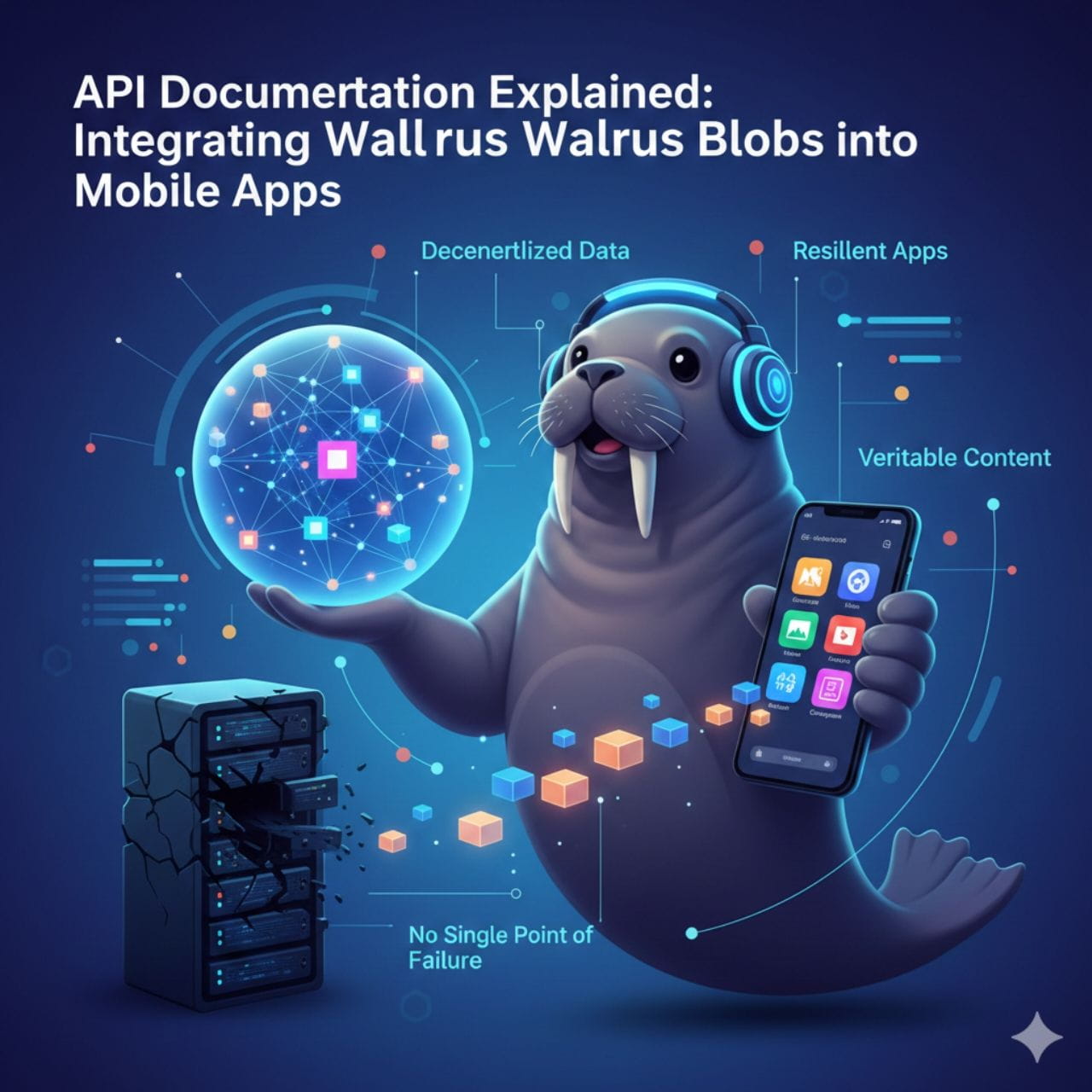
Bringing Decentralized Data to Mobile
Mobile apps are at the core of the Web3 ecosystem today. From crypto wallets and DeFi dashboards to NFT galleries and on-chain games, most of the Web3 experiences users interact with are designed to fit in your pocket. Yet, despite the decentralized promise of these apps, it’s surprising how many still quietly rely on centralized servers for delivering crucial content like images, metadata, and configuration files.
This reliance is risky. When those servers experience downtime, face regional censorship, or get blocked, the user experience takes a hit—sometimes rendering whole sections of your app useless.
Walrus blobs are designed to transform this paradigm. With Walrus, developers can build apps that utilize decentralized, verifiable data sources. This reduces dependency on single points of failure, offering a more resilient, transparent, and robust experience. Even in the face of network disruptions or outages, your app can continue serving reliable content.
To help you navigate this new territory, let’s dive into what Walrus blobs actually are, how APIs play a role, and what developers need to keep in mind to confidently implement this in real-world mobile apps.
What Exactly Is a Walrus Blob?
At its core, a Walrus blob is a chunk of data distributed across the Walrus network rather than being locked to a single server. These blobs are referenced in a way that allows anyone to retrieve or verify them, ensuring data is always accessible and authentic.
Imagine a blob as a tamper-proof package: you can fetch it from the network, unpack it, and immediately confirm that its contents haven’t been altered. This property is vital for trustless, decentralized systems.
In practical terms, blobs are versatile and can encapsulate:
- Images, videos, and other media assets
- Application configuration files and settings
- Metadata for digital assets (like NFTs or game items)
- Static content used across multiple components or views
By using blobs, developers can ensure that essential resources are always available, regardless of backend availability or network hiccups.
Why Decentralized Data Matters for Mobile Apps
Mobile apps must operate in a world of unreliable connectivity, shifting network environments, and increasingly sophisticated forms of censorship or regional blocking. Users expect seamless, always-on experiences, but centralized APIs can quickly become bottlenecks or targets for disruption.
When a centralized backend fails—whether due to technical issues, targeted attacks, or regulatory interference—the entire app can grind to a halt. That’s a single point of failure you can’t afford.
Walrus blobs address these challenges by:
- Reducing your app’s dependence on any one server or infrastructure provider
- Enhancing data availability, so content persists even if specific gateways or hosts go offline
- Enabling cryptographic verification, so users can trust that fetched data matches what was originally published
Think of it as shifting from calling a single private office for every document to having access to a globally available, public library—one that’s censorship-resistant and always open.
How Walrus APIs Work in Mobile Apps
Integrating Walrus doesn’t mean rewriting your entire app. Instead, Walrus acts as an additional data layer, complementing your existing logic.
Here’s a general flow of how it all fits together:
1. Publish data as a blob
Your backend, admin panel, or publishing service uploads data—such as images or metadata—to the Walrus network as blobs.
2. Store blob references
Your app saves lightweight references or identifiers that point to the corresponding blobs, often storing these references on-chain or in local storage.
3. Fetch data with the API
When needed, the mobile app retrieves blob data using APIs or SDKs compatible with Walrus. These APIs abstract the complexity of interacting with the decentralized network.
4. Verify the content
The app checks that the retrieved data matches the expected reference, ensuring integrity and authenticity before displaying or using the data.
This process creates a clean separation between your app’s business logic and its data infrastructure. As a result, your app remains functional and trustworthy even when your original backend is unreachable.
A Real-World Example
Consider a mobile app for viewing NFTs:
- The images and metadata for NFTs are uploaded as Walrus blobs, rather than being stored on a traditional server.
- The app reads blob references directly from smart contracts or blockchain entries.
- When a user views an NFT, the app fetches the corresponding blob from the Walrus network, not from any single centralized image server.
- The app verifies the integrity of the blob before displaying it, ensuring users see exactly what was published—no chance for tampering.
If a particular gateway or API endpoint is unavailable, the data is still retrievable from the network, ensuring uninterrupted access for users.
Tips for Mobile Developers
1. Cache smartly
Mobile networks can be inconsistent. Implement local caching for blobs so users aren’t repeatedly downloading the same data, improving performance and reducing network usage.
2. Keep blobs small
Smaller blobs mean faster downloads and lower storage requirements. Break up large resources when possible, keeping the user experience snappy.
3. Handle failures gracefully
When a data fetch fails—due to network issues or an unavailable gateway—retry the request or switch to an alternative access path. Provide clear feedback to users when content is temporarily inaccessible.
4. Separate permanent from changing data
Use blobs for content that should remain unchanged, like released media files or asset metadata. For frequently updated or real-time data, consider alternative solutions that support fast, dynamic updates.
Security and Trust
Walrus blobs improve trust in your app’s data, but developers still have important responsibilities:
- Manage cryptographic keys securely, both on the backend and within the app
- Always verify blob references before consuming or displaying fetched data
- Establish clear processes for updating blobs and references as your content or app evolves
While decentralization mitigates many trust and availability concerns, robust engineering practices remain essential for maintaining security and user confidence.
FAQs
Q: Do I need to run a Walrus node directly in my mobile app?
A: No. Most apps interface with the Walrus network through APIs, SDKs, or public gateways that handle the heavy lifting of data retrieval and verification.
Q: Are Walrus blobs suitable for large media files?
A: Yes, Walrus can handle substantial files, but you should be mindful of performance, bandwidth, and storage costs. Structuring your blobs efficiently will keep your app responsive.
Q: Can blobs be updated after publishing?
A: Blobs are designed for immutability and verifiability. To update content, publish a new blob and update any references pointing to the old version. This ensures data integrity and clear version control.
By embracing Walrus blobs, mobile developers can build apps that are more resilient, transparent, and future-proof in the decentralized era—offering users confidence that their data and experiences remain accessible and trustworthy, regardless of what happens to any single server.
