

Most people don’t wake up thinking about blockchains. They wake up thinking about safety, stability, and whether the systems they rely on will quietly do their job. Money, for most of human history, has lived in the background. It has been private by default, structured by rules, and protected from unnecessary exposure. Then blockchains arrived and flipped that assumption. Suddenly everything was public. Balances, transfers, histories. Technically impressive, yes. Emotionally uncomfortable for anyone who understands how finance actually works. That quiet discomfort is where Dusk comes from.
Founded in 2018, Dusk wasn’t born out of hype or rebellion. It came from a realization that something essential was missing. Privacy is not secrecy. It is dignity. It is the difference between being accountable and being exposed. I’m talking about the kind of privacy people expect without asking for it. Dusk set out to bring that expectation back into blockchain systems, without breaking the things that make blockchains valuable in the first place. They weren’t trying to escape regulation. They were trying to build something regulation could actually live with.
From the start, Dusk moved differently. While many projects rushed to launch and fix problems later, they kept pausing to ask uncomfortable questions. How do you prove something happened without revealing everything? How do you give regulators what they need without turning users into open books? How do you design a system that institutions can trust without recreating the same closed doors blockchains were meant to open? Those questions slowed things down. At times, they forced the team to rebuild parts of the system entirely. But that slowness wasn’t hesitation. It was commitment.
When regulations shifted, Dusk didn’t look for shortcuts. They went back to the foundation. That decision cost time and attention, but it also revealed intent. Anyone can build fast when no one is watching closely. It takes conviction to build when you expect scrutiny. They were preparing for a future where the chain wouldn’t just be used by enthusiasts, but by entities that answer to laws, audits, and real-world consequences.
Privacy on Dusk is not about disappearing. It is about choice. Most people don’t want to hide from the world. They just don’t want the world staring into their finances. Dusk reflects that human reality. Transactions can be private by default, yet still verifiable. Information can be revealed selectively, to the people who are meant to see it, when it matters. If a regulator needs proof, it can be provided. If a user wants confidentiality, it can be preserved. It becomes a system that mirrors how trust actually works in society.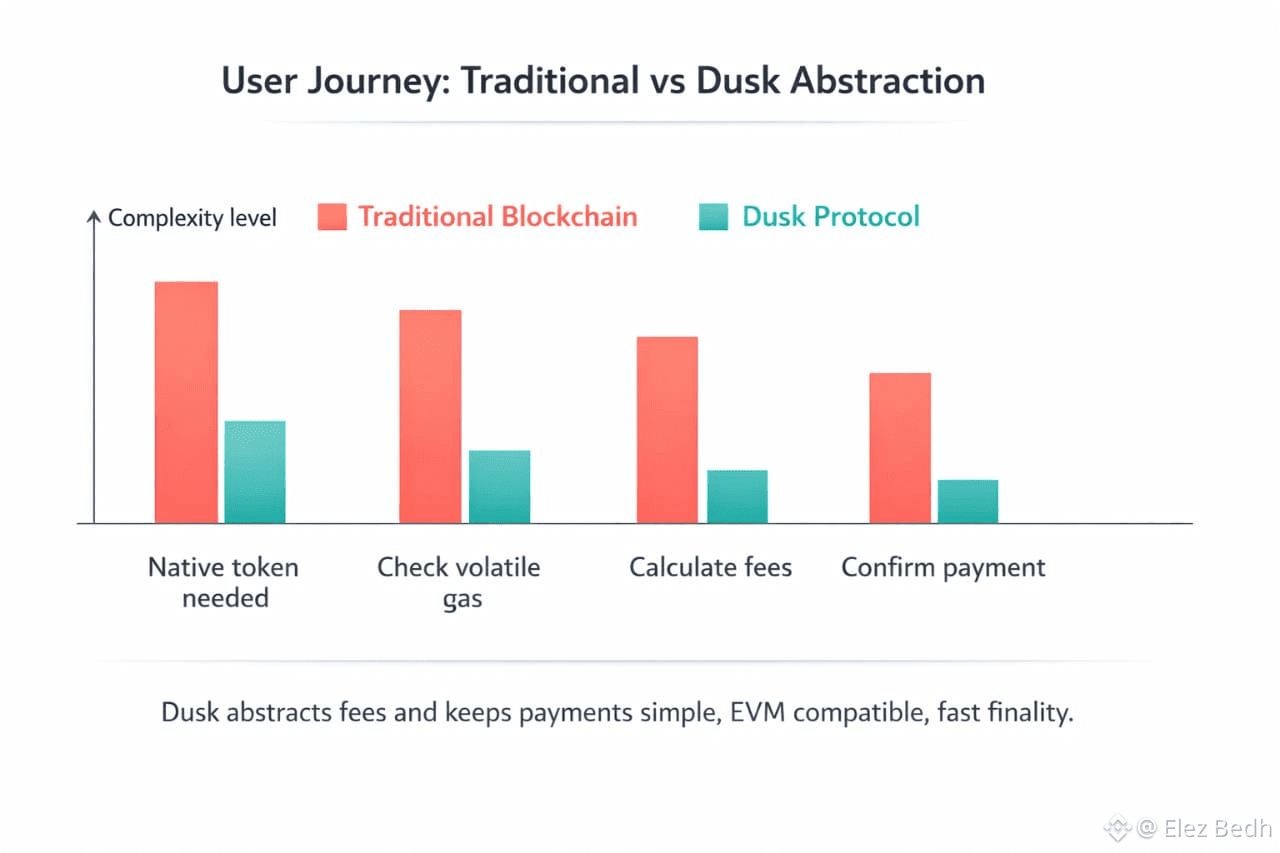
This design shows up in how the network functions day to day. There are different ways to transact depending on whether transparency or confidentiality is required. Nothing is forced. Everything is intentional. That flexibility is subtle, but it’s powerful. It allows the same network to support open activity and sensitive financial flows without contradiction.
When Dusk’s main network went live in early 2025, the tone changed. Ideas became responsibility. From that point on, the system had to hold real value, not just theory. Validators committed stake. Blocks finalized. Transactions settled. There was no longer room for abstraction. The network either worked or it didn’t. And it kept working. Quietly, without spectacle.
As the project matured, another realization surfaced. If builders are required to abandon familiar tools just to participate, adoption slows. People don’t resist innovation, but they do resist unnecessary friction. So Dusk separated its system into layers. The foundation handles settlement and security. Above it, execution environments allow developers to work with tools they already understand. Privacy is woven into the system rather than bolted on at the edges. This wasn’t about copying others. It was about respecting how people actually build and deploy software.
The consensus mechanism reflects the same mindset. Finality is fast and deterministic, because uncertainty creates risk. In financial systems, “probably final” is not good enough. Once something happens on Dusk, it stays happened. Validators stake value because trust must have a cost. But punishment is measured. Honest failure is not treated the same as malicious behavior. That balance encourages participation instead of fear. It creates resilience rather than fragility.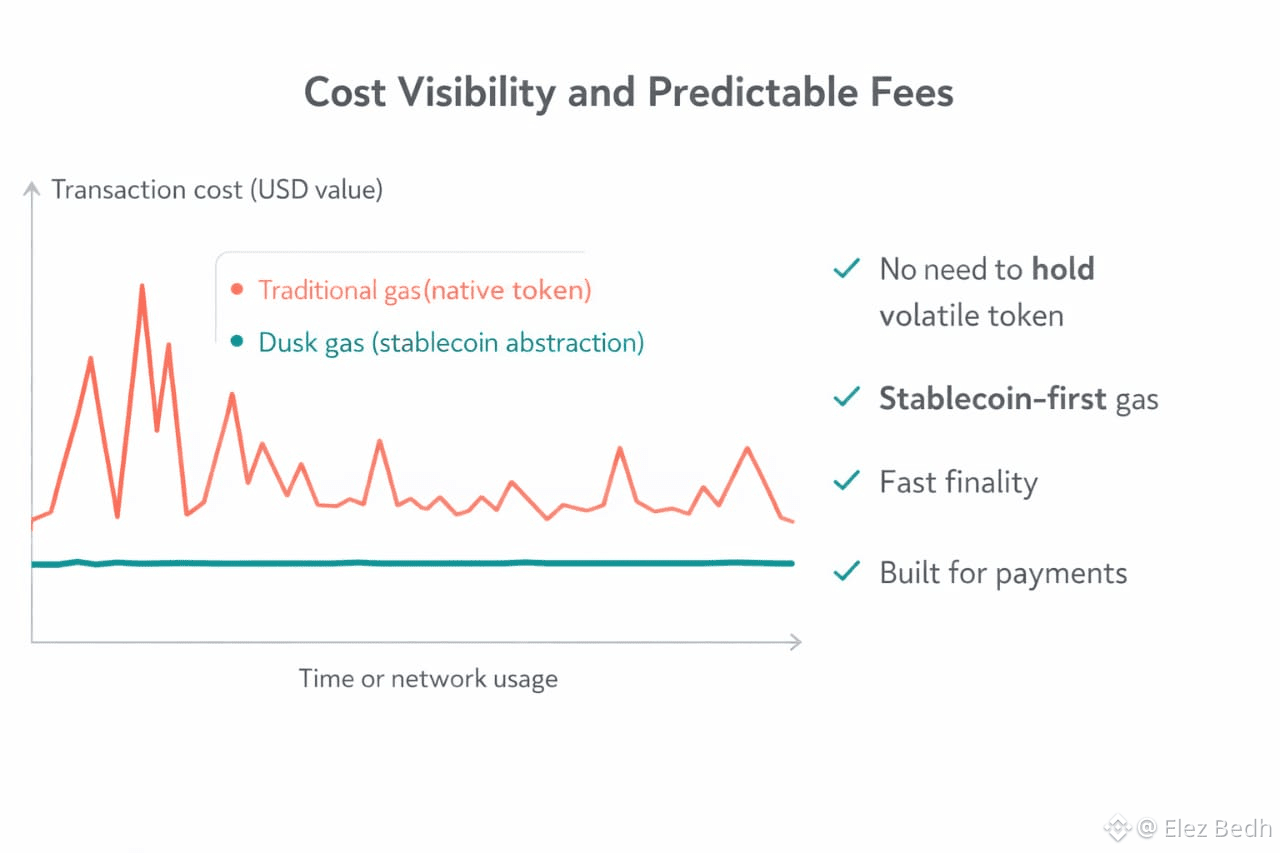
The DUSK token exists to secure the network, not to sell a dream. When someone stakes it, they are committing to the system’s future. Supply is capped. Emissions are spread over decades. Incentives favor patience and responsibility. This design may feel unexciting to short-term traders, but for infrastructure, excitement is often a liability. Stability is the goal.
None of this means Dusk is without risk. Privacy systems are complex, and complexity can fail. Building for regulated finance means long adoption cycles and slow feedback. It can feel lonely to build something serious in an industry that rewards noise. There is also competition from other chains trying to solve similar problems in different ways. These risks are real. They’re not hidden.
But so is the conviction behind the work. Dusk is not trying to convince the world overnight. It is trying to earn trust over time. If developers find the system usable, if institutions feel comfortable placing real value on it, if validators continue to show up and secure the network, then something meaningful happens. It becomes infrastructure people rely on without thinking about it. And that is the highest compliment any financial system can receive.
Dusk does not promise a revolution. It offers reconciliation. Between privacy and accountability. Between decentralization and regulation. Between human expectations and cryptographic systems. I’m not sure the world needs louder blockchains. We’re seeing that it needs more thoughtful ones. And if Dusk succeeds, it won’t be because it demanded belief. It will be because it quietly deserved it.
