

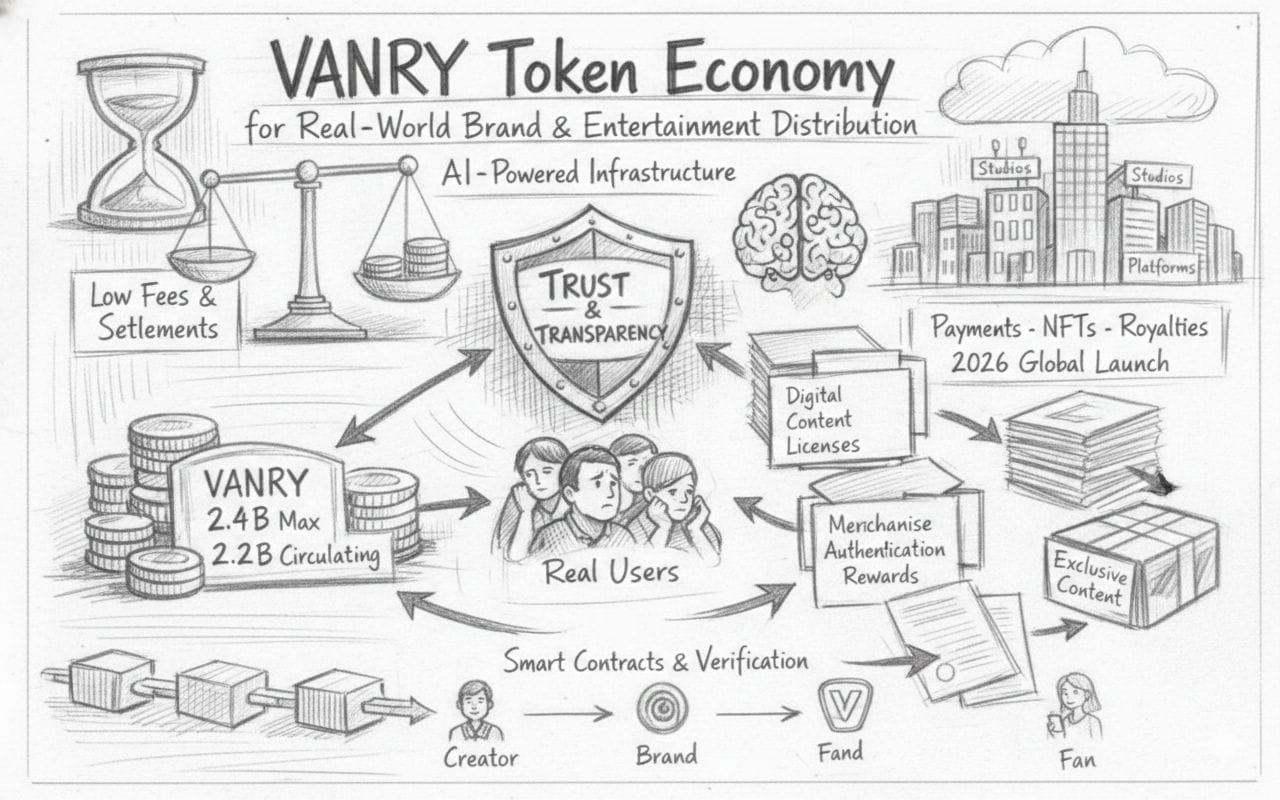
 Token economies are usually designed for traders reinforcing speculative flows, volatility, and reflexive liquidity. The VANRY token economy takes a different route: it is built as an economic settlement layer for real-world brand and entertainment distribution, where the asset isn’t hype, but attention, IP, and cultural capital.
This reframes the purpose of a token entirely. Instead of measuring speculative value, VANRY becomes the unit of account for how digital culture is distributed, activated, and monetized across consumer ecosystems. In other words, VANRY is not trying to engineer more financial users it is trying to onboard more cultural participants.
Why a Brand Distribution Token Needs a Different Economic DNA
Most token economies are optimized for:
liquidity provisioning,
staking incentives,
yield extraction,
and speculative demand.
But brands don’t operate on those rails.
Brands operate on:
reach,
engagement,
conversion,
retention,
and identity.
The token economy of a chain serving brands must align to brand economics, not trading economics. This means VANRY must enable: ✔ distribution of digital goods,
✔ activation of campaigns,
✔ monetization without user friction,
✔ and persistent IP value capture.
This is fundamentally different from “number go up” mechanics.
The Cultural Settlement Layer: Where VANRY Sits in the Stack
To simplify, there are three layers in consumer cultural markets:
1. IP Layer — content, universes, characters, art, stories
2. Engagement Layer — gaming, entertainment, loyalty, membership
3. Economic Layer — payments, incentives, asset exchange, identity
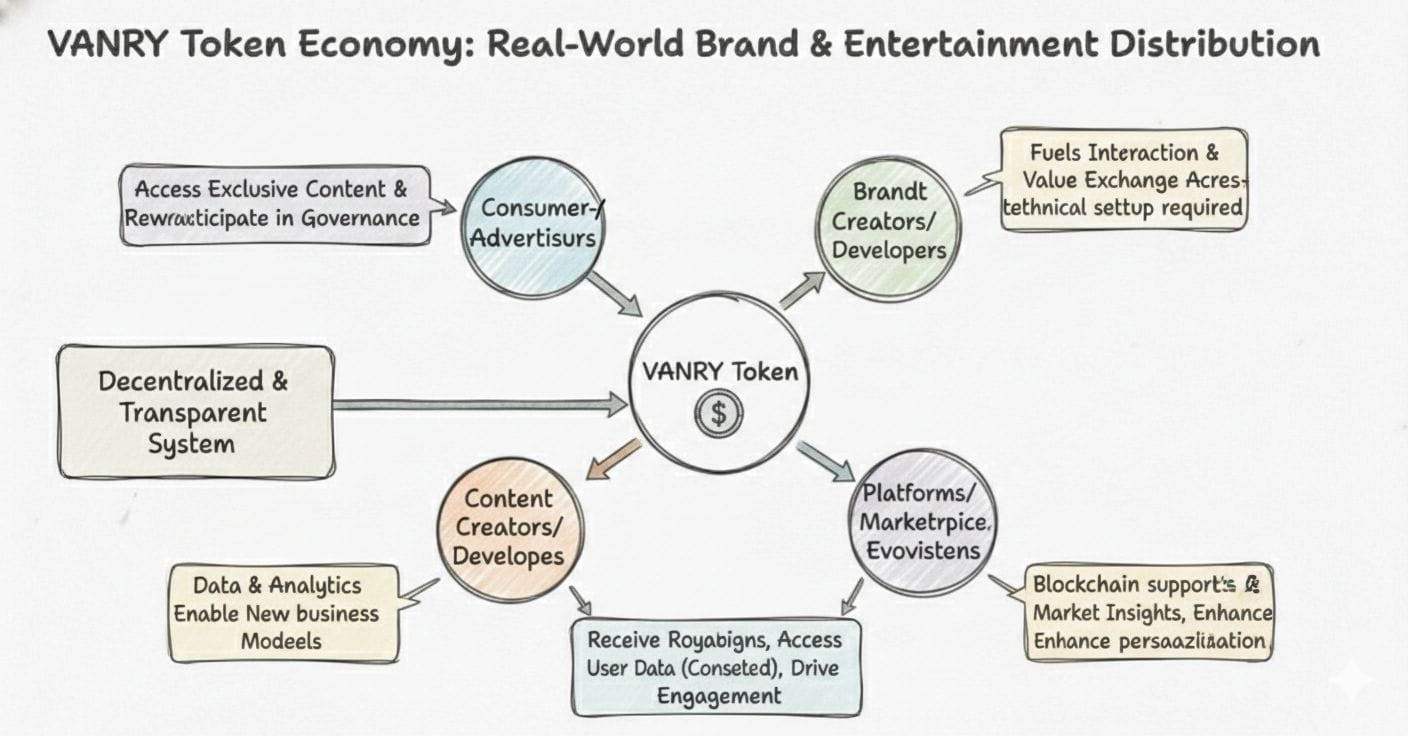 VANRY sits at Layer 3, enabling value transfer across the first two layers without breaking UX. If a brand launches a digital collectible, a game skin, a membership tier, a reward track, or a loyalty perk, VANRY operates as the neutral clearing mechanism.
This neutrality matters because culture markets require interoperability across many brands not one closed ecosystem.
Attention as Collateral: The Shift in Token Primitives
The breakthrough is recognizing that in consumer ecosystems, attention is collateral.
Brands pay for it. IP monetizes it. Platforms compete for it.
Traditional blockchains don’t know how to tokenize attention; they tokenize capital. VANRY bridges this by enabling attention-linked actions to settle through tokens without forcing users into speculative behavior.
Examples:
viewing a branded experience,
leveling in a game tied to IP,
unlocking digital perks,
redeeming loyalty tiers,
participating in campaigns.
These actions generate economic surface area without requiring speculation.
From Idle Tokens to Activated Tokens
Traditional tokens sit idle waiting for price movement. VANRY tokens activate during distribution cycles:
campaign activations,
brand launches,
IP expansions,
seasonal drops,
loyalty events,
metaverse integrations.
This mirrors how brands already operate:
seasons,
collections,
releases,
collaborations.
VANRY plugs into the cadence of culture, not the cadence of trading.
A Token Economy Designed for Non-Crypto Natives
Brands onboard users who: ✔ don’t self-custody,
✔ don’t trade tokens,
✔ don’t speculate,
✔ don’t bridge assets,
✔ don’t farm yields.
They want:
rewards,
identities,
status,
cosmetics,
perks,
ownership,
recognition.
These are cultural motives, not financial ones. VANRY abstracts the blockchain until it only expresses “value unlock,” not “financial complexity.”
If tokens force users to learn crypto, the model collapses. With VANRY, the token economy is invisible to the user but essential to the settlement path.
Liquidity Without Speculation: A Rare Property
Most token economies face a paradox:
Liquidity requires speculation,
but speculation destroys UX for non-financial users.
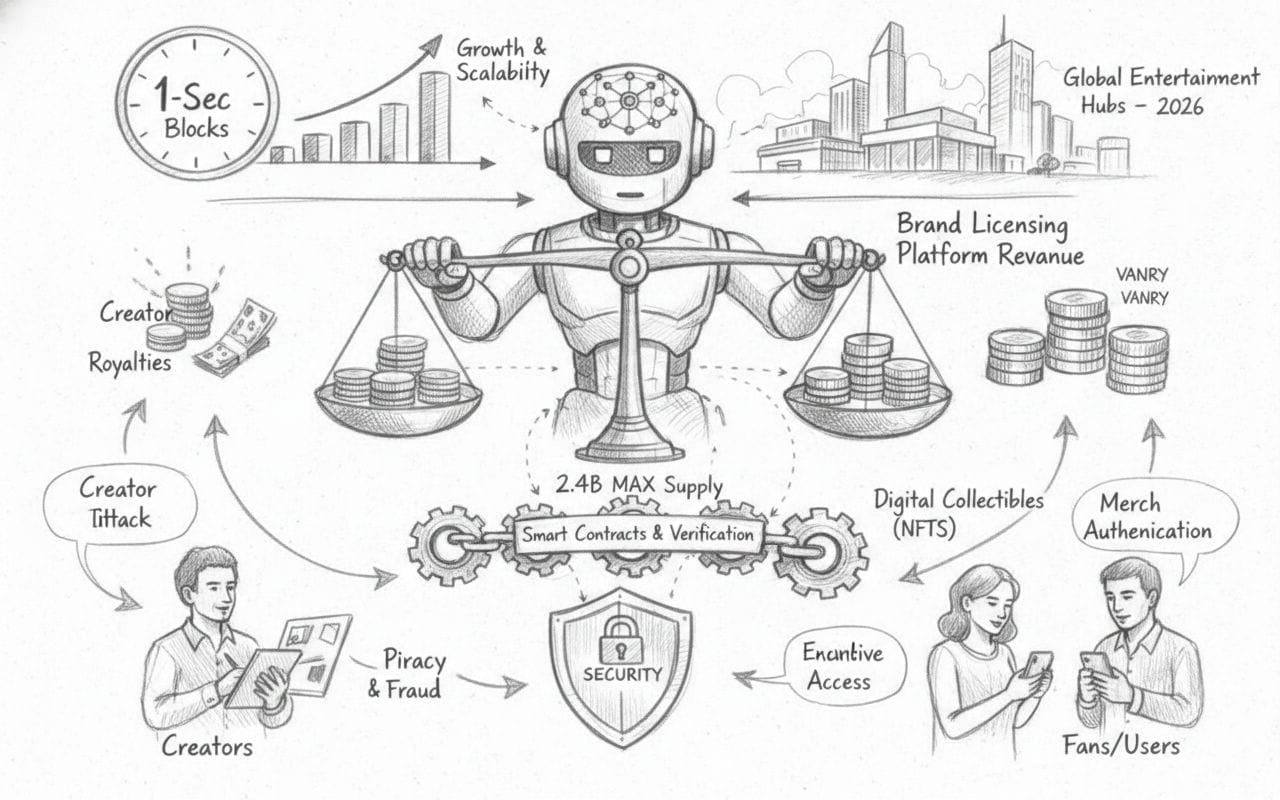 VANRY solves this by generating event-driven liquidity rather than speculative liquidity.
When brands launch campaigns, liquidity arrives through:
redemptions,
in-game purchases,
trading of digital assets,
reward distribution,
passes, tickets, memberships,
cross-IP collaboration perks.
This liquidity aligns to culture cycles, not market hype cycles.
Why This Matters Strategically: Vanar Is Building Export Infrastructure
Blockchains fail when they only import value (capital), not export value (products).
Games, entertainment and brands export value because IP travels across borders, cultures, and demographics.
VANRY enables the export of:
digital goods,
loyalty systems,
fan engagement economies,
cross-brand collaborations,
branded metaverse experiences,
and consumer digital identity.
This makes VANRY a token for distribution economies, not speculative markets.
The One-Line Summary
The VANRY token economy monetizes how culture is distributed, not how capital is traded enabling brands and IP to scale on-chain without forcing users into crypto behaviors.
That’s what makes it different, and that’s what makes it matter.