
Dusk Foundation has positioned itself as a core building block for bringing real world assets on chain in a way that institutions can actually use. What keeps catching my attention is how deliberately the network is designed around privacy and regulation at the same time. Instead of forcing banks and funds to choose between transparency and confidentiality, Dusk makes both possible through its base layer. In this deep dive, i walk through how the foundation supports real world asset issuance and trading, the key protocols that make it work, the partnerships pushing adoption forward, the lifecycle advantages for institutions, the economic incentives behind the system, and what all of this could mean as tokenized markets scale.
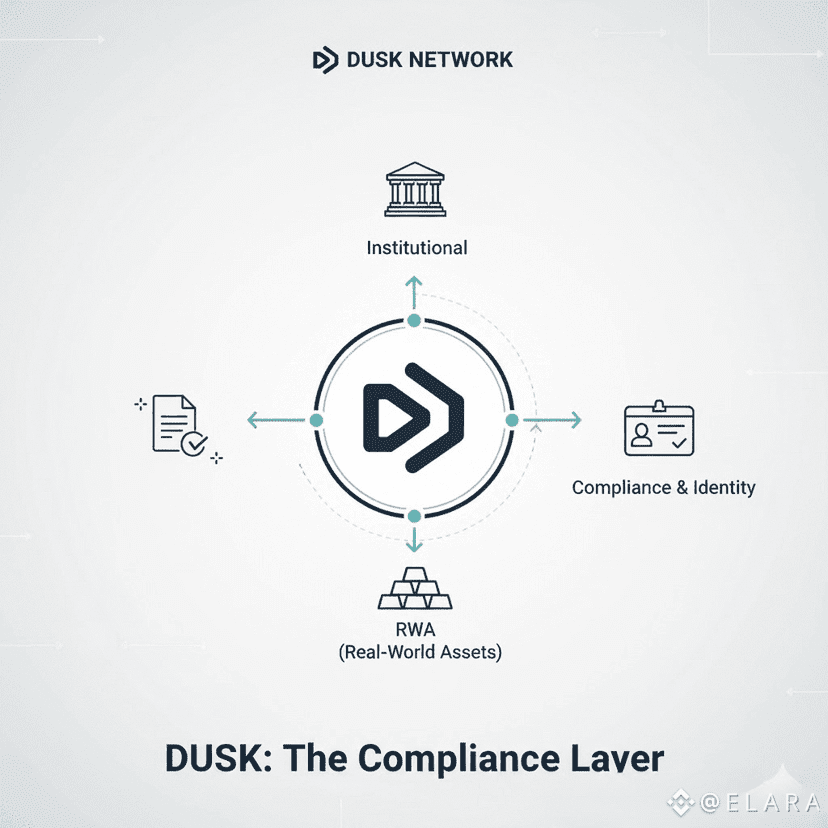 A Network Designed for Regulated Finance From Day One
Dusk Network supports the entire lifecycle of real world assets, from initial issuance to secondary trading and final settlement. Assets are issued as Confidential Security Tokens that carry legal ownership logic directly inside smart contracts. Unlike most public blockchains where balances and activity are visible to everyone, Dusk keeps ownership, transfers, and contract states private using zero knowledge proofs. At the same time, regulators and compliance teams can still verify what they need through selective disclosures.
The foundation provides all the core components to make this possible. The Dusk Virtual Machine executes contracts in a shielded environment. The consensus system finalizes transactions quickly and irreversibly. Citadel handles identity and compliance proofs without exposing raw personal data. Because of this setup, institutions can tokenize equities, bonds, real estate, or funds while automating dividends, lockups, and transfer rules, all while staying aligned with European regulatory frameworks. From my point of view, this feels like a system built with regulators and enterprises in mind rather than retrofitted after the fact.
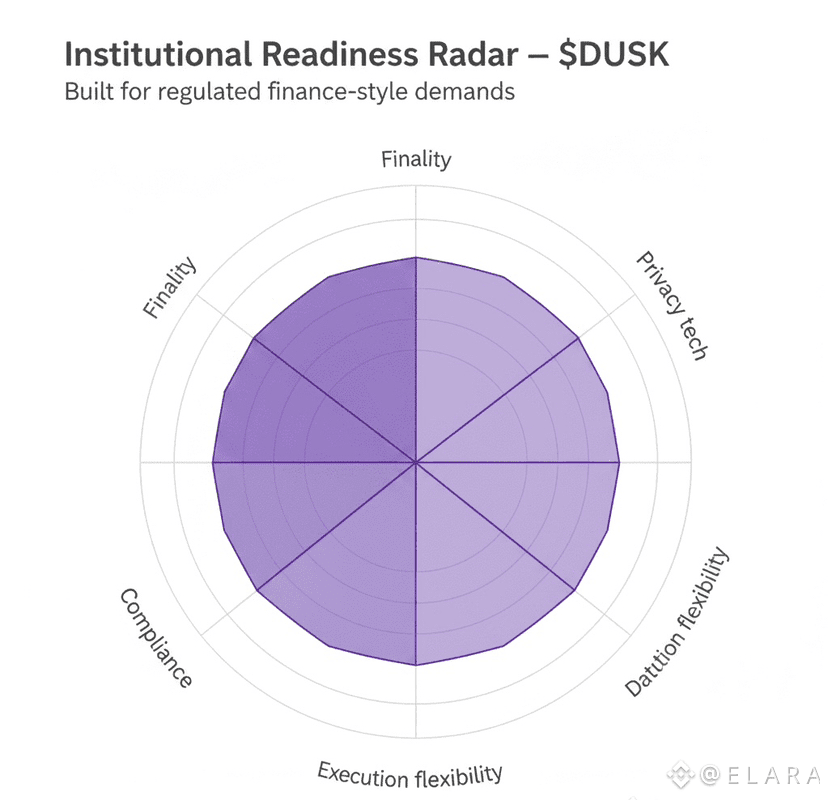 How Core Protocols Work Together in Practice
At the center of the real world asset stack are Confidential Security Tokens and Citadel. These tokens represent legal claims on off chain assets and include built in compliance logic. Fractional ownership, investor whitelists, vesting schedules, and clawback conditions can all be enforced privately but still verified when required.
Citadel complements this by managing identity checks through zero knowledge attestations. Users can prove things like residency or accreditation without revealing their full identity. This allows platforms to automatically restrict access to regulated markets while protecting user privacy. I see this as one of the strongest aspects of the system, because it mirrors how traditional finance controls information but replaces trust in intermediaries with cryptography. For high value assets where information leakage could be costly, this approach makes on chain markets realistic.
Partnerships Turning Theory Into Reality
Dusk Foundation is not building in isolation. It works closely with regulated exchanges and financial service providers to move from concepts to live deployments. Secondary markets for tokenized securities are being developed with licensed trading venues, targeting hundreds of millions in on chain volume. Stablecoin integrations simplify settlement and payouts, while banks are testing cross border payment and asset servicing workflows on top of Dusk.
These collaborations are already producing concrete use cases. Real estate firms are fractionalizing properties to widen access. Investment funds are automating revenue distribution. Asset issuers are gaining liquidity without relying on layers of intermediaries. From what i can see, the foundation plays an active role in shaping this ecosystem by providing tooling and guidance for developers building compliant applications.
Economic Design Aligned With Asset Activity
The DUSK token underpins everything happening on the network. It is used to pay fees for issuing assets, executing contracts, and processing transfers. Validators stake it to secure the network and process transactions tied to real world value. As activity grows, a portion of fees is burned, which gradually reduces supply and ties the token more closely to real usage rather than speculation.
Governance also runs through DUSK. Token holders can vote on protocol upgrades, including changes that affect how asset standards evolve or how compliance features are implemented. I like how this keeps the network adaptable as regulations change. Instead of hard coding assumptions, Dusk can evolve alongside the markets it serves.
Why This Approach Stands Out
Compared to traditional finance infrastructure, Dusk removes layers like central securities depositories and brokers by handling issuance, clearing, and settlement natively on chain. This reduces costs significantly and enables continuous trading rather than limited market hours. Compared to permissioned blockchains, it preserves decentralization. Compared to open public networks, it offers privacy and compliance as first class features.
Real estate is a good example. Fractional ownership becomes accessible to more participants, ownership records are provable, and compliance rules are enforced automatically. All of this happens without exposing sensitive financial data publicly. To me, this balance is what makes Dusk particularly compelling for institutions.
Looking Ahead as Tokenized Markets Grow
As real world asset markets continue to mature, the role of Dusk Foundation is likely to expand further. There is ongoing work around scaling, advanced compliance automation, and integration with emerging technologies to handle higher volumes and more complex assets.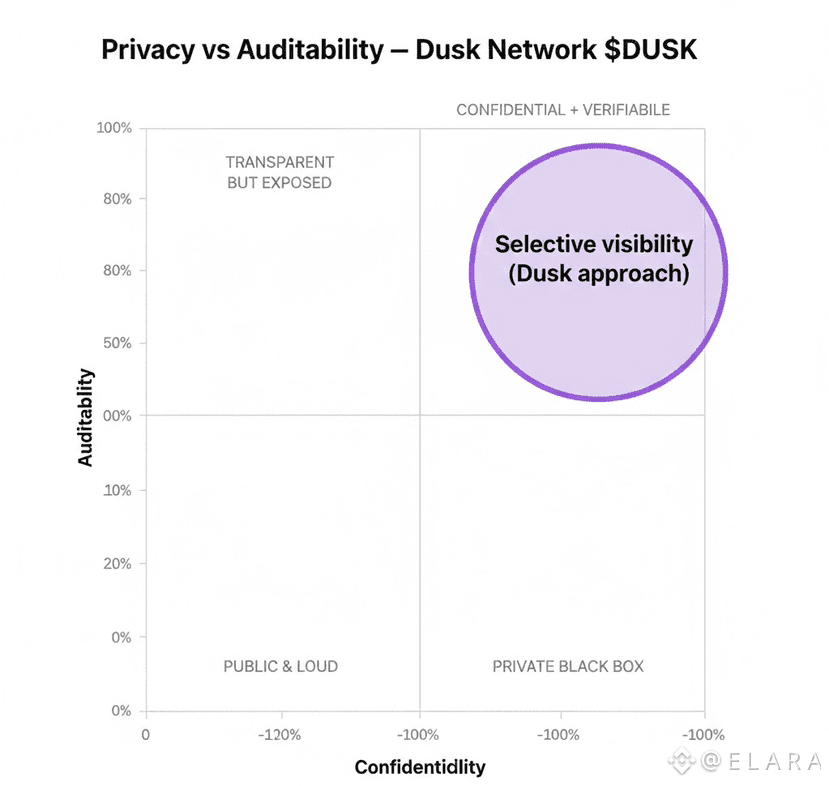
I see Dusk not just as a tool for tokenization, but as an attempt to redesign financial infrastructure around privacy by default. If trillions in traditional assets eventually move on chain, networks that respect both regulatory realities and decentralization will be essential. Dusk is quietly laying those rails, and it leaves me wondering what entirely new markets might emerge once real assets become programmable without being exposed.@Dusk $DUSK #dusk
