
@Vanarchain didn’t grab my attention the way most blockchain projects try to. There was no loud branding, no constant hype cycles, no aggressive claims about “changing everything overnight.” In an industry where noise is usually the main strategy, that quiet approach felt unusual. I spend a lot of time around crypto, especially gaming chains, and most of them introduce themselves before they’ve built anything meaningful. They tell you who they’re for, what they’re disrupting, and why they’re inevitable. Vanar Chain didn’t do that. It just kept working. And over time, that restraint became impossible to ignore.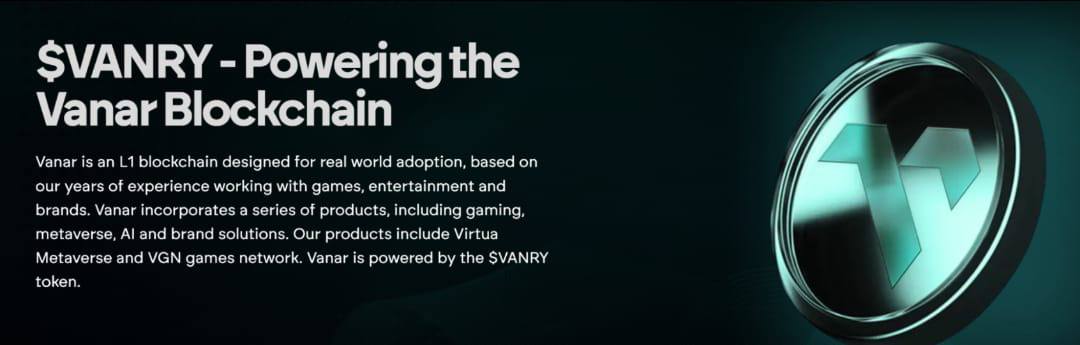
As I observed more closely, Vanar started to feel less like a product pitch and more like an extension of how digital worlds already function. It didn’t feel like a blockchain designed by people watching gaming from the outside. It felt like infrastructure created by people who understand how players behave, how studios operate, and how brands think in decades, not quarters. At first, everything blended together. Like many Layer-1 projects, the surface language sounded familiar: performance, scalability, ecosystem growth. But clarity arrived when I started noticing real integrations and working environments rather than abstract demos. Projects like Virtua Metaverse and the VGN Games Network weren’t just partnerships for marketing slides. They were signals of long-term direction.
What stood out most was what Vanar refused to force. There was no obsession with pushing NFTs, wallets, or tokens directly into gameplay just to justify being “on-chain.” Most gaming chains still believe visibility equals adoption. So they inject blockchain mechanics into menus, tutorials, and progression systems. The result is almost always friction. Players feel interrupted rather than empowered. Vanar takes the opposite approach. It focuses on how players, studios, and brands can exist on-chain without constantly being reminded that they are. The blockchain becomes infrastructure, not interface. That’s a harder problem to solve, and it doesn’t look impressive in pitch decks, but it’s the only model that scales in real consumer environments.
Even the VANRY token reflects this mindset. It doesn’t feel like the centerpiece of the ecosystem. It feels like a utility layer that keeps the system running. Fees, access, governance, and incentives are structured to support long-term activity rather than short-term speculation. In many projects, the token is the product. In Vanar’s case, the token is a tool. That distinction reveals a level of discipline that is rare in this market.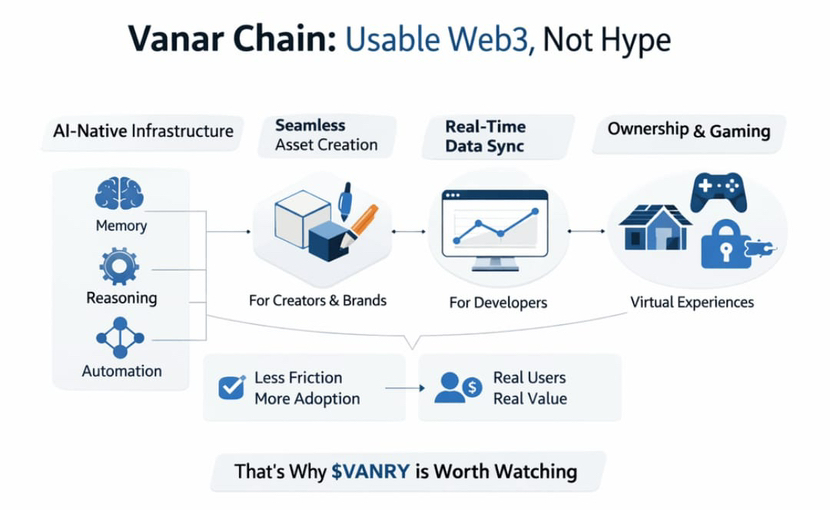
Where Vanar truly separates itself, however, is in how it treats behavior. Most digital systems treat user activity as temporary. You start a session, perform actions, and when you log out, context disappears. Intent resets. History becomes irrelevant. On Vanar, a session is not a sandbox. It is an interaction with state. And state remembers. Every finalized action becomes part of an ongoing record. Retries are not ignored. Repetition is not dismissed as noise. Patterns accumulate. Over time, behavior becomes structure.
This shift from “session-based” thinking to “state-based” thinking is subtle, but it’s profound. In traditional systems, success is measured by whether an action worked. On Vanar, the deeper question is whether it persisted. Persistence is where accountability begins. It’s where identity forms. It’s where reputation becomes meaningful. In gaming terms, this means progression, ownership, and interaction histories are not just stored temporarily on servers. They become part of an evolving digital reality that can be audited, reused, and built upon.
This philosophy becomes even more interesting when combined with Vanar’s approach to artificial intelligence. Early Layer-1 blockchains like Ethereum focused on decentralization and developer tooling. Newer high-performance chains like Solana prioritized speed and throughput. Both ecosystems host many AI-related projects, but neither was designed for AI workloads at the protocol level. Most AI computation, data storage, and model execution still happens off-chain, with blockchains acting as coordination layers.
Vanar represents a different design philosophy. Instead of treating AI as an external feature, it embeds intelligence into the core infrastructure. AI agents and models can run, interact, and update directly on-chain. They can be audited through smart contracts. They can be triggered automatically. They can evolve based on persistent state. This enables systems where intelligent agents respond not just to transactions, but to long-term behavioral patterns. According to industry benchmarks, off-chain AI pipelines can account for over 80% of operational complexity in decentralized applications. By reducing this dependency, Vanar lowers friction for developers building intelligent systems.
From a practical standpoint, this opens doors for advanced NPC behavior, adaptive game economies, automated moderation systems, and dynamic virtual environments. A persistent AI-driven economy, for example, can adjust supply, rewards, and pricing based on real user behavior stored on-chain. Player engagement data stops being disposable analytics and becomes functional infrastructure.
Still, none of this matters without execution. Philosophy alone does not build ecosystems. Infrastructure is only valuable if developers use it to create experiences people genuinely want to spend time in. Interesting demos cannot sustain long-term activity. Studios must deliver compelling gameplay. Communities must form organically. Brands must see measurable value. Without that, even the most elegant architecture becomes irrelevant.
That’s why I remain cautious. I’m impressed by the design logic. I respect the restraint. I see the technical ambition. But adoption is the final test. Gaming history is filled with brilliant platforms that never found their audience. Vanar will not be judged by whitepapers or roadmaps. It will be judged by worlds that feel alive, economies that function naturally, and communities that stay long after incentives fade.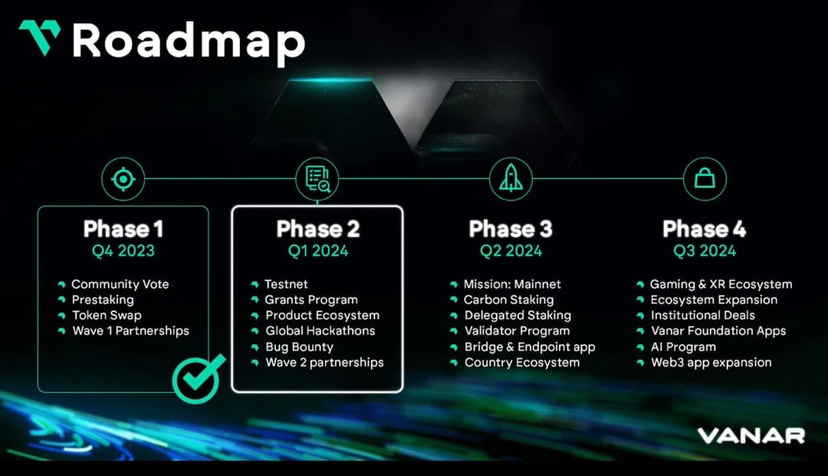
What makes me keep watching is that Vanar doesn’t appear obsessed with out-scaling everyone. It isn’t trying to replace Ethereum as a general-purpose settlement layer. It isn’t trying to beat Solana on raw speed. It’s trying to redefine what an intelligent, persistent, behavior-aware blockchain looks like. It’s building systems where digital actions accumulate meaning over time. Where history matters. Where interaction becomes identity.
In a market driven by short attention spans and rapid narratives, sustained focus is rare. Vanar has earned mine not through promises, but through structure. Not through noise, but through design. I’m not fully sold yet. But I’m paying attention. And in this industry, that’s usually the first sign that something is being built for the long run.