What is Vanar?
Vanar Group is a Web3-focused ecosystem builder designed to bridge blockchain technology with real-world utility. It aims to combine entertainment, gaming, AI, and decentralized finance into one scalable infrastructure.
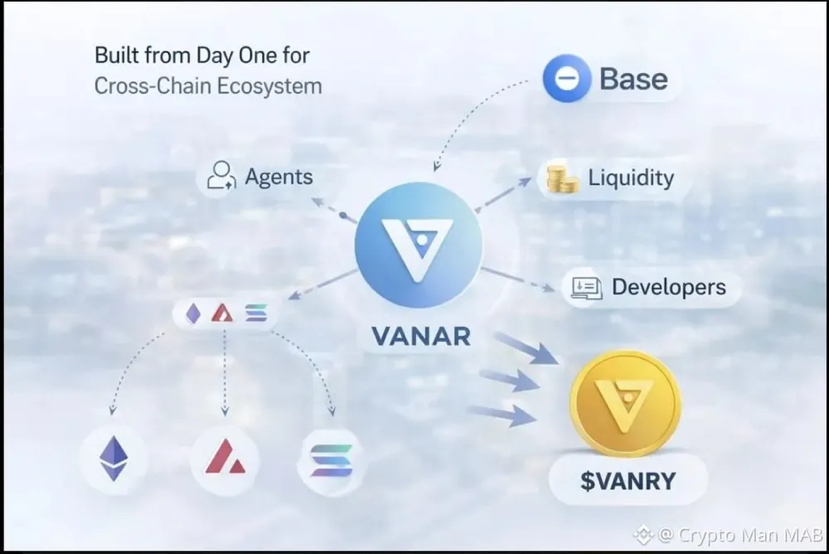
At the core of this ecosystem lies Vanar Chain, a high-performance blockchain built to support:
Fast transactions
Low fees
Gaming & Metaverse applications
Enterprise-grade security
Cross-chain interoperability
VANAR Coin (VANRY): The Fuel of the Ecosystem:
VANAR Coin (VANRY) powers the entire ecosystem. It is used for:
Gas fees & transaction payments
Staking & validator rewards
Governance voting
Ecosystem incentives
NFT & gaming transactions
Why VANRY Stands Out:
Utility-Driven Tokenomics – Not just speculative, but ecosystem-backed.
Scalable Infrastructure – Built for mass adoption.
Gaming + AI Integration – Targets fast-growing digital industries.
Community Incentives – Designed for long-term holders.
Market Strategy Breakdown:
Accumulation Strategy:
Investors often accumulate during consolidation phases near strong support zones.
Watch volume spikes
Track on-chain activity
Monitor ecosystem announcements
Breakout Strategy:
When VANAR breaks resistance with high volume:
Confirm trend strength
Avoid fake breakouts
Set clear stop-loss levels
Long-Term Holding (HODL Strategy):
For believers in ecosystem growth:
Stake tokens
Participate in governance
Benefit from ecosystem expansion
Growth Potential Factors:
Ecosystem Expansion:
More partnerships = higher token utility.
Gaming & Metaverse Focus:
Blockchain gaming adoption continues to grow globally.
Strategic Partnerships:
Enterprise collaborations can drive institutional trust.
Cross-Chain Compatibility:
Interoperability increases liquidity and adoption.
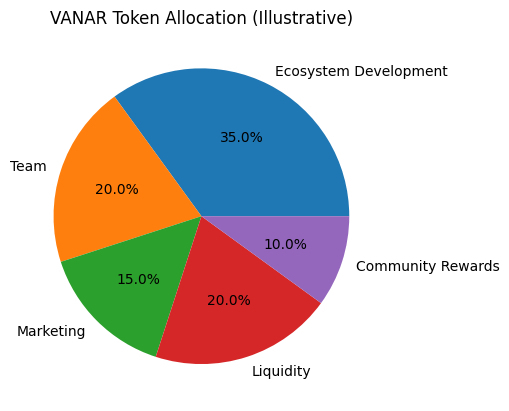
Tokenomics Snapshot (Illustrative):
The ecosystem allocation model generally focuses on:
Large portion for ecosystem development
Strong liquidity provisioning
Sustainable marketing and team incentives
Community reward mechanisms
Balanced token distribution is crucial for long-term sustainability.
Risk Factors to Consider:
Market-wide crypto volatility
Regulatory changes
Competition from other Layer-1 blockchains
Token inflation pressure
Adoption delays
High-reward ecosystems often come with high volatility
Advanced Market Strategy Framework:
Phase 1: Early Accumulation:
Usually occurs during:
Market fear cycles
Low volume sideways trends
Broader crypto downturns
Smart investors analyze:
On-chain wallet growth
Ecosystem partnership announcements
Token unlock schedules
Phase 2: Narrative Expansion:
Price momentum often builds when:
New gaming or AI partnerships are announced
Exchange listings increase liquidity
Broader Web3 adoption trends return
Narrative alignment is critical — projects linked to AI + Gaming tend to attract stronger retail momentum.
Phase 3: Liquidity Surge:
When strong volume enters:
Breakouts above resistance confirm trend strength
Higher highs + higher lows structure forms
Institutional attention may increase
At this stage, disciplined profit-taking becomes important.
Competitive Advantage Factors:
Scalability Edge:
Fast confirmations are essential for gaming and NFT use cases.
Cross-Industry Appeal:
Combining AI + Gaming + DeFi broadens target markets.
Enterprise Orientation:
If enterprise use cases scale, this reduces reliance on speculative retail investors.
Governance Participation:
Staking models encourage long-term holding rather than short-term flipping.
Growth Catalysts to Watch:
Major gaming studio integrations
AI infrastructure collaborations
Institutional partnership announcements
Developer ecosystem growth rate
Total Value Locked (TVL) expansion
Active wallet address growth
These metrics often precede major price shifts.
Smart Investor Checklist:
Before investing or trading:
Understand token supply dynamics
Track vesting schedules
Analyze liquidity depth
Avoid overexposure to one asset
Study macro crypto cycle
Long-Term Outlook Narrative:
If the ecosystem successfully:
Expands developer adoption
Builds real gaming ecosystems
Integrates AI tools
Maintains strong liquidity
Then VANAR could transition from a speculative asset to an infrastructure-level digital economy player.
Risk Factors to Consider:
Market-wide crypto volatility
Regulatory changes
Competition from other Layer-1 blockchains
Token inflation pressure
Adoption delays
High-reward ecosystems often come with high volatility.