
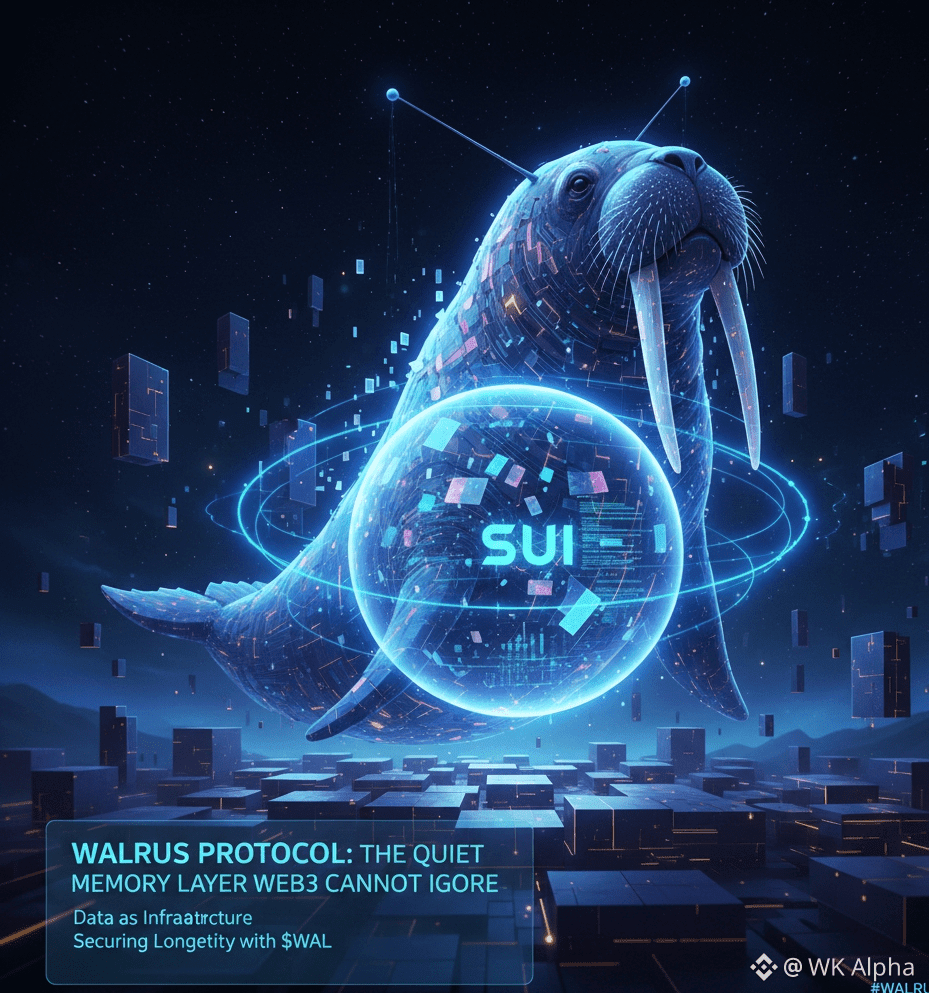
Late hours again flipping through explorer data and recent Sui posts and the pattern stands out clear blockchains nail instant verifiable changes but let the underlying information drift toward fragility or central control. Walrus addresses this overlooked strain by existing as the layer that makes data stick without forcing everything onto the chain itself. It uncovers how much of Web3's promise has rested on temporary fixes rather than built-in endurance for the blobs that actually power real applications.
THE REAL PROBLEM
Execution layers thrive on small replicated state yet collapse under the load of large unstructured files where replication costs explode and availability becomes probabilistic at best. Onchain storage for anything substantial remains inefficient pushing projects toward centralized providers that reintroduce single points of failure and remove the sovereignty blockchains were built to deliver. The divide is technical and persistent leaving data provenance and long-term access as afterthoughts in systems that demand both.
WHAT WALRUS IS
Walrus functions as a decentralized storage and availability protocol that applies erasure coding to distribute blob shards across nodes keeping redundancy low around four to five times the original size for practical efficiency. It secures durability with cryptographic proofs and ongoing node challenges verifying possession without full data pulls. The engineering centers on reliable long-term retention as shown in the ongoing Tusky migration support extended through January 19 2026 where users shift files to Walrus blobs for continued decentralized access.
WHY SUI MAKES SENSE
Sui's object-centric approach already models resources as programmable and owned which fits Walrus blobs as attestable objects carrying onchain metadata and availability proofs. Sui coordinates governance payments and logic while Walrus manages the distributed heavy lifting preventing bloat in the execution path. This mutual fit shines in integrations like Seal whitepaper released January 8 2026 where Walrus stores encrypted payloads allowing privacy-preserving AI and compute to reference verifiable data seamlessly.
DATA AS INFRASTRUCTURE
Data persistence should operate as core protocol duty with mechanisms enforcing it over epochs rather than optional tooling. Walrus implements this through staking-driven node duties reward distributions for uptime and penalties for lapses creating sustained reliability. With integrations like Seal for programmable access and ongoing migrations it positions information as dependable infrastructure essential for AI agents and beyond.
ROLE OF WAL
WAL anchors the system structurally handling storage payments node staking and governance votes on parameters like epoch settings or fee adjustments. Fees spread across time to operators and stakers maintaining predictable costs while usage mechanics add alignment without speculative dominance. The token's role ties directly to network demand and security keeping it grounded in utility.
WHAT WALRUS IS BECOMING
Walrus steps aside from direct rivalry with clouds or broad execution chains instead solidifying as the memory foundation decentralized AI privacy layers and data markets increasingly require for verifiable longevity. As Sui Stack components like Seal evolve alongside it supports cross-ecosystem flows where data endures with provenance intact. In these still moments @WalrusProtocol seems to be the understated piece that lets everything else actually last.

