I’ve always wondered what it feels like to truly own my digital life. Every photo, video, and piece of data we store online is often sitting in servers we don’t control, behind walls we can’t see. That’s what makes Walrus feel so refreshing. It’s not just another cryptocurrency. It’s a platform built to give people control, privacy, and freedom over their data. It feels personal because our data is personal, and for the first time, someone is treating it that way.
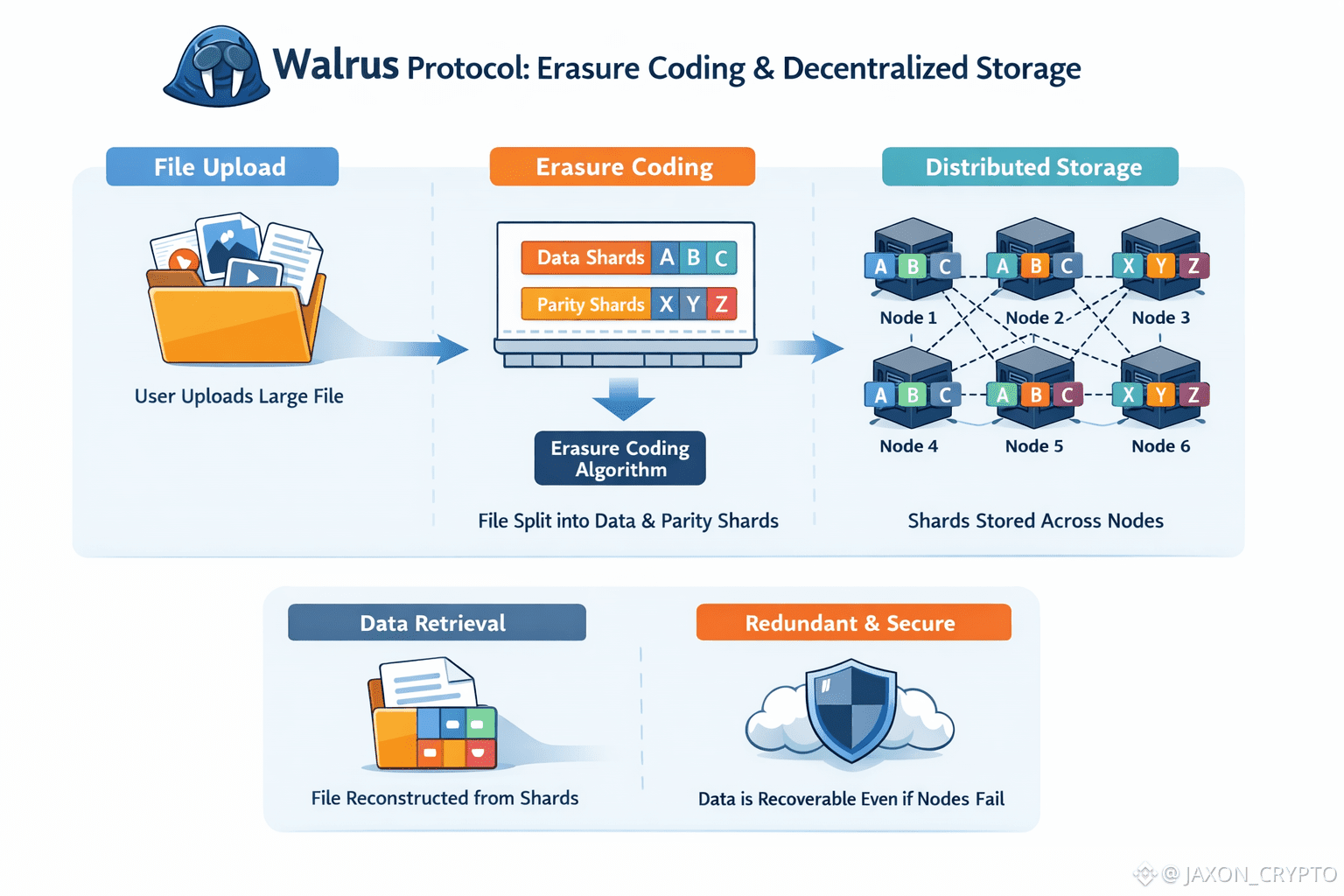
Walrus runs on the Sui blockchain and is designed to make storage and transactions decentralized, secure, and private. The team behind it wants our data to belong to us and to be usable in ways that feel natural and safe. The platform splits files into fragments and distributes them across multiple nodes using advanced erasure coding and blob storage techniques. This ensures that even if some nodes go offline, your files remain recoverable. For someone like me, who has memories and projects I want to protect, it feels like a promise rather than just a technical feature.
The WAL token is at the heart of the system. People use it to pay for storage, stake in the network, and participate in governance. Payments are designed to stay fair even if the price of WAL fluctuates. Node operators earn rewards for maintaining the network, and the community has a real say in shaping how the system works. This makes participation feel meaningful. It’s not just about owning a token; it’s about being part of a movement that values privacy, freedom, and decentralization.
What makes Walrus special is how accessible it is for developers. They provide clear APIs and SDKs so apps, AI tools, or creators can easily store and retrieve large files without the usual headaches of decentralized systems. If you’re a developer, it feels like you’re finally building on something reliable, scalable, and future-ready. The network is designed to be cost-efficient, censorship-resistant, and capable of supporting enterprise-level workloads while remaining accessible to individuals.
Of course, there are risks. Operating a decentralized network at this scale is complex. Bugs, token volatility, and adoption challenges are real. Regulatory and legal questions may arise as more data moves across borders. But the Walrus team has approached these challenges deliberately, building testnets, documenting systems, and rolling out mainnet operations carefully. That gives me confidence that this is a project meant to last, not just an experiment.
The roadmap shows steady progress, from research to testnet and now live deployments. The project continues to expand tools for developers, integrate more storage nodes, and build incentives that align long-term usage with network stability. If you care about your privacy, control, and the future of digital freedom, this is a project worth following. WAL is listed on Binance, which makes participation and trading convenient, giving users confidence in liquidity and access.
I’m inspired by Walrus because it’s more than technology. It’s a vision where our data belongs to us, privacy is real, and digital freedom is possible. They’re building a future where we can store, share, and use our information safely, knowing that control is finally in our hands.