
Security in decentralized systems is often discussed in terms of cryptography alone. While cryptographic strength is essential, it is not sufficient. Walrus Coin approaches security as a holistic concept that includes economic incentives, network design and human behavior. That broader perspective is what makes it compelling to me.
One of the key ideas behind Walrus is minimizing trust assumptions. Instead of expecting participants to behave honestly by default, the system is structured so that honest behavior is the most economically rational choice. This alignment between incentives and security is something I deeply respect because it acknowledges human nature rather than denying it.
Walrus also treats data security as inseparable from data availability. A system where data exists but cannot be accessed reliably is just as flawed as one where data can be altered. By distributing data fragments across multiple participants, Walrus reduces the risk that any single failure or attack can compromise the system.
From my point of view, this design reflects a mature understanding of threats. Attacks don’t always come from external actors; they can also emerge from economic pressure, negligence or shifting incentives. Walrus anticipates these risks rather than reacting to them after damage is done.
I also appreciate that Walrus avoids overcomplicating security with unnecessary features. Complexity often introduces new vulnerabilities. By focusing on core principles, redundancy, verification and incentive alignment, the system achieves robustness without excessive fragility.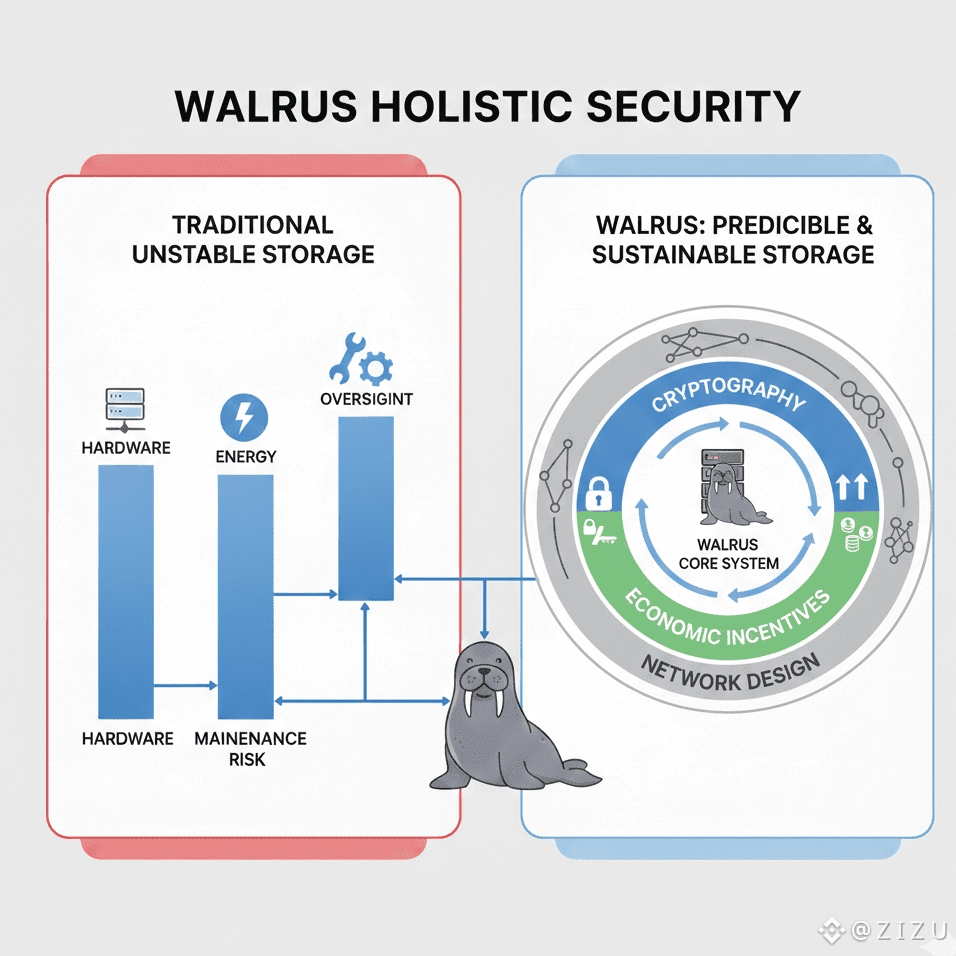
Personally, I believe true security is quiet. When systems work as intended, nobody notices. Walrus Coin seems to aim for that kind of security: not dramatic but dependable. In an ecosystem where security failures can erase years of trust overnight, this philosophy feels both rare and valuable.

