

Anyone who has traded through a market outage understands the real damage is not the downtime itself. It is the uncertainty that lingers afterward. Orders may or may not have landed. Records may or may not be final. Trust becomes the missing asset. In distributed systems, that same uncertainty has a name: Byzantine faults. This is the scenario where parts of the system do not simply go offline, but actively misbehave. They can lie, collude, send conflicting data, or try to confuse recovery. For storage infrastructure, this is the hardest problem to solve, and also the most important. Walrus is built around a clear premise: storage only matters if it behaves like a settlement layer, not a best-effort content server. Everything in its design flows from that assumption.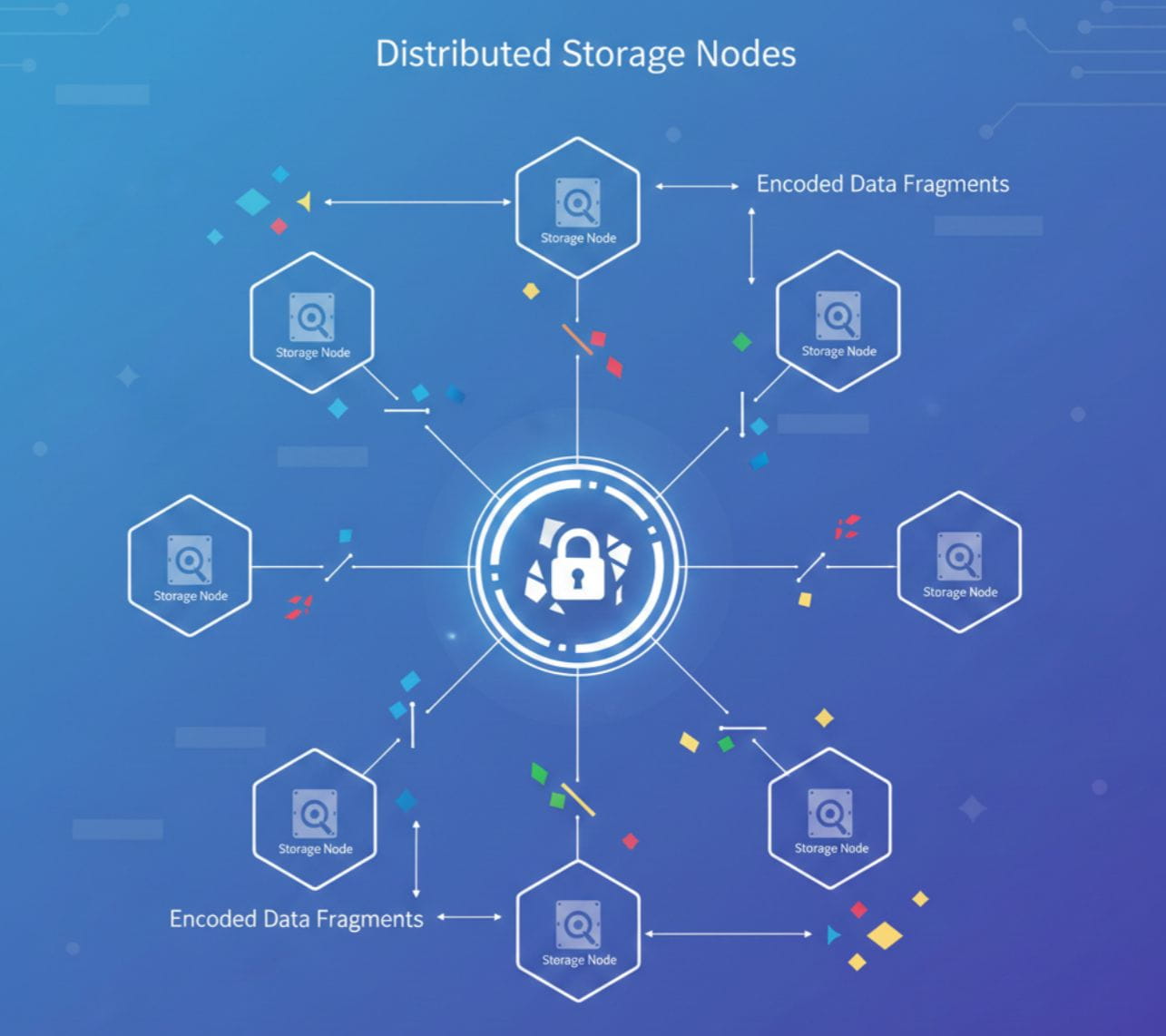
At its core, Walrus is a decentralized network for storing large, unstructured files, often called blobs. Instead of relying on full copies of data scattered across many nodes, which is costly and inefficient, Walrus uses erasure coding. The idea is simple to explain. Imagine tearing a document into many pieces, then adding extra pieces created through math. Even if some original pieces go missing, the document can still be reconstructed. Walrus takes this a step further with a two-dimensional approach known as Red Stuff. This method spreads risk across rows and columns of encoded data, so recovery does not depend on any single group of nodes behaving well. The result is high resilience without the overhead of storing full replicas everywhere. In practical terms, this means the network aims to stay durable even when a meaningful portion of participants fail or act dishonestly.
What makes this design more than just clever math is the control plane. Walrus uses Sui as its coordination layer. This is where rules live, proofs are checked, and behavior is enforced. Storage nodes do not simply promise to hold data. They must continuously prove that they still have it. These proofs are tied to protocol rules, staking, and rewards. If a node underperforms or acts dishonestly, penalties are not social or reputational. They are economic. This matters because Byzantine environments are not theoretical. Real money changes incentives. When rewards are real, so are attempts to cheat. Walrus does not assume goodwill. It assumes rational actors and designs around that reality.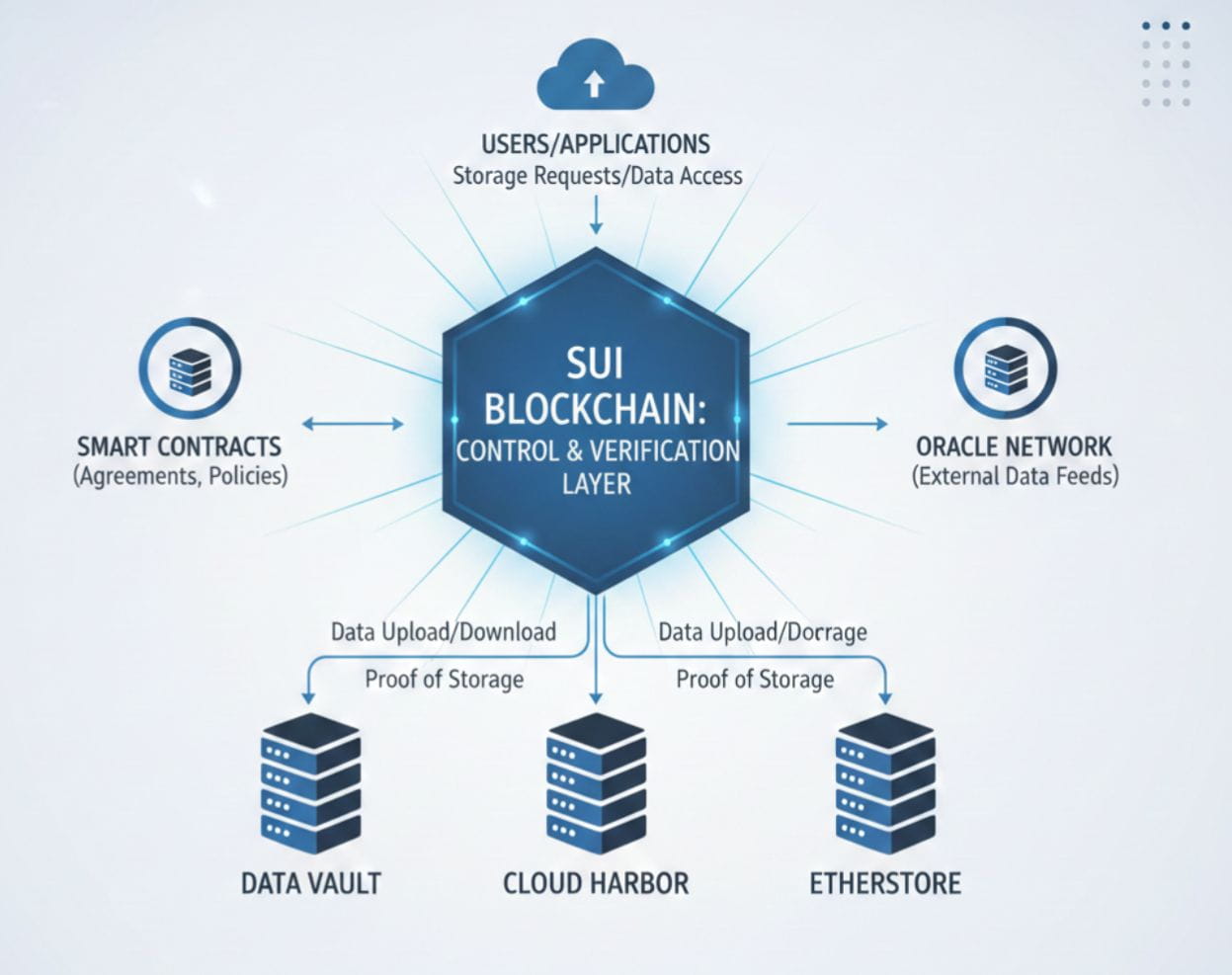
This is where WAL, the token, becomes more than a narrative asset. In Walrus, WAL functions as part of the security budget. Staking and rewards are not add-ons. They are central to keeping honest storage online over long periods of time. Storage is not a one-time event. It is a commitment that must be maintained day after day. If incentives weaken, retention weakens. If retention weakens, security breaks. Walrus is explicit about this chain. The network’s architecture is designed to attract a large and economically motivated set of providers so that dishonest actors never gain meaningful influence. In other words, Byzantine fault tolerance is not only achieved through cryptography, but through sustained economic pressure that favors honest behavior.
For anyone evaluating storage infrastructure, this framing changes the questions that matter. Instead of asking how exciting the story sounds, it is more useful to ask how the system behaves under stress. How does it handle churn when nodes come and go? How quickly can lost fragments be repaired? Are proofs frequent and verifiable? Are penalties applied when promises are broken? Walrus puts these issues front and center by design. Its use of erasure coding reduces repair costs. Its proof systems create accountability. Its integration with Sui makes enforcement visible and programmable. None of this guarantees perfection, but it does show a serious attempt to treat storage as critical infrastructure rather than a marketing concept.
The broader takeaway is simple. Storage tokens should be viewed like infrastructure balance sheets. The real value sits in retention, enforcement, and incentives that hold up over time. Price moves faster than trust, but trust is what keeps demand alive. Walrus is built on the idea that security failures do not fade slowly. They break suddenly. By focusing on Byzantine fault tolerance as both a technical and economic problem, it positions storage as something closer to settlement than caching. For investors, builders, and users alike, that shift in mindset may matter more than any short-term metric.

