
How Is Vanar’s Modular L1 Creating the Building Blocks for Mass Adoption?
@Vanarchain Modular Layer 1 is a change in how blockchains are made for people to use in everyday life. Normally all applications have to follow the rules and use the same system.. Vanars Modular Layer 1 is different. It breaks down the layer into smaller parts that can be put together in different ways. This means that developers and companies and people who make things can pick and choose what they need from Vanars Modular Layer 1.. They can still be sure that Vanars Modular Layer 1 is safe and not controlled by one person or group. Vanars Modular Layer 1 is, like a box of blocks that people can use to build what they want.
At the heart of Vanars design is an idea: Vanar separates the different jobs that need to be done. Vanar breaks down these jobs into three parts: consensus, execution, data availability and application logic. By keeping these parts separate Vanar does not have the problems that other systems have.
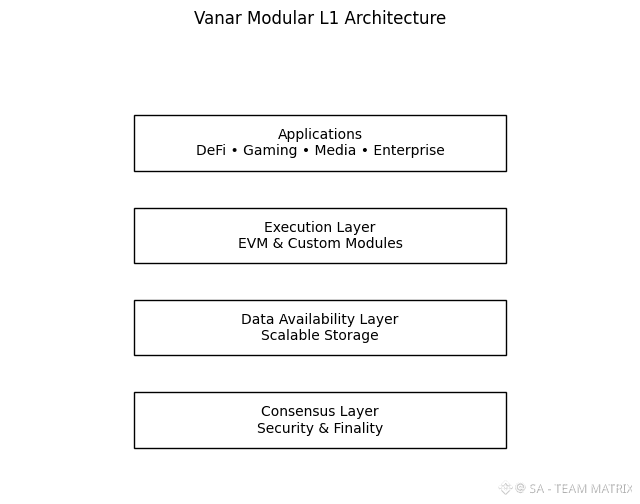
Vanars execution environments can. Improve on their own. The consensus part of Vanar can stay stable. Work well. The data layers of Vanar can also. Get bigger without causing problems. This way of designing Vanar is very important for applications that a lot of people use. For these applications it is more important that Vanar works well and can be trusted than having new and experimental features. Vanars design is good, for applications where performance is key.
Vanars modular L1 is really good for developers. It makes it easy for them to work with. The fact that it is compatible with EVM means that teams can use the contracts and tools they already have without a lot of trouble. They can also add modules if they need to.
Developers have a lot of options with Vanars L1. They can use the way of doing things for things like DeFi and NFT. They can add special modules for things like gaming and media and applications that use AI.
This makes it easier for developers to get their projects done quickly. It also costs less to try things with Vanars modular L1. Vanars modular L1 is, about giving developers the freedom to choose how they want to work.
Vanar is really good for companies because it is modular. This means companies can be sure that things will work the way they are supposed to. Vanar has parts that help with following rules, like who can do what and how things are done. These parts can be added to Vanar without causing problems for the system.
Companies can do what they need to do to follow the rules and work well. They can still use the shared part of the system that everyone uses. This is important because it helps organizations and well known brands feel comfortable using Web3. Vanar helps these companies balance being open with being in control which's really important, for Web3.
The thing that really matters for Vanar to be widely used is that people have an experience with it. Vanar takes care of this problem at a level. It has a system for fees that can be changed and it can also hide the complicated parts of the blockchain from the people who are using it. This means that when people make transactions with Vanar it can feel like it is happening away and it is easy to understand. This is really important for people who're not good with technology. Vanar also helps by allowing applications to pay the fees, for the users or by using payment methods. This gets rid of one of the problems that stops people from starting to use Vanar.
Vanars modular L1 is made to last. It is designed to be strong and able to handle problems. When new technologies come out Vanars modules can be. Replaced without having to change the entire system. This means Vanars modular L1 can handle rules, new laws and new things that people want. Vanars modular L1 is ready, for the future because it can adapt to standards, new regulatory frameworks and new consumer behaviors. Vanars modular L1 is built to be flexible and to keep working over time.
By treating blockchain infrastructure as a set of composable building blocks Vanar positions itself as a foundation for mass market Web3. It is not just another L1 competing on raw throughput but a flexible platform built to scale with real world demand and evolve alongside the applications it supports.
