
Two receipts point at the same Plasma transaction.
Same tx hash. Same amount. Same sender. Different timestamps in the footer, different internal references up top. Both look official enough that nobody wants to be the first person to say one of them shouldn’t exist.
The payment itself is already old news.
USDT already moved, gasless, relayer acked it, PlasmaBFT stamped it, and you’re late by the time you finish rereading the hash. Balance updated before anyone finished refreshing the dashboard. No argument available. The truth is finished.
The paperwork isn’t.
The first receipt shows up almost immediately after Plasma stablecoin payment settlement. Lightweight. Minimal fields. It grabs what was available at the moment finality landed and writes it down before anything else has time to settle into place. Clean. Sparse. Technically accurate.
Then the second one arrives.
Later. Not hours later. Just a beat later. It carries more context. Tax metadata that wasn’t ready before. A different internal reference because the enrichment job restarted. Same tx hash, but the “receipt_id” string is different, and the VAT field flips from blank to filled.
Nobody’s doing anything malicious. Nothing is “broken” in the way people like. It’s just time behaving badly across systems that still expect a soft window.
Support doesn’t notice. Customers don’t either, at first. Both receipts confirm what they care about: money left, payment worked. That’s enough until it isn’t.
Accounting is where it snaps.
Two documents. One transaction. Two flows. One already attached to a daily export. The other sitting in a queue that only gets checked when reconciliation feels off. Same PlasmaBFT finality timestamp staring back from both, daring someone to explain why they disagree on everything else.
Which one is real.
Nobody answers immediately because both are real in the only way Plasma cares about. Plasma already gave you the only immutable thing: the PlasmaBFT finality timestamp on that tx hash. Everything after that is your stack trying to finish a sentence after the ledger already stopped moving.
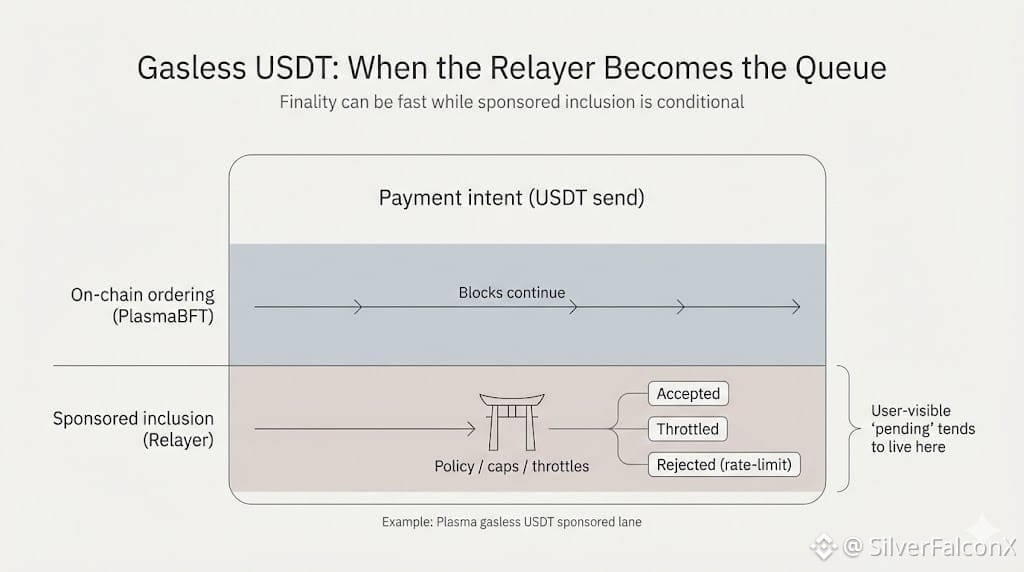
The Plasma's relayer ack is clean. The tx hash exists once. PlasmaBFT recorded it and moved on. No ambiguity there.
The ambiguity is the stuff you tried to attach later.
Receipt one ships before enrichment is ready. Receipt two ships after enrichment retries. Same truth. Two wrappers. And now you get to pick which wrapper is “official.”
So now you’re staring at timing artifacts like they’re compliance events.
Accounting traces it. Finality timestamp first. Receipt one lands almost immediately. The second lands a beat later—still “fast” to a human, late to a pipeline. Both valid. Both signed. Both pointing at the same Plasma truth, but disagreeing on the parts auditors actually read.
Someone suggests deleting one. Someone else asks which system gets blamed if they pick wrong. Another person points out that one already fed a file that went out of the building. Regulator-adjacent. The room goes quiet, then busy, then quiet again.
And the rule that gets typed into the runbook isn’t elegant.
“Canonical receipt = latest enriched version. Earlier receipt must be annotated. Do not resend exports.”
Manual note. Manual justification. A checkbox nobody wanted.
On a stablecoin-first rail like Plasma, the payment layer is the easy part; the meaning layer is where you bleed.
Meanwhile payments keep flowing. Plasma Network Gasless USDT keeps moving. PlasmaBFT keeps closing blocks.
It works on paper. It also guarantees you’ll see this again.
In the reconciliation sheet, both receipt IDs stay there, side by side, waiting for the next person to ask why the same tx hash needed two stories.