@Vanarchain The intersection of artificial intelligence and decentralized networks is reshaping the way digital infrastructure is built and managed. For years, blockchains prioritized decentralization—censorship resistance, trustless operations, and open access—while AI developed mostly in centralized systems, relying on massive servers, proprietary data, and opaque algorithms.
A new model is emerging: decentralized infrastructure designed to work hand-in-hand with AI. In this approach, blockchain provides transparency, neutrality, and verifiable processes, while AI brings automation, adaptability, and intelligence. This isn’t theoretical—enterprises, governments, developers, and users increasingly demand systems that are intelligent, scalable, auditable, and globally accessible.
@Vanarchain is an example of this trend. Modern infrastructure is no longer just for moving tokens or executing contracts; it now serves as a foundation for AI-powered applications, dynamic data management, and real-world services. Success will be measured not by ideology, but by the network’s ability to handle intelligent, autonomous operations.
Traditional blockchains are deterministic, excelling at enforcing rules and maintaining consensus—but they cannot adapt on their own. AI-backed networks change this, turning static ledgers into responsive platforms. AI interprets complex inputs—user behavior, environmental data, or market trends—while decentralized networks ensure accountability, transparency, and verifiability.
Centralized AI carries risks: opaque decisions, concentrated power, and single points of failure. By anchoring AI to decentralized layers, processes can be audited, data usage verified, and outcomes remain trustworthy. Unlike systems that bolt AI on top, AI-native infrastructure integrates intelligence at the core, supporting real-time interactions, autonomous agents, and adaptive marketplaces.
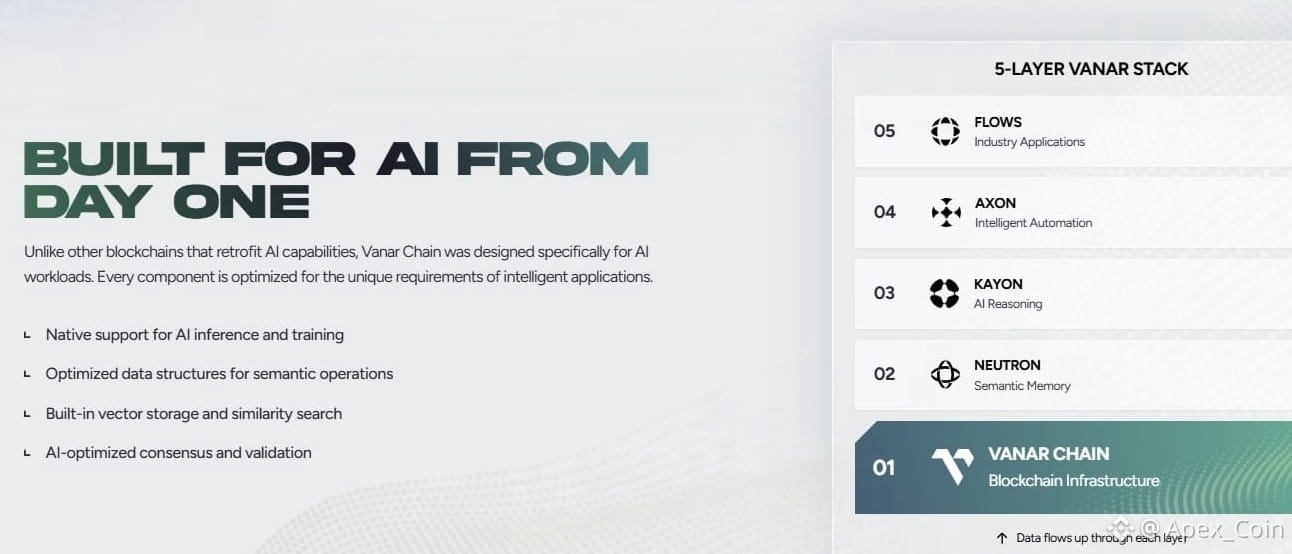
Data becomes the key asset. Decentralized networks enable secure data sharing, provenance tracking, controlled access, and privacy-preserving coordination. Contributors, developers, and AI model creators can collaborate under transparent, programmable rules, unlocking new economic and organizational models.
AI-driven automation is another game-changer. Networks can monitor conditions, assess risks, and act autonomously while decentralized consensus ensures accountability. From finance to logistics and public services, operations become faster, smarter, and more reliable. Governance evolves too—AI enables data-informed decisions, simulations, and measurable outcomes, reducing dependence on speculation or centralized control.
For institutions, AI-powered decentralized infrastructure combines the efficiency of AI with the trust, auditability, and resilience of blockchain. Incentives are tied to network performance and contributions rather than speculation, making these networks sustainable and utility-oriented.
Challenges remain—scaling AI without compromising decentralization, and creating standards for interoperability, ethics, and regulation—but these are part of a natural evolution.
The future of decentralized systems is intelligent, adaptive, and verifiable. AI-powered infrastructure doesn’t just remove intermediaries—it builds a foundation for systems society can rely on with confidence