Vanar does not feel like something that was built just to impress investors or chase trends because its story begins in a very quiet and familiar place where people lose files, lose records, lose proof, and slowly lose trust in the systems that were supposed to protect them, and that feeling of loss is something almost everyone understands, which is why Vanar speaks less to logic at first and more to emotion, touching that deep need to know that what we create, sign, or live through will not simply disappear one day without warning.
The idea behind Vanar grew from a simple realization that blockchains were great at counting value but terrible at remembering meaning, while intelligent tools could talk and analyze but often forgot context or bent the truth, and instead of choosing one side, Vanar tried to stitch them together carefully so memory could become both intelligent and honest, anchored in something that does not change just because a company shuts down or a server goes dark.
What makes this feel human is the way memory is treated almost like a fragile object, something to be handled gently, compressed, protected, and stored in a way that still allows it to be recalled later without distortion, and when you imagine your work, your documents, or your creative history living somewhere safe and verifiable, it brings a sense of calm that most digital tools never offer because they always feel temporary.
Interaction on Vanar slowly removes fear from technology because instead of forcing people to adapt to cold interfaces, it allows natural conversation and simple intent, so asking about balances or actions feels closer to talking to a helpful assistant than operating a machine, and that small change can mean everything for people who have always felt excluded by complicated systems.
Beneath that softness there is real discipline and structure, because anything that holds memory must also respect boundaries, and Vanar is built with the awareness that permanence can protect but can also harm if handled without care, so the ongoing challenge is not just speed or scale but fairness, consent, and the ability to correct mistakes without breaking trust.
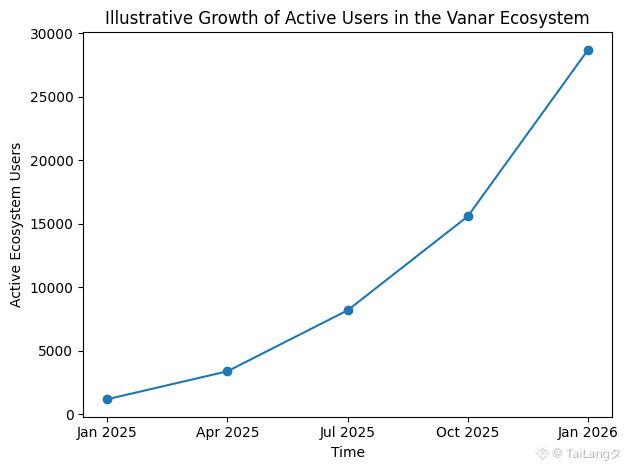
What gives the project weight is that it is already being used in ways that matter, with people paying for tools that remember their work, creators building things others rely on, and communities staying active over time instead of chasing quick attention, and that kind of steady use is often invisible compared to hype but far more meaningful.
The economic side follows this same quiet logic, where value moves through participation rather than empty promises, and when users pay for services that help them and builders are rewarded for usefulness, the system begins to feel less like a gamble and more like an economy that reflects real effort and real need.
There are risks that cannot be ignored, because storing memory and adding intelligence means facing hard questions about privacy and responsibility, and the future of Vanar will depend on how openly these concerns are handled, how much the community listens, and whether humility stays stronger than ambition as the platform grows.
Looking ahead, it is easy to imagine a world where digital tools stop feeling disposable and start feeling dependable, where records stay intact, creativity stays protected, and people feel less anxious about losing pieces of their digital lives, and if Vanar continues on this path with patience and care, it may quietly help rebuild something we have been missing for a long time, the simple feeling that technology is finally working for us rather than against us.