
Ethereum is currently moving through a quiet and uneventful phase. Price action has slowed, volatility has compressed, and $ETH ETH is no longer dominating daily discussions the way Bitcoin does. For many traders, this feels like stagnation. Historically, however, these calm periods are often where important market structure forms before larger moves emerge.
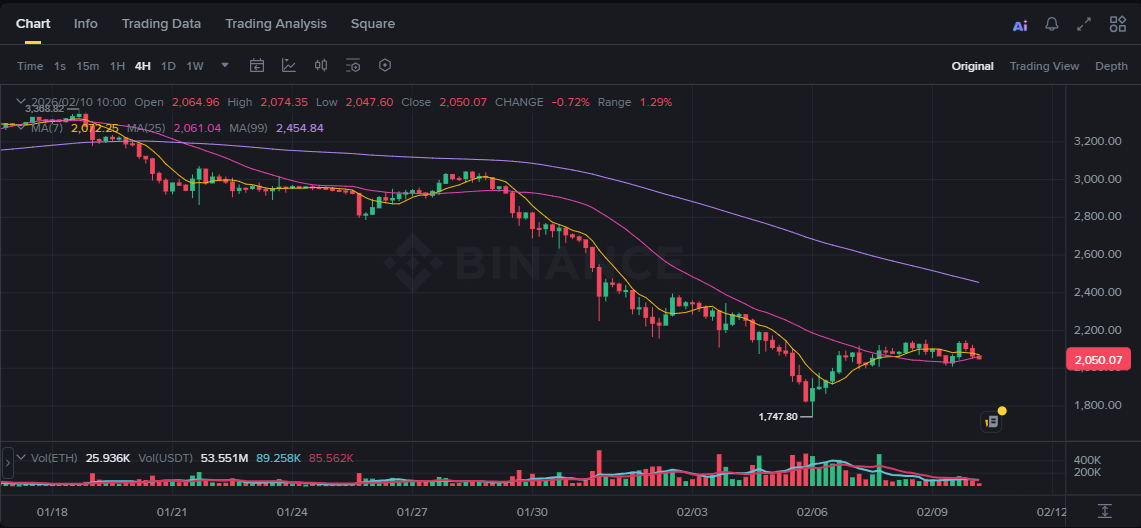
Recent price action shows Ethereum topping near $2,074 before accelerating lower and printing a local low around $1,747. This decline was impulsive in nature, signaling strong selling pressure. Since then, ETH has stabilized and begun trading within a narrow range, suggesting the market is absorbing prior sell pressure rather than continuing immediately lower. Sideways movement after a sharp drop often reflects either early accumulation or broad indecision.
From a technical structure perspective, the $1,747–$1,780 region stands out as a critical demand zone. Buyers stepped in aggressively here, preventing further downside. On the upside, ETH continues to face resistance in the $2,100–$2,150 area, a zone aligned with previous breakdowns. Price remains below key moving averages, keeping the broader trend cautious, while short-term structure has shifted into range-bound consolidation. Until support is lost or resistance is reclaimed with conviction, the market remains neutral rather than directional.

Extended sideways trading usually frustrates short-term participants. Low volatility often leads to choppy price action, where breakout attempts fail and momentum strategies struggle. This environment tends to punish impatience, while longer-term participants wait for confirmation through structure and volume expansion.
The key lesson in Ethereum’s current phase is the importance of structure over noise. Headlines and intraday swings often distract during consolidation, but Ethereum has historically spent significant time building structure before decisive moves. Quiet markets are rarely meaningless. They are often preparation phases.
Ethereum’s lack of excitement right now is not a sign of weakness. It is a pause, and markets often make their most important moves after convincing participants that nothing is happening at all.