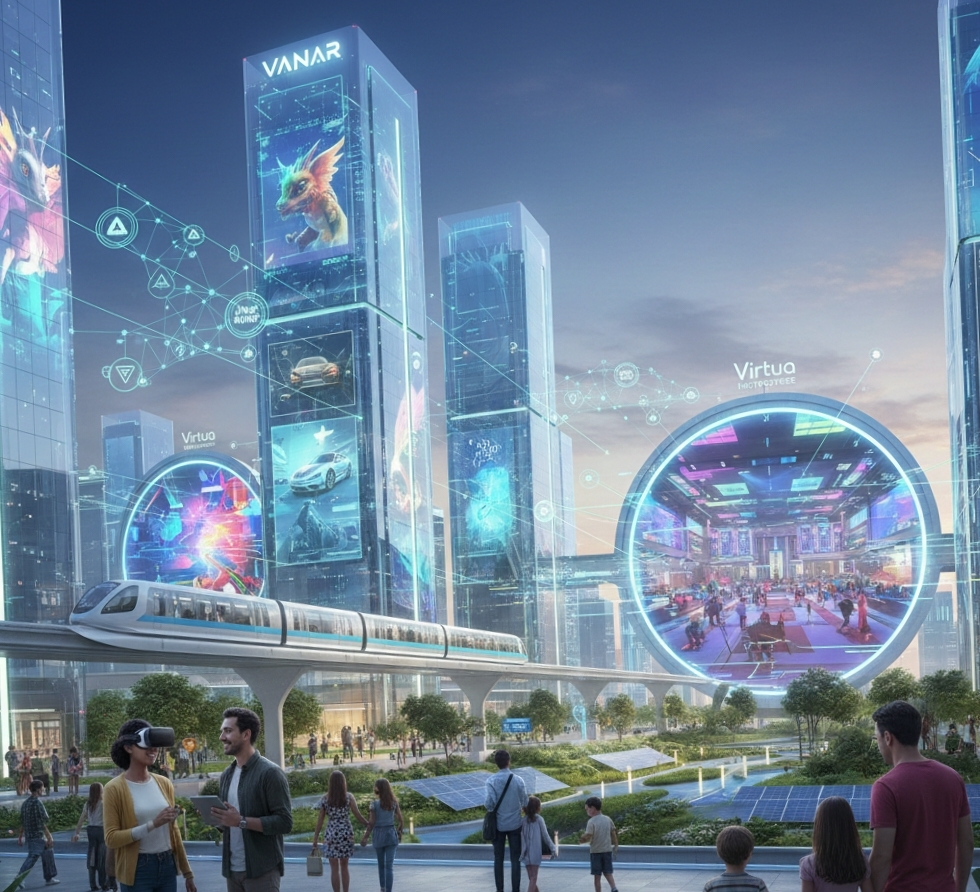
I was watching a friend fumble with a new online game, frustrated that in-game purchases took forever and sometimes didn’t even register. That’s the kind of problem Vanar seems to have noticed long before the rest of us did. Unlike most blockchains that feel like experiments in code and speculation, Vanar is built from the ground up with everyday use in mind. It’s designed for the real world, not just whitepapers or forum debates.
Vanar is a Layer 1 blockchain, which means it’s its own network, independent and self-sufficient. The team behind it isn’t coming out of nowhere they’ve worked in games, entertainment, and brand partnerships, so they understand what people actually want. That perspective shows in how the system is structured. It’s not trying to do everything at once. Instead, it focuses on areas that millions of people interact with every day: gaming, the metaverse, AI applications, eco-solutions, and branded experiences. It’s almost like walking into a new city that’s been designed for convenience, not just for sightseeing.
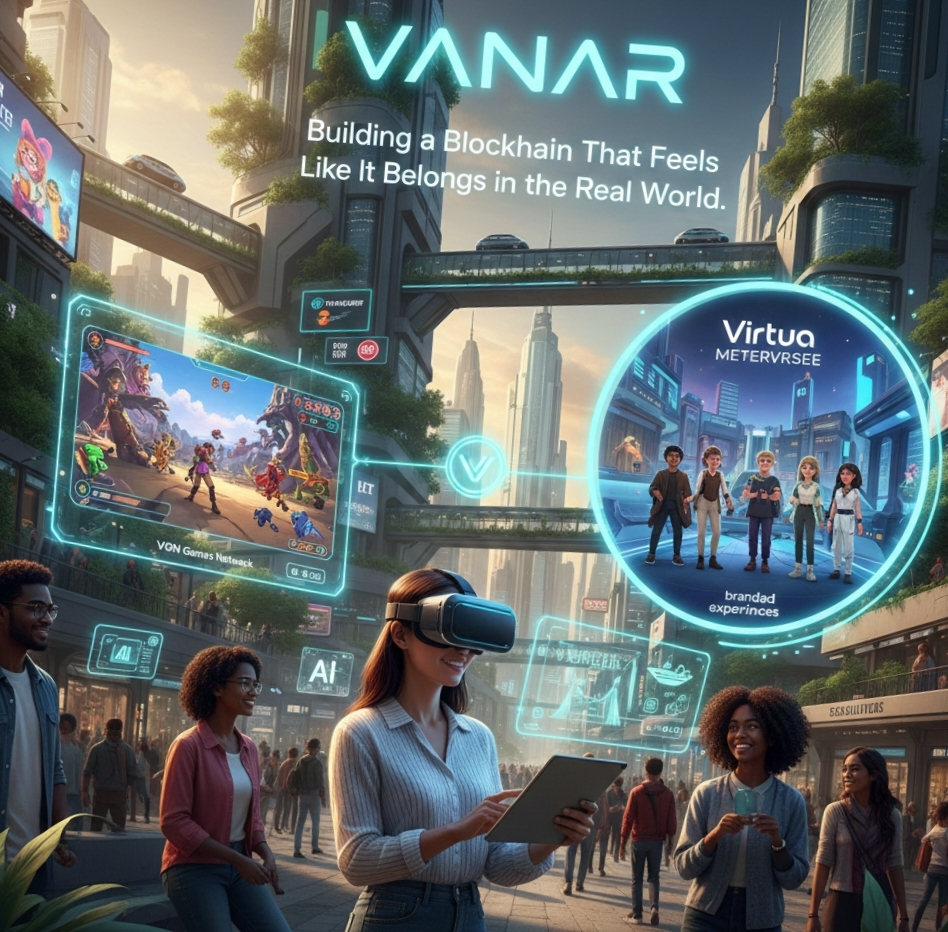
Two of Vanar’s main products illustrate this approach. Virtua Metaverse is their immersive virtual space where users can interact, play, and experience digital worlds, while VGN Games Network connects developers and gamers in a shared ecosystem. Both are powered by the VANRY token, which acts as the fuel for transactions, rewards, and access. It’s easy to imagine someone playing a game in Virtua and using VANRY without even thinking about the mechanics behind it like tapping a subway card and just moving on with your day. That simplicity, applied to something inherently digital and complex, is rare in blockchain.
I like that Vanar doesn’t treat adoption as an abstract goal. The team is focused on bringing the next three billion consumers to Web3. It’s ambitious, yes, but it’s grounded in practical steps. Instead of forcing people to learn a new technical language, Vanar tries to meet them where they already are. That could be a gamer logging in for a new release, a fan interacting with a branded experience, or someone exploring AI-driven applications that feel more helpful than experimental. The experience is supposed to feel seamless, not like you’re testing a prototype every time you click something.
There’s also a subtle appeal in how Vanar crosses multiple mainstream verticals. Many blockchains end up siloed, serving only DeFi enthusiasts or NFT collectors. Vanar wants to touch areas people use in their daily life. It’s like the difference between a toolkit sitting on a shelf and a Swiss Army knife in your pocket you can actually use it without thinking too much. You can imagine a brand creating an interactive campaign in Virtua, a game studio launching a new title on VGN, and everyday users naturally moving between both worlds. That kind of versatility makes it feel more like a living platform than a static ledger.
Of course, it’s not without limitations. A system this broad has to balance complexity and accessibility. Not every feature will be perfect, and onboarding three billion users is easier said than done. There’s a risk that as adoption scales, some parts of the network might struggle to keep up, whether in transaction speed, developer support, or cross-vertical integration. Users should also be aware that while VANRY powers these experiences, token volatility could affect incentives and participation. Thinking about these challenges makes me respect the design a little more it’s ambitious but not blind to reality.
From a market perspective, it’s interesting to watch where attention gathers. Platforms like Binance see Vanar activity because people are curious about both the token and the ecosystem it powers. Watching VANRY trading alongside other mainstream cryptocurrencies gives a sense of how serious users and investors are about this project, even if they’re still figuring out exactly how to interact with it. For many, seeing the token on a familiar exchange bridges the gap between curiosity and actual use.
I also find it quietly satisfying how Vanar handles the feel of daily interactions. Imagine opening Virtua Metaverse to check in with friends or attend a live event, and everything works smoothly without constant prompts about gas fees, confirmations, or blockchain jargon. That might sound minor, but it’s the kind of friction that often kills adoption before a platform even has a chance to shine. Vanar’s approach shows respect for the user’s time and attention, which I don’t think gets praised enough in tech circles.
The focus on real-world usability also hints at a longer-term vision. By combining gaming, branded experiences, AI, and eco-solutions, Vanar isn’t chasing one trend. Instead, it’s trying to embed itself into multiple parts of everyday digital life. That strategy has its own risks spreading too wide could dilute resources or slow feature development but it also means the blockchain isn’t dependent on one fad or niche community. Personally, I find that kind of thoughtful design reassuring. It feels like someone actually considered how people live their digital lives, rather than just how to attract speculators.
At the end of the day, Vanar is not about empty promises or flashy announcements. It’s about building an ecosystem that makes sense to actual users. There’s a focus on ease, speed, and practical applications that are noticeable the first time you interact with it. The challenge will be scaling and maintaining that user-first approach while keeping the technology robust. If it succeeds, it won’t just be a blockchain. It will be a place where people naturally spend time, transact, and explore without thinking about the blockchain at all and that, I think, is where its true value lies.