The reason why Walrus exists at all in my unpopular opinion
The majority of individuals believe that the data problem in crypto is resolved already. We have blockchains to transact, IPFS to store files and cloud servers to have it all. However, once you start to construct serious products and applications: games, AI pipelines, social applications, onchain media, you quickly hit the wall. The data are costly with blockchains. The old storage is inexpensive and centralized. The thing that Walrus does is to begin with a straightforward creator-level question: what would it mean to make data a first-class blockchain object, and not necessarily have data fully-lived onchain?
Walrus is constructed upon Sui since Sui already differentiates objects as opposed to account-based chains. Walrus is an extension to data blobs. Walrus does not act as though big data is onchain: it is noted that data is cheap, available, verifiable and recoverable, but not always executed.
Blob storage Like a human being.
In Walrus a blob is nothing more than raw data. It may be a picture, model weights, an asset in a game or an application state snapshot. This is not executed by Walrus. It is able to store it such that it can be demonstrated to exist, can be accessed reliably and can be reconstructed even in the event that some nodes fail.
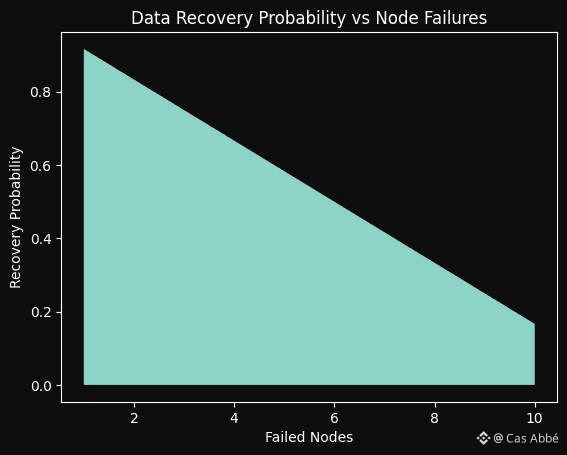
The most important concept is erasure coding. Walrus is mathematically redundant instead of storing a complete copy of your data on each node, committed to fragmenting the data and placing copies in different locations. One does not have to have all the pieces to regenerate the original file. This saves money by a significant margin and does not compromise on reliability. Imagine that it was a painting in pieces of puzzle and you only have to have 70 percent of the pieces to have the entire picture.
It is an alternate state of thought when compared to IPFS or cloud storage. Walrus does not concern pinning files. It concerns assured supply on economic incentives.
What Walrus Gets Right
Walrus fits in very nicely with the direction of the market:
Applications do not require costly blockspace, but cheap data.
AI does not require the transactions but massive datasets.
Games require speed, and not international agreement on bytes.
Walrus allows blockchains to be more realistic and less bloated by distinguishing data availability and execution.
Tradeoffs You Really Should Understand.
Walrus does not intend to supplant AWS. That's important. Neither does it promise instant access such as centralized CDNs. The speed of the retrieval is determined by the network conditions and the participation of the nodes. Complexity is also another tradeoff: erasure coding and distributed recovery are more difficult to reason about than store file, retrieve file. Constructors have to have faith in the math and incentives of the protocol.
Walrus is scalable and decentralized at the expense of simplicity. And nothing but an aware decision, not a moral failure.