

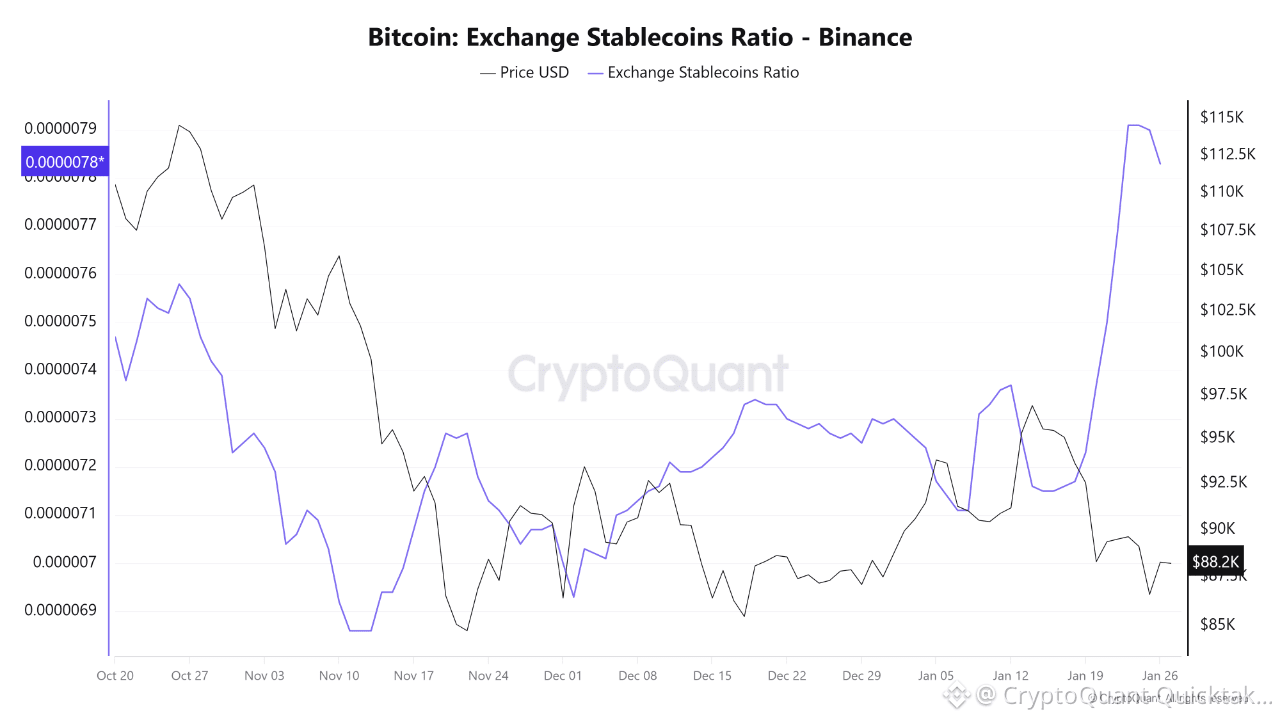
On January 23, the Bitcoin: Exchange Stablecoins Ratio on Binance recorded a sharp spike—an event that initially resembles a classic bullish signal. This ratio compares Bitcoin balances on the exchange to stablecoin reserves, which represent available buying power. Under normal conditions, a rising ratio suggests increasing risk appetite and potential upward price pressure.
However, a closer look at the underlying mechanics tells a different story.
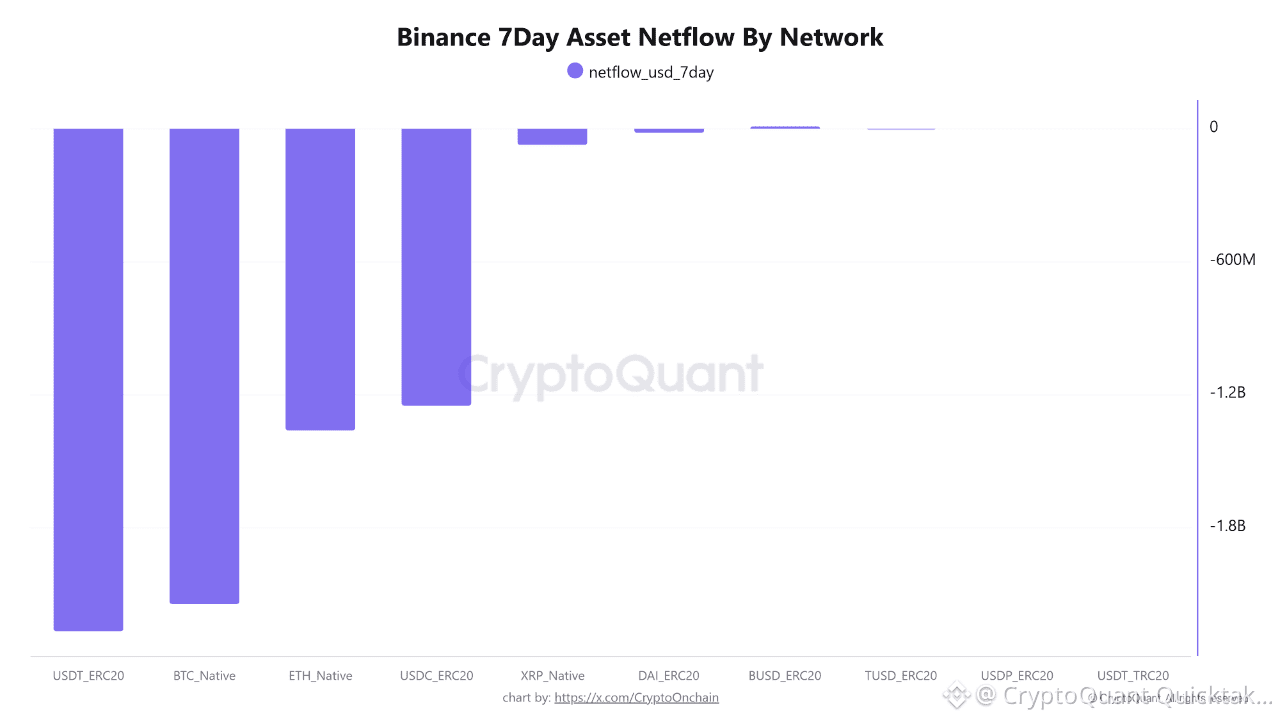
The key driver of this move lies in the denominator of the ratio: stablecoin reserves. During this period, Binance experienced a large-scale capital outflow amounting to several billion dollars, impacting both crypto assets and stablecoins. Crucially, the contraction in stablecoin balances was large enough to significantly reduce the denominator. As a result, the ratio surged due to mathematical compression, not because of new Bitcoin inflows or increased spot demand.
In practical terms, this means the ratio rose because purchasing power was removed, not because demand expanded. This creates a structural false positive—a signal that appears bullish on charts but does not reflect healthier liquidity conditions or stronger internal demand.
From a market-structure perspective, this is an important distinction. While Bitcoin outflows can imply lower immediate sell pressure, the simultaneous depletion of stablecoin liquidity weakens Binance’s ability to absorb downside volatility. With fewer stablecoins waiting on the sidelines, potential buy-the-dip support becomes structurally thinner.
In conclusion, the recent surge in the Bitcoin: Exchange Stablecoins Ratio on Binance should be interpreted cautiously. Rather than signaling renewed accumulation, it primarily reflects liquidity drainage and balance-sheet restructuring. Without confirming stablecoin inflows or external demand, this ratio alone is not a reliable bullish indicator.
Written by CryptoOnchain