
Why Vanar Had to Be Built in the First Place
Vanar wasn’t born from a desire to chase trends or claim the title of the fastest blockchain on paper. Its origin was far more understated. The team recognized that while Web3 promised openness and empowerment, it was still largely inaccessible to everyday users. Wallets felt intimidating, transaction fees were inconsistent, and the jargon-heavy culture of crypto often pushed away the very audiences it aimed to attract.
Having spent years collaborating with game developers, entertainment companies, and global brands, the team understood how high mainstream expectations are. In Web2, user experience is carefully refined, and audiences are quick to abandon products that feel clunky, slow, or risky. That insight led to a foundational question: if Web3 truly wants mass adoption, shouldn’t it feel as intuitive and trustworthy as the digital platforms people already use every day?
From that realization, Vanar began to take shape around real-world usability rather than theoretical ideals. The goal wasn’t to disrupt everything overnight. Instead, it was to create infrastructure that stays out of the way, allowing users to focus on playing games, owning digital items, creating content, and engaging with communities—without needing to think about blockchain mechanics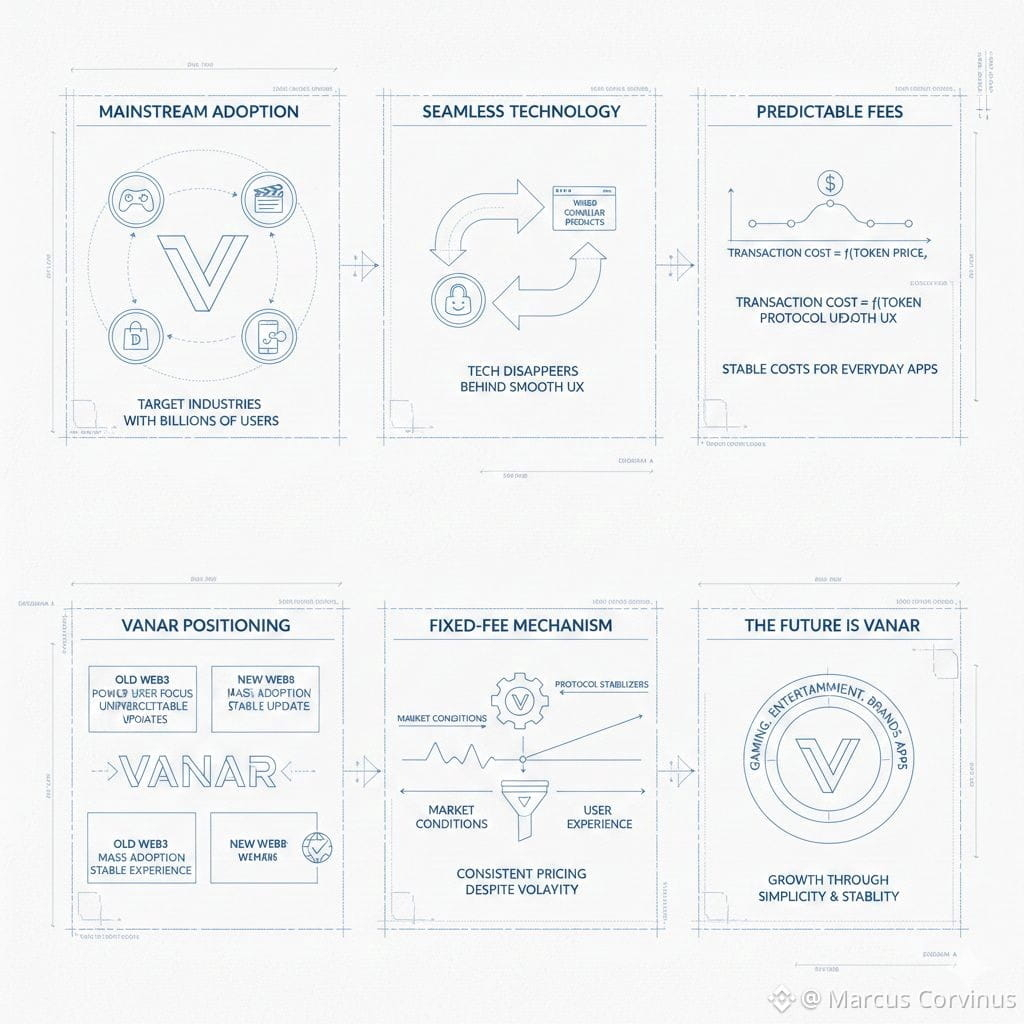
A Layer 1 Designed for Users, Not Just Engineers
As the concept evolved, the team made a conscious decision to build a Layer 1 blockchain. This wasn’t about prestige or visibility. It was about having full control over how the network performs, how costs behave, and how smooth the experience feels. For applications like games, virtual worlds, and branded platforms, unpredictability—whether in congestion or fees—can quickly ruin the experience.
Vanar’s technical design reflects how real people behave. Transactions need to be fast enough to feel instant. Fees must remain low and consistent so even small actions feel worthwhile. And scalability has to be gradual and sustainable, growing alongside adoption instead of breaking under pressure.
Rather than advertising extreme theoretical metrics, the network prioritizes stability in real-world conditions. For entertainment and interactive applications, dependable performance matters far more than impressive numbers achieved only in controlled test scenario
Creating a Living Ecosystem Instead of Just Infrastructure
Early on, the team realized that technology alone wouldn’t drive adoption. A blockchain without practical examples leaves too much friction for developers and users alike. Real adoption needs visible, functional products that demonstrate how the technology can disappear into the background.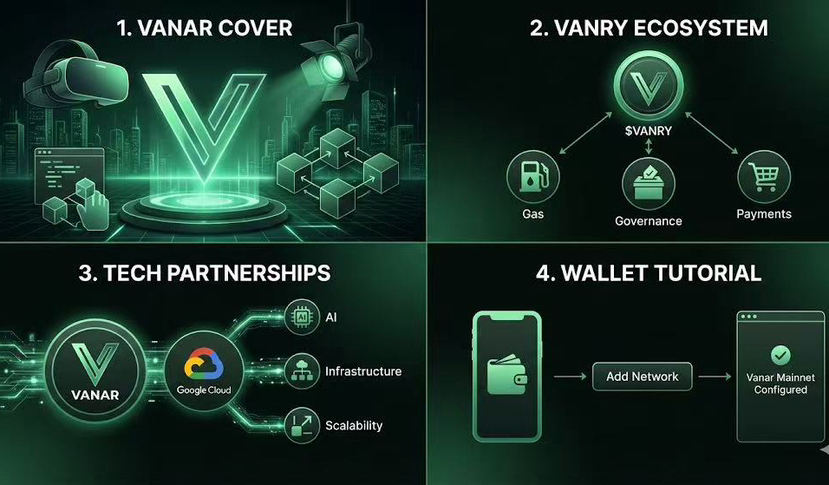
That insight led to an ecosystem-first strategy. Vanar didn’t position itself solely as backend infrastructure. It actively supported projects across gaming, metaverse environments, AI-powered experiences, sustainability initiatives, and brand-focused platforms. These different areas all connect through the same network, sharing users, liquidity, and technical standards.
Projects like Virtua Metaverse serve as more than demonstrations. They are consumer-facing spaces where digital ownership, social connection, and immersive experiences intersect naturally. Users entering these worlds aren’t thinking about block production or consensus—they’re focused on self-expression, creativity, and community.
The same philosophy applies to the VGN gaming network. Games are especially sensitive to friction. If onboarding feels awkward or transactions lag, players leave. By designing the blockchain and gaming ecosystem together, Vanar minimizes those pain points in ways that are difficult to achieve through add-on solutions.
Infrastructure That Works Quietly in the Background
At its core, Vanar functions like well-designed utility infrastructure. Transactions are processed, assets are secured, and consensus is maintained without demanding attention from users. Smart contracts handle items, land, collectibles, and branded interactions, but they’re presented through interfaces that feel familiar to non-crypto audiences.
The VANRY token plays a central role in aligning the network. It powers transactions, supports security, and fuels ecosystem development. Rather than existing purely as a speculative asset, it acts as the economic backbone that keeps incentives aligned across validators, developers, and users.
What truly matters here is predictability. Developers can build confidently when performance is consistent. Users gradually develop trust when interactions feel smooth again and again, without surprises.
Rethinking How Success Is Measured
Many crypto projects emphasize metrics like peak throughput or short-term price action. Vanar looks elsewhere. Success is reflected in active users engaging with real applications, players staying inside games and virtual worlds, and brands returning to build additional experiences rather than treating Web3 as a novelty.
Adoption in this model isn’t explosive—it’s incremental. Each successful use case lowers resistance for the next. Every user who joins through a game or virtual experience becomes comfortable with digital ownership without needing to understand blockchain theory.
A Pragmatic Approach to Risk and Reality
Any project targeting mainstream adoption faces challenges. Regulatory uncertainty remains an ongoing concern as Web3 moves closer to everyday consumers. Competition is also intense, especially among blockchains claiming to specialize in gaming and metaverse applications.
Vanar’s response has been practical rather than ideological. The team focuses on compliance-aware design, durable partnerships, and steady growth. Instead of promising instant revolutions, the network is positioned as infrastructure that can adapt alongside regulation, technology, and user expectations.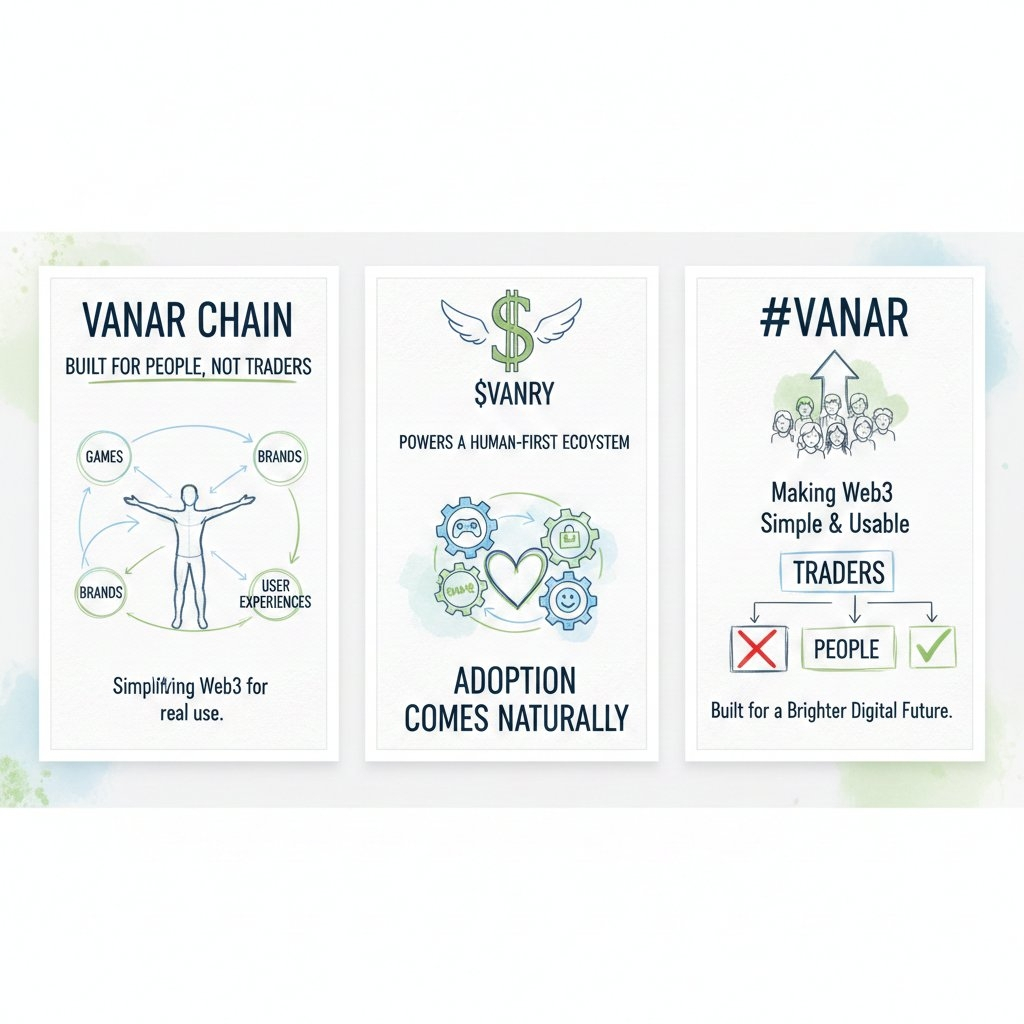
There’s also the risk of fading attention. Many projects launch with excitement only to lose momentum. Vanar counters this by staying rooted in industries it knows well. Games and entertainment aren’t passing trends—they’re constants of human behavior, offering a more stable foundation than purely speculative narratives.
What Long-Term Growth May Actually Look Like
If Vanar achieves its vision, the result likely won’t be loud or dramatic. It will be subtle. More games using blockchain without highlighting it. More brands experimenting with digital ownership because the tools finally feel safe and understandable. More users entering virtual spaces without realizing they’ve crossed into Web3.
The future taking shape is one where blockchain doesn’t need to explain itself. It simply works. In that world, Vanar’s role isn’t to dominate headlines, but to quietly enable experiences for millions—and eventually billions—of people.
Closing Thoughts
What truly distinguishes Vanar isn’t just its technology or its growing ecosystem, but its perspective. The project begins with empathy for users rather than obsession with systems. It assumes people don’t want to learn new terminology just to enjoy digital experiences—they want things to feel natural and intuitive.
If Web3 is ever to become part of everyday life, it will be because projects like Vanar chose patience over hype, thoughtful design over ideology, and people over abstractions. Which leaves a final question worth considering: what changes when blockchain stops trying to impress us—and starts simply serving us?
