
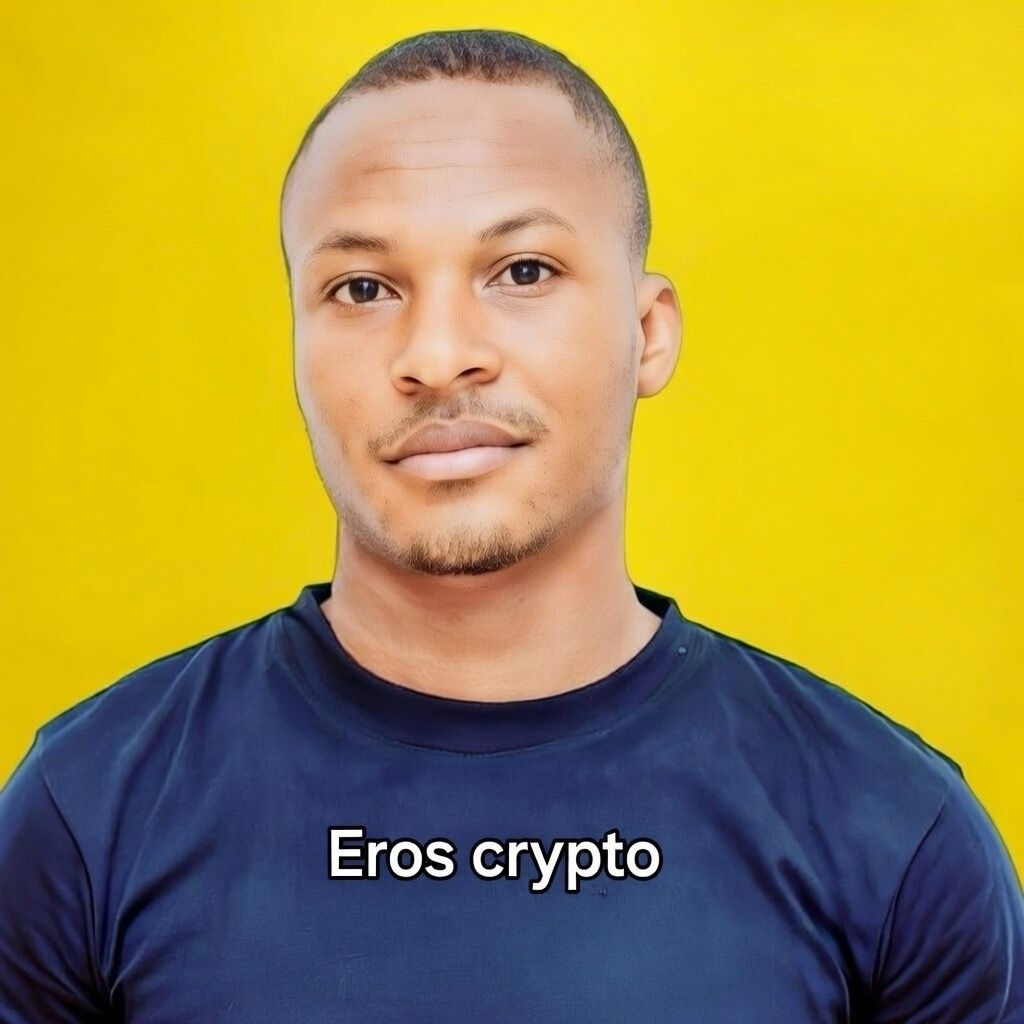
Eros crypto
X: eroscrypto_ 🔶 Kol binance | Analyst & trading.

Détenteur pour BNB
Trade fréquemment
4.8 an(s)
66 Suivis
27.4K+ Abonnés
40.6K+ J’aime
3.4K+ Partagé(s)
Publications
Tous
Citations
Vidéos
Direct
We may or may not be in a bear market, but $BTC is. So why keep buying BTC?
Looking at the #BTC chart, we can certainly say we're in a bear market. Will we see further, more brutal corrections? Yes, we could drop to the $50k zone before a rebound. There, we'll see a 60% correction, which I find normal and realistic. But as I always say, the probability of falling further into this range is very low because BTC has become far too heavy now, especially with governments accumulating it.
This morning, Binance's SAFU fund bought another 4,545 BTC for $304.58 million, bringing its total purchases to 15,000 BTC, or about $1 billion.
Why are they buying now? Why not wait for a lower point since everyone's predicting BTC will hit $45k? They're using an investment strategy called Dollar-Cost Averaging (DCA), which is very effective for the long term.
I think you should look at someone like @CZ , who sold his apartment to buy BTC, and everyone thought he was crazy, but he ended up being proven right.
You just have to follow him because he's very experienced. So, I'm starting my #DCA , what about you, bro?
#cz
Looking at the #BTC chart, we can certainly say we're in a bear market. Will we see further, more brutal corrections? Yes, we could drop to the $50k zone before a rebound. There, we'll see a 60% correction, which I find normal and realistic. But as I always say, the probability of falling further into this range is very low because BTC has become far too heavy now, especially with governments accumulating it.
This morning, Binance's SAFU fund bought another 4,545 BTC for $304.58 million, bringing its total purchases to 15,000 BTC, or about $1 billion.
Why are they buying now? Why not wait for a lower point since everyone's predicting BTC will hit $45k? They're using an investment strategy called Dollar-Cost Averaging (DCA), which is very effective for the long term.
I think you should look at someone like @CZ , who sold his apartment to buy BTC, and everyone thought he was crazy, but he ended up being proven right.
You just have to follow him because he's very experienced. So, I'm starting my #DCA , what about you, bro?
#cz
A
BNB/USDT
Prix
647,78
TRUMP'S CRYPT INCOME SURPASSES HIS REAL ESTATE AMPIRE
A new report shows that Trump's crypto activity generated $3.45 billion in just 16 months.
$1.2 billion came from #WorldLibertyFinancial cash, and another $2.25 billion was tied to crypto holdings.
His traditional businesses (real estate, golf, brands) took 8 years to earn the same amount of money.
I'll leave that here in case some of you still have doubts about his impact on the market…
$WLFI
#TRUMP
A new report shows that Trump's crypto activity generated $3.45 billion in just 16 months.
$1.2 billion came from #WorldLibertyFinancial cash, and another $2.25 billion was tied to crypto holdings.
His traditional businesses (real estate, golf, brands) took 8 years to earn the same amount of money.
I'll leave that here in case some of you still have doubts about his impact on the market…
$WLFI
#TRUMP
I received 1 $BNB from @Binance Square Official .
But beyond the reward itself, there’s something much bigger behind it. There’s a deep joy I can’t even fully explain. Being selected by the Binance Square team means a lot to me. It represents recognition for the work, the consistency, the late nights spent creating, learning, and sharing.
I say it again and I truly mean it: Binance Square remains the best platform for Web3 content creators. It’s a space where you can express yourself, grow, learn, and most importantly, be valued.
Thank you to everyone who constantly supports us through your comments, likes, and shares. You may not always realize it, but every single interaction matters. Because of you, I’m one of the happy winners of this campaign. This win is yours too.
Thank you to the entire Binance Square team for the trust.
cy
Francis
Karin
And a special thank you to my boss @Crypto Angel_ for the motivation and the guidance. Without that support, the journey would not be the same.
We keep building. Together.
#writetoearn #binancesquare #bnb
But beyond the reward itself, there’s something much bigger behind it. There’s a deep joy I can’t even fully explain. Being selected by the Binance Square team means a lot to me. It represents recognition for the work, the consistency, the late nights spent creating, learning, and sharing.
I say it again and I truly mean it: Binance Square remains the best platform for Web3 content creators. It’s a space where you can express yourself, grow, learn, and most importantly, be valued.
Thank you to everyone who constantly supports us through your comments, likes, and shares. You may not always realize it, but every single interaction matters. Because of you, I’m one of the happy winners of this campaign. This win is yours too.
Thank you to the entire Binance Square team for the trust.
cy
Francis
Karin
And a special thank you to my boss @Crypto Angel_ for the motivation and the guidance. Without that support, the journey would not be the same.
We keep building. Together.
#writetoearn #binancesquare #bnb
60k$ to 80k$ is a very risky zone for traders and $BTC holders.
We’re indeed in the middle of a fairly wide range between 60k and 80k, the worst possible choice for taking position:
Short and be exposed to a pullback to 80k … long and also exposed to pullback to 60k … in both cases, it’is a losing bet
You can’t trade relying solely on luck.
So I’ll avoid fumbling around.
Quick update because I haven’t changed my mind over the weekend: the weekend pumps ? I don’t believe them, the structure remains #bearish in my opinion.
For now #BTC and $ETH are below all trend lines.
They tried to recover yesterday…but couldn’t. The Asian and European markets are in the green. Surprising, because US Futures are slightly in the red.
This is why I’m keeping a close eye on how this market will evolve today.
As a reminder, lask week every day except Friday of the rebound, they opened in the red and accelerated their losses during the session. So we’re waiting.
A good trade is also a trade you don’t take.
We’re indeed in the middle of a fairly wide range between 60k and 80k, the worst possible choice for taking position:
Short and be exposed to a pullback to 80k … long and also exposed to pullback to 60k … in both cases, it’is a losing bet
You can’t trade relying solely on luck.
So I’ll avoid fumbling around.
Quick update because I haven’t changed my mind over the weekend: the weekend pumps ? I don’t believe them, the structure remains #bearish in my opinion.
For now #BTC and $ETH are below all trend lines.
They tried to recover yesterday…but couldn’t. The Asian and European markets are in the green. Surprising, because US Futures are slightly in the red.
This is why I’m keeping a close eye on how this market will evolve today.
As a reminder, lask week every day except Friday of the rebound, they opened in the red and accelerated their losses during the session. So we’re waiting.
A good trade is also a trade you don’t take.
Have you ever paid €15 or €20 to send just €100 to your brother or mother? Binance Pay is a free solution; it's the payment option integrated into the Binance app.
#binancepay
#binance
#Free $BNB
#binancepay
#binance
#Free $BNB
China clarifies its stance: crypto on one side, tokenized real-world assets on the other
Throughout the week, much of the crypto media pushed the same alarming headline: “China bans RWA tokenization.” A closer look at the People’s Bank of China’s official communication tells a very different, and far more nuanced, story.
What Beijing actually reaffirmed was not a new restriction, but the continuation of its existing policy: the prohibition of cryptocurrencies treated as virtual currencies, and the ban on unauthorized offshore yuan-denominated stablecoins. Nothing new there. What China did not ban, and this is the key point, is the tokenization of onshore real-world assets. On the contrary, regulators are now working on a dedicated framework for these instruments.
For the first time, Beijing is clearly drawing a line between speculative crypto assets and RWA tied to the real economy. As Louis Wan from Unified Labs pointed out, this separation represents a major breakthrough and a true milestone for China’s RWA market. The signal is clear: blockchain technology is acceptable when it supports tangible, regulated assets.
This approach is not unique. The European Union took a similar path with MiCA, explicitly separating crypto assets from tokenized real-world assets. The difference is that Europe is already ahead. Since December 2024, MiCA has enabled the issuance of CASP licenses across 27 countries. Beyond that, the DLT Pilot Regime already allows the operation of fully on-chain trading and settlement systems, including atomic delivery-versus-payment, native on-chain record-keeping, and direct investor access. This is not a sandbox experiment. It is embedded in law.
MiCA is often heavily criticized on Crypto Twitter, yet the EU remains the only jurisdiction where a fully on-chain securities settlement infrastructure can legally operate today. China is now drawing the line. Europe drew it earlier and has already started issuing licenses.
This is exactly the regulatory environment projects like Dusk Network have been building for. The DLT-TSS infrastructure is already live, documented, and aligned with these requirements. Regulated tokenization is no longer a theoretical concept. It is becoming the standard.
#dusk $DUSK @Dusk_Foundation
What Beijing actually reaffirmed was not a new restriction, but the continuation of its existing policy: the prohibition of cryptocurrencies treated as virtual currencies, and the ban on unauthorized offshore yuan-denominated stablecoins. Nothing new there. What China did not ban, and this is the key point, is the tokenization of onshore real-world assets. On the contrary, regulators are now working on a dedicated framework for these instruments.
For the first time, Beijing is clearly drawing a line between speculative crypto assets and RWA tied to the real economy. As Louis Wan from Unified Labs pointed out, this separation represents a major breakthrough and a true milestone for China’s RWA market. The signal is clear: blockchain technology is acceptable when it supports tangible, regulated assets.
This approach is not unique. The European Union took a similar path with MiCA, explicitly separating crypto assets from tokenized real-world assets. The difference is that Europe is already ahead. Since December 2024, MiCA has enabled the issuance of CASP licenses across 27 countries. Beyond that, the DLT Pilot Regime already allows the operation of fully on-chain trading and settlement systems, including atomic delivery-versus-payment, native on-chain record-keeping, and direct investor access. This is not a sandbox experiment. It is embedded in law.
MiCA is often heavily criticized on Crypto Twitter, yet the EU remains the only jurisdiction where a fully on-chain securities settlement infrastructure can legally operate today. China is now drawing the line. Europe drew it earlier and has already started issuing licenses.
This is exactly the regulatory environment projects like Dusk Network have been building for. The DLT-TSS infrastructure is already live, documented, and aligned with these requirements. Regulated tokenization is no longer a theoretical concept. It is becoming the standard.
#dusk $DUSK @Dusk_Foundation
My ultimate futures trading strategy: I'm revealing my secret.
In trading, everyone has their own strategy, but the market always follows a structure:
- Support and resistance levels,
- Breakout of the two parallel lines,
- Breakout of both resistance and support. The market will always return to the support and resistance levels.
Therefore: 1- I buy at the support levels and close my position at the resistance levels.
2- I buy at the bottom of the channel formed by the two parallel lines and close at the top of the channel.
In addition to this, you can add the ALLIGATOR indicator on TradingView to maximize precision.
Finally, the most important thing is leverage: never exceed 10x leverage and be very patient.
$XPL
#StrategyTrade #MarketUpdate
In trading, everyone has their own strategy, but the market always follows a structure:
- Support and resistance levels,
- Breakout of the two parallel lines,
- Breakout of both resistance and support. The market will always return to the support and resistance levels.
Therefore: 1- I buy at the support levels and close my position at the resistance levels.
2- I buy at the bottom of the channel formed by the two parallel lines and close at the top of the channel.
In addition to this, you can add the ALLIGATOR indicator on TradingView to maximize precision.
Finally, the most important thing is leverage: never exceed 10x leverage and be very patient.
$XPL
#StrategyTrade #MarketUpdate
When Headlines Fade, Infrastructure Decides Where Capital Goes
In the short term, Bitcoin is taking hits. Volatility dominates the conversation, and sentiment shifts with every macro headline. But markets do not reverse because of news cycles. They turn when the underlying structure changes.
When capital moves at scale, it does not chase narratives. It looks for regulated rails, compliant issuance, private execution, and reliable final settlement. These are not speculative preferences. They are non-negotiable requirements for institutional capital.
This foundational work rarely appears on price charts. Yet it is happening quietly across the ecosystem. On-chain bonds, real-world asset tokenization, compliant trading environments, selective privacy, and settlement systems designed for professional use are steadily being built. These layers are what make blockchain infrastructure usable beyond retail speculation.
The reality is straightforward. A bank, asset manager, or large fund will not deploy meaningful capital on networks where every position, order, and strategy is fully exposed. Absolute transparency may work for experimentation, but it becomes a structural risk at scale. Institutions require a balance between auditability and confidentiality, between regulatory clarity and operational privacy.
This is precisely the category Dusk is built for. Not short-term hype, but long-term infrastructure. An environment where regulated assets can be issued, traded, and settled on-chain while preserving the privacy necessary for real financial activity.
And this is how capital actually moves on-chain.
#dusk $DUSK @Dusk_Foundation
When capital moves at scale, it does not chase narratives. It looks for regulated rails, compliant issuance, private execution, and reliable final settlement. These are not speculative preferences. They are non-negotiable requirements for institutional capital.
This foundational work rarely appears on price charts. Yet it is happening quietly across the ecosystem. On-chain bonds, real-world asset tokenization, compliant trading environments, selective privacy, and settlement systems designed for professional use are steadily being built. These layers are what make blockchain infrastructure usable beyond retail speculation.
The reality is straightforward. A bank, asset manager, or large fund will not deploy meaningful capital on networks where every position, order, and strategy is fully exposed. Absolute transparency may work for experimentation, but it becomes a structural risk at scale. Institutions require a balance between auditability and confidentiality, between regulatory clarity and operational privacy.
This is precisely the category Dusk is built for. Not short-term hype, but long-term infrastructure. An environment where regulated assets can be issued, traded, and settled on-chain while preserving the privacy necessary for real financial activity.
And this is how capital actually moves on-chain.
#dusk $DUSK @Dusk_Foundation
Pendant que de nombreux particuliers observent leurs wallets se contracter sous l’effet de la volatilité, certains acteurs majeurs agissent avec une logique radicalement différente. Le fonds SAFU de Binance vient d’acquérir environ 3 600 bitcoins supplémentaires pour un montant estimé à 233 millions de dollars, portant ses réserves totales à 6 230 $BTC . Ce type de mouvement s’inscrit généralement dans une vision de long terme, basée sur la gestion du risque et la confiance dans la résilience du marché.
Ce contraste entre la peur des investisseurs particuliers et le calme stratégique des grandes entités mérite réflexion. Historiquement, les phases de corrections marquées sont souvent celles où les acteurs les mieux capitalisés renforcent leurs positions. Non pas par intuition, mais parce que les données, les cycles passés et les niveaux techniques offrent des zones d’accumulation jugées intéressantes.
Si l’on se base sur le dernier sommet historique du bitcoin, situé autour de 126 200 dollars, une correction classique de 50 % ramènerait le prix dans une zone proche des 63 100 dollars. Ce niveau a joué un rôle clé ces dernières jours. Malgré un cassure temporaires, la zone continue de montrer une certaine solidité, ce qui suggère que le marché pourrait avoir déjà marqué un point bas intermédiaire.
Dans un scénario plus pessimiste, une correction de 60 % placerait le bitcoin autour des 50 480 dollars. Techniquement, ce niveau reste possible, mais il impliquerait une pression vendeuse beaucoup plus forte que celle observée actuellement. Au vu des flux institutionnels, des réserves accumulées par certains fonds et de la structure globale du marché, ce scénario apparaît peu probable à court terme.
Cela ne signifie pas que le risque a disparu. La vigilance reste indispensable, surtout dans un environnement macroéconomique encore incertain. Toutefois, tant que les fondamentaux restent intacts et que les grands acteurs continuent d’accumuler, une stratégie de #DCA disciplinée conserve toute sa pertinence.
Ce contraste entre la peur des investisseurs particuliers et le calme stratégique des grandes entités mérite réflexion. Historiquement, les phases de corrections marquées sont souvent celles où les acteurs les mieux capitalisés renforcent leurs positions. Non pas par intuition, mais parce que les données, les cycles passés et les niveaux techniques offrent des zones d’accumulation jugées intéressantes.
Si l’on se base sur le dernier sommet historique du bitcoin, situé autour de 126 200 dollars, une correction classique de 50 % ramènerait le prix dans une zone proche des 63 100 dollars. Ce niveau a joué un rôle clé ces dernières jours. Malgré un cassure temporaires, la zone continue de montrer une certaine solidité, ce qui suggère que le marché pourrait avoir déjà marqué un point bas intermédiaire.
Dans un scénario plus pessimiste, une correction de 60 % placerait le bitcoin autour des 50 480 dollars. Techniquement, ce niveau reste possible, mais il impliquerait une pression vendeuse beaucoup plus forte que celle observée actuellement. Au vu des flux institutionnels, des réserves accumulées par certains fonds et de la structure globale du marché, ce scénario apparaît peu probable à court terme.
Cela ne signifie pas que le risque a disparu. La vigilance reste indispensable, surtout dans un environnement macroéconomique encore incertain. Toutefois, tant que les fondamentaux restent intacts et que les grands acteurs continuent d’accumuler, une stratégie de #DCA disciplinée conserve toute sa pertinence.
C'est fait, $BTC a cassé le support important et a réintégré le range de 2024. Partir en short était mon plan. on a touché les 69K, niveau que certains voyaient pour un rebond. Il se fait attendre.
Le risque maintenant, dans les prochains mois, est de revenir vers les 50K. Et pour l'instant, je ne vois pas grand chose qui pourrait l'empêcher.
À partir de maintenant, il est fort probable que les shorts seront plus fréquents que les longs.
ETH a aussi cassé un support important. Graphiquement, le prochain gros support serait vers les 1500$, voire un aller-retour vers les 1380$ pour aller chercher la mèche d'avril 2025. Ca serait tout à fait possible ces prochains mois.
Les marchés asiatiques n'ont pas plongé cette nuit, finissant légèrement dans le rouge.
L'Europe vient d'ouvrir plutôt dans le vert et les Futurs US légèrement dans le vert. Rebond possible en ouverture, mais on a souvent plongé en deuxième partie de journée alors attendons. L'argent toujours volatile, en perte de 10% ce jour.
Depuis fin 2023, les marchés nous avaient généralement habitué à une faible volatilité et des buy the dip constants. Oui ça a changé, c'est plus compliqué et il faut s'adapter. Et on est là pour ça, on modifie nos habitudes de trading en conséquence, même si ça veut dire moins de trade par moment.
Warren Buffet a quitté son poste chez Berkshire avec plus de 300 milliards en cash car ils pensent que les actions sont historiquement très chères. Rester en cash, ou en partie en cash, vous donne la possibilité d'avoir des opportunités.
Être totalement investit dans un marché baissier vous empêche de profiter des opportunités générationnelles car pris dans une spirale de trades perdants.
Vous pouvez être fougeux en bull, mais vous devez être humble en bear.
#WhenWillBTCRebound
Le risque maintenant, dans les prochains mois, est de revenir vers les 50K. Et pour l'instant, je ne vois pas grand chose qui pourrait l'empêcher.
À partir de maintenant, il est fort probable que les shorts seront plus fréquents que les longs.
ETH a aussi cassé un support important. Graphiquement, le prochain gros support serait vers les 1500$, voire un aller-retour vers les 1380$ pour aller chercher la mèche d'avril 2025. Ca serait tout à fait possible ces prochains mois.
Les marchés asiatiques n'ont pas plongé cette nuit, finissant légèrement dans le rouge.
L'Europe vient d'ouvrir plutôt dans le vert et les Futurs US légèrement dans le vert. Rebond possible en ouverture, mais on a souvent plongé en deuxième partie de journée alors attendons. L'argent toujours volatile, en perte de 10% ce jour.
Depuis fin 2023, les marchés nous avaient généralement habitué à une faible volatilité et des buy the dip constants. Oui ça a changé, c'est plus compliqué et il faut s'adapter. Et on est là pour ça, on modifie nos habitudes de trading en conséquence, même si ça veut dire moins de trade par moment.
Warren Buffet a quitté son poste chez Berkshire avec plus de 300 milliards en cash car ils pensent que les actions sont historiquement très chères. Rester en cash, ou en partie en cash, vous donne la possibilité d'avoir des opportunités.
Être totalement investit dans un marché baissier vous empêche de profiter des opportunités générationnelles car pris dans une spirale de trades perdants.
Vous pouvez être fougeux en bull, mais vous devez être humble en bear.
#WhenWillBTCRebound
Stablecoins, volumes, payments: why Plasma arrives at the right time
For several years now, the crypto market has been chasing one simple goal: moving money fast, cheaply, and at scale. Stablecoins have clearly won the battle of real-world usage, but the underlying infrastructure has not always kept up. This is exactly where Plasma comes in.
#Plasma positions itself as an infrastructure built specifically for stablecoin payments, designed from day one to handle real market volumes. Today, stablecoins represent more than $150 billion in total market capitalization and generate billions of dollars in transactions every single day. Yet a large share of this activity still runs on congested, expensive, or poorly optimized networks when it comes to everyday payments.
What @Plasma brings to the market is, above all, efficiency. Fast, predictable transactions with near-zero costs. For users, this means sending USDT without worrying about fees or delays. For businesses, it opens the door to reliable payment solutions capable of handling large volumes without friction.
The market also benefits from scalability. Plasma is built to support mass adoption, well beyond the limits of many general-purpose blockchains. This capacity is critical if stablecoins are to seriously compete with traditional payment systems, especially in areas like cross-border transfers, e-commerce, and B2B payments.
Another key element is trust. Plasma relies on a secure architecture and has already attracted significant liquidity. The strong financial interest seen in its early stages suggests that market participants view Plasma as a credible solution, not just a theoretical concept.
In the medium to long term, the potential is clear. If stablecoin adoption continues at its current pace, the market will need specialized networks optimized for this specific use case. Plasma could become one of the invisible but essential building blocks of this new financial infrastructure: less noise, more execution.
In short, Plasma is not promising a flashy revolution. It offers something far more valuable: an infrastructure that works, aligned with real market needs. And in crypto, those are often the projects that quietly end up winning.
$XPL
#Plasma positions itself as an infrastructure built specifically for stablecoin payments, designed from day one to handle real market volumes. Today, stablecoins represent more than $150 billion in total market capitalization and generate billions of dollars in transactions every single day. Yet a large share of this activity still runs on congested, expensive, or poorly optimized networks when it comes to everyday payments.
What @Plasma brings to the market is, above all, efficiency. Fast, predictable transactions with near-zero costs. For users, this means sending USDT without worrying about fees or delays. For businesses, it opens the door to reliable payment solutions capable of handling large volumes without friction.
The market also benefits from scalability. Plasma is built to support mass adoption, well beyond the limits of many general-purpose blockchains. This capacity is critical if stablecoins are to seriously compete with traditional payment systems, especially in areas like cross-border transfers, e-commerce, and B2B payments.
Another key element is trust. Plasma relies on a secure architecture and has already attracted significant liquidity. The strong financial interest seen in its early stages suggests that market participants view Plasma as a credible solution, not just a theoretical concept.
In the medium to long term, the potential is clear. If stablecoin adoption continues at its current pace, the market will need specialized networks optimized for this specific use case. Plasma could become one of the invisible but essential building blocks of this new financial infrastructure: less noise, more execution.
In short, Plasma is not promising a flashy revolution. It offers something far more valuable: an infrastructure that works, aligned with real market needs. And in crypto, those are often the projects that quietly end up winning.
$XPL
Le SILVER un actif de plus de 4000 milliards de capitalisation a Perdue 15% en 1h.
La volatilite n’est ce pas seulement sur le btc hien 😅, plus personne n’est à l’abris! Au moins la thèse de volatilité ne sera plus ce qui fait qu’on ne choisit pas BTC😂
Tout est volatile sur les marches financiere .
#GoldSilverRebound #btc
La volatilite n’est ce pas seulement sur le btc hien 😅, plus personne n’est à l’abris! Au moins la thèse de volatilité ne sera plus ce qui fait qu’on ne choisit pas BTC😂
Tout est volatile sur les marches financiere .
#GoldSilverRebound #btc
Dusk Network: the blockchain traders were waiting for without realizing it Let’s be honest.
Blockchain is powerful, but for serious trading, it has a real problem: everything is visible. Amounts, positions, sometimes even strategies. In a fast and competitive market, total transparency quickly becomes a disadvantage. On the other hand, some solutions go fully opaque… and end up unusable for real finance.
That’s exactly where Dusk Network stands out. The project is built around a simple idea: protect information without breaking trust. With its architecture and tools like DuskEVM and Hedger, transactions become private while remaining auditable when needed. Think of a tinted glass wall on a trading floor: rules are followed, activity is visible, but sensitive details stay protected.
For traders, the impact is real. Less unnecessary exposure. Less front-running. Fairer order books. The result is a cleaner, more mature trading environment designed to last, not to chase hype. And it all happens on-chain, without clunky workarounds.
But Dusk goes beyond trading. Its broader vision is to connect real-world finance with Web3 without sacrificing privacy or compliance. While many projects choose one side, Dusk builds balance.
@Dusk #dusk $DUSK
Blockchain is powerful, but for serious trading, it has a real problem: everything is visible. Amounts, positions, sometimes even strategies. In a fast and competitive market, total transparency quickly becomes a disadvantage. On the other hand, some solutions go fully opaque… and end up unusable for real finance.
That’s exactly where Dusk Network stands out. The project is built around a simple idea: protect information without breaking trust. With its architecture and tools like DuskEVM and Hedger, transactions become private while remaining auditable when needed. Think of a tinted glass wall on a trading floor: rules are followed, activity is visible, but sensitive details stay protected.
For traders, the impact is real. Less unnecessary exposure. Less front-running. Fairer order books. The result is a cleaner, more mature trading environment designed to last, not to chase hype. And it all happens on-chain, without clunky workarounds.
But Dusk goes beyond trading. Its broader vision is to connect real-world finance with Web3 without sacrificing privacy or compliance. While many projects choose one side, Dusk builds balance.
@Dusk #dusk $DUSK
🎙️ Qu'est ce qui se passe sur le marche crypto actuellement ?

Fin
01 h 51 min 59 sec
393
0
Dusk : The Missing Infrastructure for Institutional-Grade Tokenized Finance
In a crypto ecosystem that has clearly entered a new phase, the tokenization of real-world assets is no longer a laboratory concept. It is becoming an operational reality, tested and increasingly adopted by institutional players. It is in this context that Dusk Network stands out as one of the most serious infrastructures in the space. After more than six years of development, the network launched its mainnet on January 7, 2025. Dusk is a permissionless Layer-1 designed from the ground up for regulated on-chain finance, with a position that few protocols fully embrace: native privacy and full regulatory compliance are not opposites, they reinforce each other. Through zero-knowledge proofs, the protocol enables private transactions while remaining compliant with European frameworks such as MiCA, MiFID II, and the DLT Pilot Regime.
At the time of writing, in February 2026, the $DUSK token is trading around $0.10 to $0.11. Its market capitalization remains modest, almost negligible, relative to the size of the market it is targeting. And that market is one of the most dynamic segments of on-chain finance today. Excluding stablecoins, the value of tokenized real-world assets currently ranges between $19 and $36 billion according to aggregated sources, with nearly $9 billion concentrated in tokenized U.S. Treasuries. Medium- and long-term projections are striking. Some analysts expect the $100 billion threshold to be crossed as early as the end of 2026. By 2030, McKinsey estimates a $2 trillion market, while Ark Invest outlines far more aggressive scenarios exceeding $10 trillion when private markets, real estate, and structured debt are included.
This growth is not accidental. Tokenization delivers structural advantages that are difficult to ignore: continuous liquidity, instant asset fractionalization, a sharp reduction in intermediation costs, and near-instant settlement where traditional finance still operates on T+2 or T+3 cycles. It also opens access to asset classes historically reserved for a narrow group of investors, including real estate, private credit, and unlisted equities. As a result, the broader tokenization market is expected to grow from roughly $3.5 billion in 2024 to over 13 billion by 2030, with a compound annual growth rate exceeding 25 percent. Yet it is the RWA segment that represents the most profound structural shift.
The main bottleneck remains the radical transparency of public blockchains. By design, everything is visible, which is incompatible with institutional and regulatory requirements when it comes to portfolios, transaction sizes, and identities. Dusk addresses this friction directly. Its privacy-preserving smart contract layer enables confidential transactions, zero-knowledge compliance proofs for KYC and AML without exposing sensitive data, and programmable business logic that remains private. All of this is achieved with immediate finality, a critical feature for financial markets.
From a product perspective, the ecosystem is taking shape rapidly. Zedger enables the tokenization of equities, bonds, and real estate within a regulated framework. Dusk Pay targets MiCA-compliant payments through an electronic money token. DuskEVM provides Ethereum compatibility to attract DeFi developers, while Citadel delivers a zero-knowledge KYC solution where users retain full control over their personal data.
This positioning is already validated by concrete institutional adoption. The Dutch regulated exchange NPEX has tokenized more than €200 million worth of securities on Dusk. In late 2025, Chainlink integrated CCIP, Data Streams, and DataLink to secure cross-chain RWA transfers and compliant oracle data. Meanwhile, Quantoz is issuing a MiCA-compliant euro stablecoin, EURQ, directly on the network. The 2026 roadmap follows the same trajectory, with the completion of Dusk Pay, upgrades to DuskEVM, the introduction of hyperstaking with customizable logic, the launch of Superbridge for interoperability, and a gradual rollout of on-chain governance.
On the tokenomics side, total supply is capped at 1 billion DUSK, with approximately 497 million currently in circulation. The token has clear utility within the ecosystem: staking, gas fees, governance, and collateral for privacy-enabled contracts. Hyperstaking offers yields of around 12 percent annually. At current prices, the market capitalization sits near $50 million, with a fully diluted valuation close to $100 million.
When compared to other RWA-focused projects, the discrepancy is striking. Several protocols that are less advanced technically and lack native privacy already command market caps in the hundreds of millions. If Dusk were to capture even a small fraction of the projected market, for example 0.5 percent of a $2 trillion RWA market by 2030, the resulting valuation would justify a multi-billion-dollar market cap. Even a conservative scenario, with DUSK trading at 1$ by 2027 or 2028, would represent a significant multiple from current levels while remaining reasonable relative to the addressable market.
Dusk is not a typical privacy-oriented project. It is an infrastructure designed to allow institutions to tokenize, trade, and settle real-world assets on a public blockchain without sacrificing confidentiality or compliance. As regulation tightens and demand for on-chain assets continues to grow, this positioning becomes increasingly defensible. The mainnet is live, institutional partnerships are in place, and the technology is proven. If 2025 was the year of construction, 2026 could well be the year Dusk transitions from a promising project to a core piece of next-generation financial infrastructure
#dusk @Dusk_Foundation
At the time of writing, in February 2026, the $DUSK token is trading around $0.10 to $0.11. Its market capitalization remains modest, almost negligible, relative to the size of the market it is targeting. And that market is one of the most dynamic segments of on-chain finance today. Excluding stablecoins, the value of tokenized real-world assets currently ranges between $19 and $36 billion according to aggregated sources, with nearly $9 billion concentrated in tokenized U.S. Treasuries. Medium- and long-term projections are striking. Some analysts expect the $100 billion threshold to be crossed as early as the end of 2026. By 2030, McKinsey estimates a $2 trillion market, while Ark Invest outlines far more aggressive scenarios exceeding $10 trillion when private markets, real estate, and structured debt are included.
This growth is not accidental. Tokenization delivers structural advantages that are difficult to ignore: continuous liquidity, instant asset fractionalization, a sharp reduction in intermediation costs, and near-instant settlement where traditional finance still operates on T+2 or T+3 cycles. It also opens access to asset classes historically reserved for a narrow group of investors, including real estate, private credit, and unlisted equities. As a result, the broader tokenization market is expected to grow from roughly $3.5 billion in 2024 to over 13 billion by 2030, with a compound annual growth rate exceeding 25 percent. Yet it is the RWA segment that represents the most profound structural shift.
The main bottleneck remains the radical transparency of public blockchains. By design, everything is visible, which is incompatible with institutional and regulatory requirements when it comes to portfolios, transaction sizes, and identities. Dusk addresses this friction directly. Its privacy-preserving smart contract layer enables confidential transactions, zero-knowledge compliance proofs for KYC and AML without exposing sensitive data, and programmable business logic that remains private. All of this is achieved with immediate finality, a critical feature for financial markets.
From a product perspective, the ecosystem is taking shape rapidly. Zedger enables the tokenization of equities, bonds, and real estate within a regulated framework. Dusk Pay targets MiCA-compliant payments through an electronic money token. DuskEVM provides Ethereum compatibility to attract DeFi developers, while Citadel delivers a zero-knowledge KYC solution where users retain full control over their personal data.
This positioning is already validated by concrete institutional adoption. The Dutch regulated exchange NPEX has tokenized more than €200 million worth of securities on Dusk. In late 2025, Chainlink integrated CCIP, Data Streams, and DataLink to secure cross-chain RWA transfers and compliant oracle data. Meanwhile, Quantoz is issuing a MiCA-compliant euro stablecoin, EURQ, directly on the network. The 2026 roadmap follows the same trajectory, with the completion of Dusk Pay, upgrades to DuskEVM, the introduction of hyperstaking with customizable logic, the launch of Superbridge for interoperability, and a gradual rollout of on-chain governance.
On the tokenomics side, total supply is capped at 1 billion DUSK, with approximately 497 million currently in circulation. The token has clear utility within the ecosystem: staking, gas fees, governance, and collateral for privacy-enabled contracts. Hyperstaking offers yields of around 12 percent annually. At current prices, the market capitalization sits near $50 million, with a fully diluted valuation close to $100 million.
When compared to other RWA-focused projects, the discrepancy is striking. Several protocols that are less advanced technically and lack native privacy already command market caps in the hundreds of millions. If Dusk were to capture even a small fraction of the projected market, for example 0.5 percent of a $2 trillion RWA market by 2030, the resulting valuation would justify a multi-billion-dollar market cap. Even a conservative scenario, with DUSK trading at 1$ by 2027 or 2028, would represent a significant multiple from current levels while remaining reasonable relative to the addressable market.
Dusk is not a typical privacy-oriented project. It is an infrastructure designed to allow institutions to tokenize, trade, and settle real-world assets on a public blockchain without sacrificing confidentiality or compliance. As regulation tightens and demand for on-chain assets continues to grow, this positioning becomes increasingly defensible. The mainnet is live, institutional partnerships are in place, and the technology is proven. If 2025 was the year of construction, 2026 could well be the year Dusk transitions from a promising project to a core piece of next-generation financial infrastructure
#dusk @Dusk_Foundation
The stablecoin market: a $300 billion ocean in rapid expansion
At the start of 2026, the stablecoin market crossed a symbolic threshold. Total market capitalization has now surpassed 300 billion dollars, with a peak at 311 billion in January according to DeFiLlama. No longer just trading instruments, stablecoins have become a global payment infrastructure in their own right. On an annual basis, they already process more than 30 trillion dollars in volume, particularly across cross-border payments, remittances, and key layers of decentralized finance.
This is the environment in which Plasma has emerged. Launched in September 2025, Plasma is an EVM-compatible Layer-1 blockchain built around a clear and radical idea: turning stablecoins into a currency that can be used at global scale. With more than 3 billion dollars in total value locked, nearly 7 billion dollars in stablecoin deposits, and a position among the top four networks worldwide by USDT balance, Plasma is not positioning itself as just another Layer-2. It is a purpose-built infrastructure designed for usage rather than speculation.
The broader market dynamics largely explain this momentum. USDT remains dominant, accounting for roughly 70 percent of total supply, followed by USDC. At the same time, new entrants such as USD1, backed by World Liberty Financial, have exceeded 5 billion dollars in capitalization within just a few months. Projections are ambitious. McKinsey and the U.S. Treasury estimate that the stablecoin market could reach 2 trillion dollars by 2028, while some analysts point to as much as 4 trillion by 2030. This growth is supported by strong fundamentals: near-instant transfers at marginal cost, 24/7 liquidity, and direct accessibility for nearly 1.7 billion unbanked people worldwide.
Until now, Tron has largely dominated USDT payments, concentrating more than half of global flows. Plasma enters the market with a different value proposition. Transfers operate at near-zero cost, transaction finality is achieved in under a second, and the entire ecosystem is fully EVM-compatible, allowing existing protocols to migrate seamlessly. While many networks attempt to be everything at once, Plasma deliberately focused on a single use case and optimized it end to end.
From a technical standpoint, the network delivers over 1,000 transactions per second, sub-second block times, and a PlasmaBFT consensus mechanism engineered for high performance. USDT transfer fees average around $0.20 and are often fully abstracted away through native fee mechanisms. A native Bitcoin bridge is under development, and full EVM compatibility enables frictionless deployment of existing DeFi applications. As a result, more than 100 protocols joined the network within its first months, including Aave, Ethena, Pendle, Euler, and Fluid.
The ecosystem extends beyond DeFi alone. Plasma One, the network’s consumer-facing product, positions itself as a stablecoin neobank offering a debit card, cashback, yield-bearing savings, and fiat integration across more than 100 countries and 100 currencies. This is where Plasma attempts to bridge the gap between crypto infrastructure and everyday financial usage.
Data observed in February 2026 confirms this trajectory. Total value locked stands at approximately 3 billion dollars and has remained relatively stable despite a gradual reduction in incentives. Stablecoin market capitalization on Plasma is around 1.87 billion dollars, with USDT representing more than 80 percent. Announced cumulative stablecoin deposits amount to 7 billion dollars. Bridged TVL is close to 6.7 billion dollars, while native TVL reaches roughly 4.7 billion. Daily DEX volume averages about 15 million dollars, with weekly growth exceeding 40 percent. The native token, XPL, trades near $0.10, corresponding to a market capitalization of roughly 213 million dollars and a fully diluted valuation close to 1 billion.
Plasma consistently ranks among the top 10 to 15 blockchains by stablecoin TVL and, according to certain metrics, holds the second-largest position in on-chain lending behind Ethereum. Its launch in September 2025 was particularly striking, with 14 billion dollars in TVL accumulated within five days and 5.6 billion within a week, temporarily placing Plasma just behind Tron.
The project is also supported by a strong group of backers. More than 75 million dollars has been raised from firms such as Framework, Founders Fund, Bitfinex, and Tether. Prominent figures from both the crypto ecosystem and regulatory institutions, including Paolo Ardoino, David Sacks, and former CFTC chairman Chris Giancarlo, have publicly expressed their support. Today, the ecosystem includes over 100 DeFi partners, multiple fiat on-ramp channels, and strategic integrations, notably with NEAR Intents. Plasma has placed particular emphasis on the MENA region, where inflationary pressures and banking constraints continue to drive strong demand for stablecoin-based payments.
Challenges remain. The XPL token has declined more than 85 percent from its all-time high, and significant token unlocks scheduled for July 2026, totaling approximately 2.5 billion tokens, continue to weigh on market sentiment. Stablecoin TVL has also retraced from its initial peaks before stabilizing. Competition remains intense, with Tron firmly established in low-cost USDT payments, Solana and Base attracting DeFi volumes, and new stablecoin-focused blockchains beginning to emerge.
The real test for Plasma will not be attracting additional opportunistic liquidity, but converting capital into genuine economic activity. If Plasma One reaches one million active users and real-world flows such as remittances, commerce, and merchant payments begin to scale, the network could become a core pillar of the crypto payments stack.
The stablecoin market represents one of the largest structural opportunities of the decade. A new global financial infrastructure is being built in real time, often outside traditional financial rails. Plasma has demonstrated that a blockchain designed from day one for stablecoin payments can compete with established giants. The coming months will be decisive. But if Plasma succeeds in turning its billions in deposits into everyday usage, it may well become the invisible infrastructure powering a significant share of the Web3 payment economy.
The future of global payments is no longer decided solely on Ethereum or Tron. It is also being shaped on #Plasma .
@Plasma $XPL
This is the environment in which Plasma has emerged. Launched in September 2025, Plasma is an EVM-compatible Layer-1 blockchain built around a clear and radical idea: turning stablecoins into a currency that can be used at global scale. With more than 3 billion dollars in total value locked, nearly 7 billion dollars in stablecoin deposits, and a position among the top four networks worldwide by USDT balance, Plasma is not positioning itself as just another Layer-2. It is a purpose-built infrastructure designed for usage rather than speculation.
The broader market dynamics largely explain this momentum. USDT remains dominant, accounting for roughly 70 percent of total supply, followed by USDC. At the same time, new entrants such as USD1, backed by World Liberty Financial, have exceeded 5 billion dollars in capitalization within just a few months. Projections are ambitious. McKinsey and the U.S. Treasury estimate that the stablecoin market could reach 2 trillion dollars by 2028, while some analysts point to as much as 4 trillion by 2030. This growth is supported by strong fundamentals: near-instant transfers at marginal cost, 24/7 liquidity, and direct accessibility for nearly 1.7 billion unbanked people worldwide.
Until now, Tron has largely dominated USDT payments, concentrating more than half of global flows. Plasma enters the market with a different value proposition. Transfers operate at near-zero cost, transaction finality is achieved in under a second, and the entire ecosystem is fully EVM-compatible, allowing existing protocols to migrate seamlessly. While many networks attempt to be everything at once, Plasma deliberately focused on a single use case and optimized it end to end.
From a technical standpoint, the network delivers over 1,000 transactions per second, sub-second block times, and a PlasmaBFT consensus mechanism engineered for high performance. USDT transfer fees average around $0.20 and are often fully abstracted away through native fee mechanisms. A native Bitcoin bridge is under development, and full EVM compatibility enables frictionless deployment of existing DeFi applications. As a result, more than 100 protocols joined the network within its first months, including Aave, Ethena, Pendle, Euler, and Fluid.
The ecosystem extends beyond DeFi alone. Plasma One, the network’s consumer-facing product, positions itself as a stablecoin neobank offering a debit card, cashback, yield-bearing savings, and fiat integration across more than 100 countries and 100 currencies. This is where Plasma attempts to bridge the gap between crypto infrastructure and everyday financial usage.
Data observed in February 2026 confirms this trajectory. Total value locked stands at approximately 3 billion dollars and has remained relatively stable despite a gradual reduction in incentives. Stablecoin market capitalization on Plasma is around 1.87 billion dollars, with USDT representing more than 80 percent. Announced cumulative stablecoin deposits amount to 7 billion dollars. Bridged TVL is close to 6.7 billion dollars, while native TVL reaches roughly 4.7 billion. Daily DEX volume averages about 15 million dollars, with weekly growth exceeding 40 percent. The native token, XPL, trades near $0.10, corresponding to a market capitalization of roughly 213 million dollars and a fully diluted valuation close to 1 billion.
Plasma consistently ranks among the top 10 to 15 blockchains by stablecoin TVL and, according to certain metrics, holds the second-largest position in on-chain lending behind Ethereum. Its launch in September 2025 was particularly striking, with 14 billion dollars in TVL accumulated within five days and 5.6 billion within a week, temporarily placing Plasma just behind Tron.
The project is also supported by a strong group of backers. More than 75 million dollars has been raised from firms such as Framework, Founders Fund, Bitfinex, and Tether. Prominent figures from both the crypto ecosystem and regulatory institutions, including Paolo Ardoino, David Sacks, and former CFTC chairman Chris Giancarlo, have publicly expressed their support. Today, the ecosystem includes over 100 DeFi partners, multiple fiat on-ramp channels, and strategic integrations, notably with NEAR Intents. Plasma has placed particular emphasis on the MENA region, where inflationary pressures and banking constraints continue to drive strong demand for stablecoin-based payments.
Challenges remain. The XPL token has declined more than 85 percent from its all-time high, and significant token unlocks scheduled for July 2026, totaling approximately 2.5 billion tokens, continue to weigh on market sentiment. Stablecoin TVL has also retraced from its initial peaks before stabilizing. Competition remains intense, with Tron firmly established in low-cost USDT payments, Solana and Base attracting DeFi volumes, and new stablecoin-focused blockchains beginning to emerge.
The real test for Plasma will not be attracting additional opportunistic liquidity, but converting capital into genuine economic activity. If Plasma One reaches one million active users and real-world flows such as remittances, commerce, and merchant payments begin to scale, the network could become a core pillar of the crypto payments stack.
The stablecoin market represents one of the largest structural opportunities of the decade. A new global financial infrastructure is being built in real time, often outside traditional financial rails. Plasma has demonstrated that a blockchain designed from day one for stablecoin payments can compete with established giants. The coming months will be decisive. But if Plasma succeeds in turning its billions in deposits into everyday usage, it may well become the invisible infrastructure powering a significant share of the Web3 payment economy.
The future of global payments is no longer decided solely on Ethereum or Tron. It is also being shaped on #Plasma .
@Plasma $XPL
$BTC ,74k $ Le suport clé a ne pas cassé sinon on ira très bas.
Attends je t'explique ça en quelques secondes .
D'accord côté macro ça sent pas du tout bon , nous l'inflation us qui est toujours élevé et la Fed qui tarde baisser les taux d'intérêt et un risque géopolitique très élevé ce qui ne favorise pas les actifs risque on.
du côté du graphique nous avons intérêt a ne pas cassé le support des 74k sinon on plongera vers 68-60k car le marché respect toujours une structure . vous avez vu que nous avons rangé Beaucoup au tour des 97-80k pendant longtemps avant de descendre .
ce qui est intéressant nous avons un gap CME sur les 84 000- 85 000 qu'on vas combler obligatoirement .
Si on le BTC tient les 75k on pourra avoir un rebond et repartir au des 85k.
Soyez prudents les gars .
#MarketCorrection
Attends je t'explique ça en quelques secondes .
D'accord côté macro ça sent pas du tout bon , nous l'inflation us qui est toujours élevé et la Fed qui tarde baisser les taux d'intérêt et un risque géopolitique très élevé ce qui ne favorise pas les actifs risque on.
du côté du graphique nous avons intérêt a ne pas cassé le support des 74k sinon on plongera vers 68-60k car le marché respect toujours une structure . vous avez vu que nous avons rangé Beaucoup au tour des 97-80k pendant longtemps avant de descendre .
ce qui est intéressant nous avons un gap CME sur les 84 000- 85 000 qu'on vas combler obligatoirement .
Si on le BTC tient les 75k on pourra avoir un rebond et repartir au des 85k.
Soyez prudents les gars .
#MarketCorrection
Plasma: A Factual Analysis of a Blockchain Infrastructure Under Real-World Conditions
In the world of digital assets, media and speculative attention often prioritize speed and immediate returns. Plasma and its XPL token are frequently assessed through this lens, which can lead to misleading conclusions about their actual utility. In reality, their role is primarily infrastructural, focusing on robustness, security, and credibility rather than instant growth or hype. The history of financial markets shows that truly foundational innovations do not establish themselves quickly; they integrate gradually into existing systems, often over decades.
To contextualize the Plasma ecosystem, some key figures are helpful. The global digital payments market, for instance, was valued at approximately $152 billion in 2025 and could exceed $660 billion by 2035, with a compound annual growth rate above 15%. The total market capitalization of cryptocurrencies was around $3.4 trillion in 2025, while the stablecoin market, a central segment for blockchain transactions and settlements, was close to $300 billion. Finally, the financial technology and blockchain finance markets could surpass $250 billion by 2035. These numbers illustrate the theoretical size of the addressable markets while emphasizing that real adoption of an infrastructure like Plasma remains modest at this stage.
The gap between potential and actual adoption is not surprising. Large financial infrastructures often follow a slow trajectory. The SWIFT network, now essential for international payments, took over twenty years to achieve global adoption. Central clearinghouses, which play a crucial role in market security, were also gradually adopted in response to crises and regulatory requirements. In this context, rapid adoption of Plasma without prior testing and technical validation would have represented a risk to the network’s credibility and its participants.
Plasma positions itself as a blockchain infrastructure aimed at efficiency, security, and governance. The XPL token is not intended for speculation but plays a functional role within the protocol, facilitating participant coordination, securing transactions, and aligning economic incentives. This positioning is closer to assets used in traditional financial infrastructures, where internal instruments primarily ensure system reliability and stability.
Plasma’s implementation follows a gradual and controlled approach. Initial use cases are limited in scope and volume to evaluate the network’s behavior under real conditions without excessive operational risk. Each stage allows improvements to resilience, adjustments to governance mechanisms, and preparation for future scaling. This strategy mirrors traditional infrastructure approaches, where innovations are introduced through pilot phases before broad deployment.
In the long term, the relevance of @Plasma and the $XPL token will depend less on speculative enthusiasm and more on their ability to integrate into structured financial systems. Institutions evaluate blockchain technologies based on strict criteria for compliance, security, and governance. History shows that building a credible and durable infrastructure is a slow but essential process. From this perspective, #Plasma appears as a maturing solution, whose utility will be measured by its effective integration into financial markets rather than short-term popularity indicators.
In the world of digital assets, media and speculative attention often prioritize speed and immediate returns. Plasma and its XPL token are frequently assessed through this lens, which can lead to misleading conclusions about their actual utility. In reality, their role is primarily infrastructural, focusing on robustness, security, and credibility rather than instant growth or hype. The history of financial markets shows that truly foundational innovations do not establish themselves quickly; they integrate gradually into existing systems, often over decades.
To contextualize the Plasma ecosystem, some key figures are helpful. The global digital payments market, for instance, was valued at approximately $152 billion in 2025 and could exceed $660 billion by 2035, with a compound annual growth rate above 15%. The total market capitalization of cryptocurrencies was around $3.4 trillion in 2025, while the stablecoin market, a central segment for blockchain transactions and settlements, was close to $300 billion. Finally, the financial technology and blockchain finance markets could surpass $250 billion by 2035. These numbers illustrate the theoretical size of the addressable markets while emphasizing that real adoption of an infrastructure like Plasma remains modest at this stage.
The gap between potential and actual adoption is not surprising. Large financial infrastructures often follow a slow trajectory. The SWIFT network, now essential for international payments, took over twenty years to achieve global adoption. Central clearinghouses, which play a crucial role in market security, were also gradually adopted in response to crises and regulatory requirements. In this context, rapid adoption of Plasma without prior testing and technical validation would have represented a risk to the network’s credibility and its participants.
Plasma positions itself as a blockchain infrastructure aimed at efficiency, security, and governance. The XPL token is not intended for speculation but plays a functional role within the protocol, facilitating participant coordination, securing transactions, and aligning economic incentives. This positioning is closer to assets used in traditional financial infrastructures, where internal instruments primarily ensure system reliability and stability.
Plasma’s implementation follows a gradual and controlled approach. Initial use cases are limited in scope and volume to evaluate the network’s behavior under real conditions without excessive operational risk. Each stage allows improvements to resilience, adjustments to governance mechanisms, and preparation for future scaling. This strategy mirrors traditional infrastructure approaches, where innovations are introduced through pilot phases before broad deployment.
In the long term, the relevance of @Plasma and the $XPL token will depend less on speculative enthusiasm and more on their ability to integrate into structured financial systems. Institutions evaluate blockchain technologies based on strict criteria for compliance, security, and governance. History shows that building a credible and durable infrastructure is a slow but essential process. From this perspective, #Plasma appears as a maturing solution, whose utility will be measured by its effective integration into financial markets rather than short-term popularity indicators.
Connectez-vous pour découvrir d’autres contenus