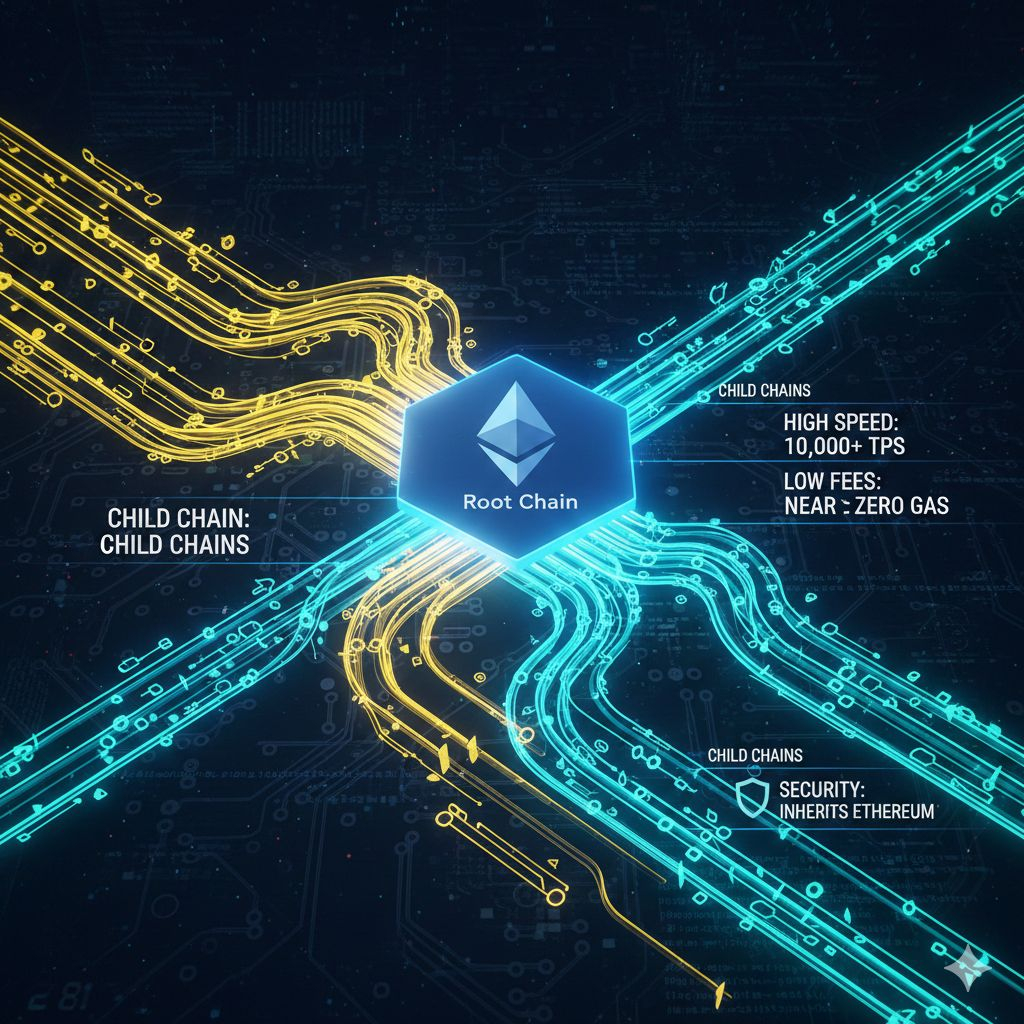
Plasma usually refers to a token associated with the "Plasma" framework designed to enhance Ethereum’s performance. It is used to make transactions within blockchain technology faster and more affordable.
Simple Definition: The goal of Plasma technology is to reduce the load on the main blockchain (e.g., Ethereum) by creating "Child Chains." Through this, thousands of transactions can be processed in seconds with extremely low fees.
Key Features:
High Speed: It eliminates Ethereum's slowness by processing transactions instantly.
Low Fees: Using it significantly reduces Gas Fees.
Security: It relies on the main Ethereum blockchain for its underlying security.
Article: Understanding Plasma — Ethereum’s High-Speed Scalability Solution
In the world of cryptocurrency, Ethereum is often compared to a busy city. While it’s the hub of innovation, it frequently suffers from "traffic jams"—high transaction fees and slow processing speeds. Enter Plasma, a framework designed to build "off-ramps" that keep the network moving.
What is Plasma?
Plasma is a Layer 2 scaling solution. Think of the Ethereum mainnet as a supreme court (the Root Chain) and Plasma as smaller, local courts (Child Chains). Instead of every single transaction being verified by the supreme court, the local courts handle the bulk of the work and only report the final results back to the main chain.
How It Works: The "Child Chain" Mechanism
Plasma creates a hierarchy of blockchains. A "Child Chain" can be spawned from the main Ethereum chain to handle specific tasks like peer-to-peer payments or NFT trades.
Off-chain Processing: Transactions happen on the Child Chain.
Periodic Commits: Only the "header" or a summary of these transactions is sent to Ethereum.
The Benefit: This prevents the main Ethereum network from becoming cluttered with tiny data points, allowing for massive scalability.
Why Does Plasma Matter?
Scalability at Scale: While Ethereum can handle roughly 15–30 transactions per second (TPS), Plasma frameworks aim for thousands.
Cost Efficiency: By moving data off the main net, "Gas Fees" (the cost of doing business on Ethereum) are slashed to near zero.
Inherited Security: Even though transactions happen on a side-road, the "Map" is always pinned to Ethereum. If a Child Chain becomes compromised, users can use the data on the main chain to safely withdraw their funds.
The Bottom Line
Plasma was one of the earliest visions for a scalable Ethereum. While other technologies like Rollups have recently taken the spotlight, the core principles of Plasma—using Child Chains to offload work—remain a foundational pillar of blockchain evolution.