Every blockchain carries more than transactions. It carries history, media, state, and context. Over time, that weight becomes a quiet constraint. Validators replicate everything, again and again, not because it is efficient, but because it is safe. This is how most chains grew up. Walrus starts from a calmer question: what if blockchains did not need to carry everything themselves? What if they could trust a separate layer to hold the heavy data, without losing guarantees? Walrus is not trying to replace chains or compete with them. It exists to relieve them. Built by Mysten Labs, the same team behind Sui, Walrus treats data as infrastructure, not as a feature. Large files, media, archives, and rollup data are stored outside the core chain, while availability and integrity remain verifiable. This shift sounds subtle, but it changes how systems scale. Instead of forcing every validator to hold the same data forever, Walrus spreads responsibility across a network designed for storage, not consensus.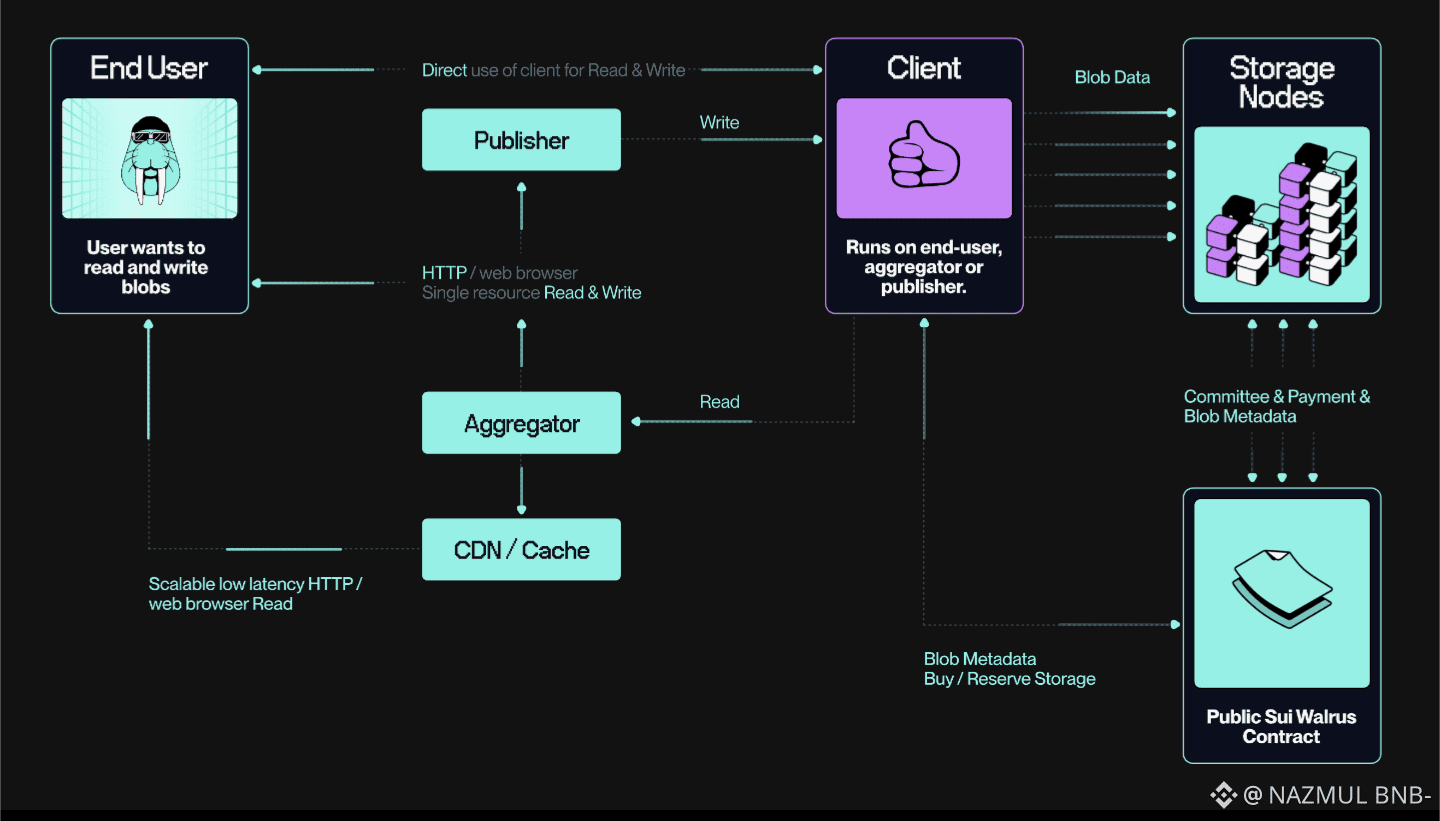
At the technical level, Walrus relies on erasure coding. Think of a large file being broken into many small pieces and spread across different storage nodes. You do not need all of them back to reconstruct the original file. You only need a portion. Even if many nodes go offline, the data survives. This is not a new idea in computer science, but applying it cleanly to blockchain use cases is the key insight. Traditional blockchains replicate data dozens or even hundreds of times. Walrus reduces that overhead to something closer to modern cloud storage, while still allowing anyone to verify that the data is actually there. For developers, this means cheaper storage for NFTs, games, AI datasets, and rollups. For blockchains, it means less pressure on validators and more room to grow. Walrus also focuses on availability proofs, so systems can confirm that data exists without downloading everything. This matters for rollups, where data must be accessible for a short window, not forever. Walrus fits naturally into that rhythm.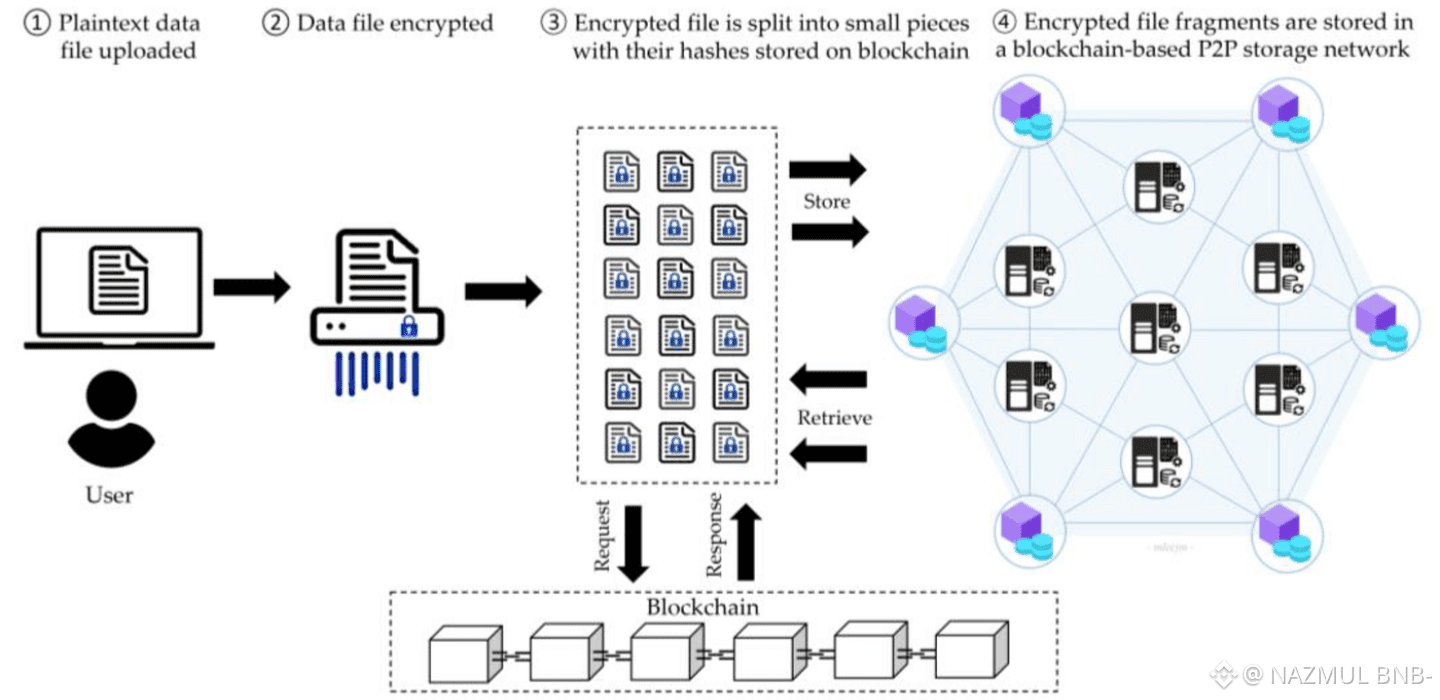
What makes Walrus interesting is not just what it stores, but what it allows blockchains to stop doing. When storage becomes its own layer, chains can focus on execution and consensus. That separation mirrors how the internet itself evolved. We do not run websites on database servers, and we do not run databases on networking hardware. Each layer specializes. Walrus pushes blockchains in the same direction. It does this carefully. The early versions are controlled and conservative, with networks operated by the core team while tooling matures. That reduces risk while developers learn how to build on top. Over time, the ambition is clear: a decentralized storage network that behaves more like infrastructure than a product. No flashy promises. No shortcuts. Just a quieter system doing a heavy job in the background. If blockchains are going to support richer applications and larger datasets, they need somewhere to put the weight. Walrus is an attempt to give them that place, without asking them to give up trust.