

@Walrus 🦭/acc is built on a straightforward but frequently overlooked truth about the internet: data underpins nearly everything digital, yet control over that data remains largely centralized. While blockchains have been effective at decentralizing value, ownership, and transactions, they have struggled with a more fundamental question—where large volumes of data should be stored and who ultimately governs it. Walrus was created to address this gap by offering a decentralized, privacy-focused storage network tailored for modern blockchain use cases, with particularly close ties to the Sui ecosystem.
The problem Walrus targets is very real. Despite the rise of Web3, many decentralized applications still depend on traditional cloud services to host images, videos, datasets, and application files. Even when ownership or logic is recorded on-chain, the underlying content often resides on centralized servers that are vulnerable to outages, censorship, pricing changes, or shutdowns. This creates an inherent tension: applications designed to be decentralized are quietly dependent on centralized infrastructure. Walrus aims to eliminate this weakness by providing a storage system that is natively distributed, resistant to censorship, and structured to prioritize long-term data availability rather than short-term gains.
From a technical standpoint, Walrus takes a different approach than both traditional blockchains and earlier decentralized storage solutions. Instead of replicating entire files across many nodes, it uses erasure coding to split data into smaller fragments. These fragments are distributed across independent storage providers in the network. As long as enough pieces remain available, the original file can be reconstructed, even if some nodes go offline. This approach allows the system to remain fault-tolerant without wasting large amounts of space on full duplication. As a result, large data objects—often referred to as blobs—can be stored efficiently while remaining verifiable and recoverable. This makes Walrus especially well suited for media content, gaming assets, AI datasets, and other data-intensive applications.
Its integration with the Sui blockchain is a core part of how Walrus functions. Sui does not hold the actual data; instead, it manages coordination. Information such as file metadata, ownership, storage terms, and payment logic is recorded on-chain as objects. This setup allows smart contracts to interact directly with stored data in a programmable manner. Applications can verify that data exists, confirm who controls it, and rely on network-level guarantees around availability—without trusting any single storage provider. Because of this tight coupling, Walrus feels less like a third-party add-on and more like a native extension of the blockchain itself.
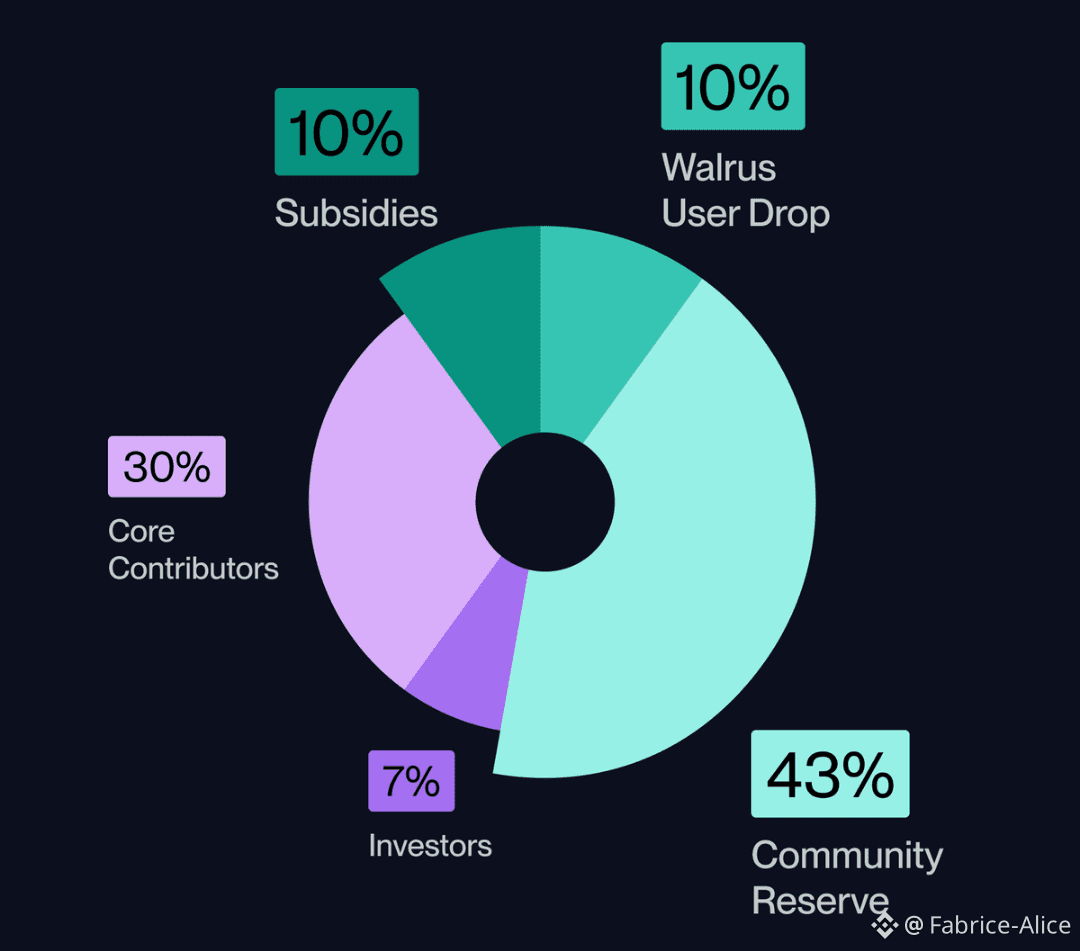
The WAL token is designed to be practical rather than symbolic. It is used to pay for storage, secure the network through staking, and align incentives between users and storage operators. When data is stored on Walrus, users pay in WAL, and those payments are gradually distributed to the nodes responsible for maintaining that data. Storage providers must stake WAL as collateral, creating economic accountability. If a node fails to meet its commitments, it risks losing part of its stake. This mechanism encourages reliability without relying solely on trust or reputation. Users who do not want to run infrastructure can still participate by delegating their WAL to operators and earning a portion of the rewards.
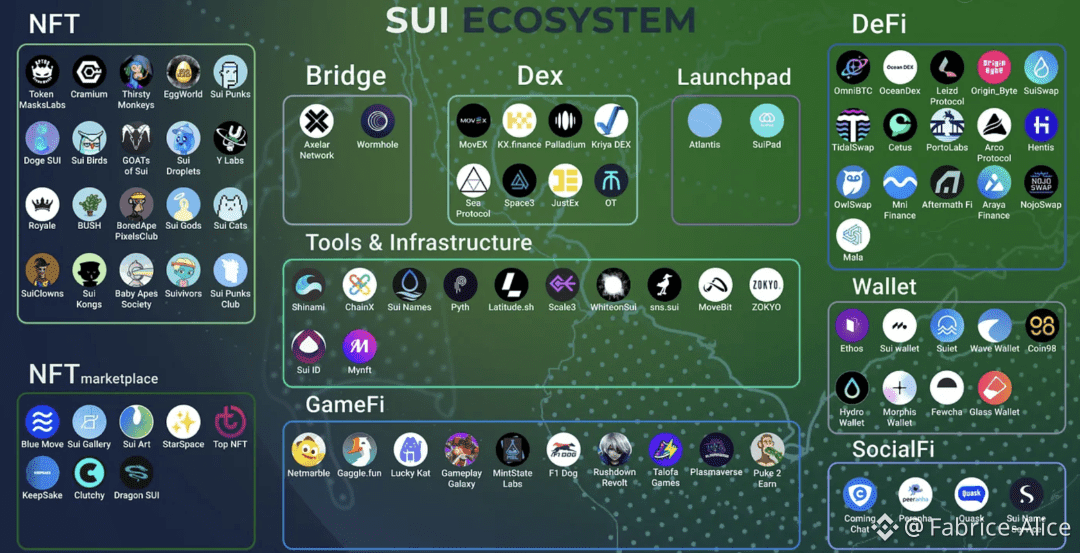
Walrus is designed to operate as part of a broader blockchain ecosystem rather than as a standalone product. Developers building on Sui can adopt Walrus as a default storage layer for NFTs, games, decentralized social platforms, and data-heavy financial applications. Because storage rules are programmable, Walrus supports more advanced use cases than basic file hosting. Applications can enforce permissions, limit access over time, or tie payments to usage through smart contracts. Over the longer term, Walrus also aims to support use beyond Sui, enabling data to be referenced and utilized across multiple blockchain networks.
In practice, Walrus is already being used for real applications, not just proofs of concept. NFT creators rely on it to ensure media remains accessible without centralized hosting. Web3 teams are deploying front-end assets on Walrus to reduce the risk of outages or takedowns. Data-centric projects are exploring it as a backend for sharing large datasets, particularly in fields like AI where data integrity, provenance, and availability are critical. These use cases directly address real challenges developers face when building robust decentralized systems.
So far, Walrus appears to be moving past the purely conceptual phase. The network is live, infrastructure is running, and integrations within the Sui ecosystem continue to grow. Investor backing and developer engagement suggest genuine demand for a storage layer that is efficient, programmable, and economically sustainable. That said, challenges remain. Competing decentralized storage networks already exist, and persuading teams to migrate infrastructure takes time. Incentive models must balance affordability for users with sufficient rewards for node operators, and security—particularly around large-scale data availability guarantees—will require ongoing attention.
Looking forward, Walrus seems focused on becoming more than just a decentralized file store. Its broader vision points toward a general-purpose data layer where applications can treat data as a core, on-chain resource rather than an external dependency. As blockchains expand into gaming, AI, and real-world asset use cases, the demand for dependable decentralized data infrastructure will only increase. If Walrus continues to refine its technology, incentives, and ecosystem integrations, it stands a strong chance of becoming one of the understated but essential components powering the next generation of Web3 applications.

