In a prolonged market downturn, the hardest part is not taking losses, but controlling behavior once the trend has already broken. Over the past period, Bitcoin has repeatedly led investors into “bottom-fishing” attempts. Each decline looked deep enough to believe a bottom was in place, yet in reality, those moves were merely lower steps within a broader, weakening structure.
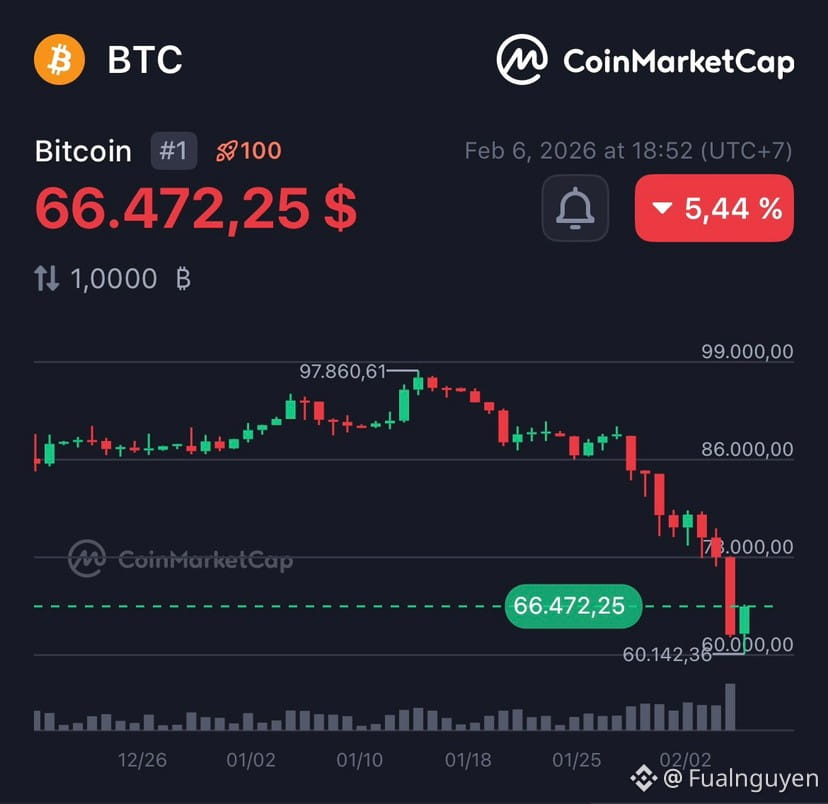
From the peak around $97,000, Bitcoin successively broke through major support levels at $86,000 and $73,000, before dropping toward the $60,000 area and staging a technical rebound back to roughly $66,000–$76,000. The issue is not how many percentage points price has fallen, but the fact that the market continues to form lower lows, indicating that current buying pressure is still insufficient to reverse the trend.
On the weekly timeframe, the technical picture becomes clearer. Bitcoin has lost its long-term uptrend structure after decisively breaking below the MA50 and MA100. This is no longer a standard pullback within an uptrend, but a signal that medium- to long-term momentum has materially weakened. In previous cycles, when price traded below these moving averages, the market typically required an extended consolidation phase or further downside before a true bottom was formed.
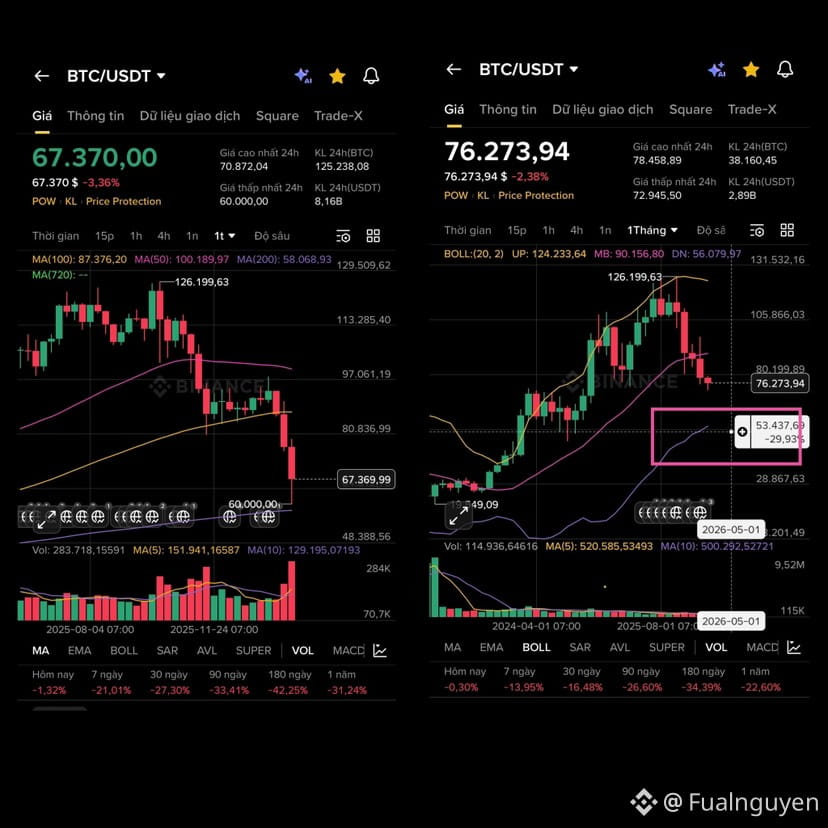 At present, the weekly MA200 around the $57,000 level stands as the last remaining long-term support. This is not a guaranteed buy zone, but rather an area where a technical reaction may occur due to the convergence of long-term defensive flows. However, MA200 only acts as support as long as it holds. In a more negative scenario, if MA200 fails decisively, the long-term defensive structure would be invalidated.
In that case, based on higher-timeframe Bollinger Bands, the lower band around the $53,000 region becomes a technically plausible area for the market to search for a new equilibrium. This is not a price prediction, but a reasonable technical scenario should the downtrend extend and selling pressure remain unresolved.
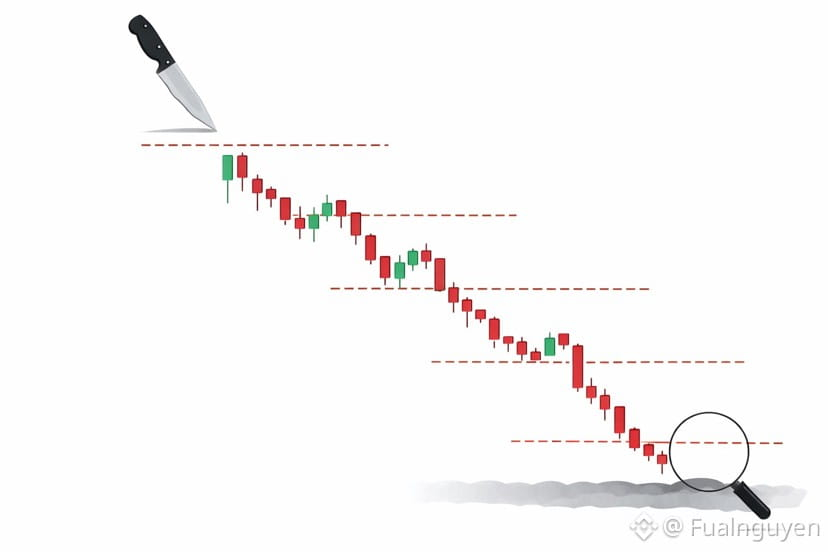
It is precisely in this environment that DCA must be re-examined carefully. DCA during a prolonged downtrend is not inherently wrong, but DCA without discipline is extremely dangerous. The most common mistake is allocating capital evenly over time and buying most aggressively during sharp sell-offs under the assumption that price has already “discounted enough.” This approach does not reduce risk—it only increases position stress while the trend remains unfinished.
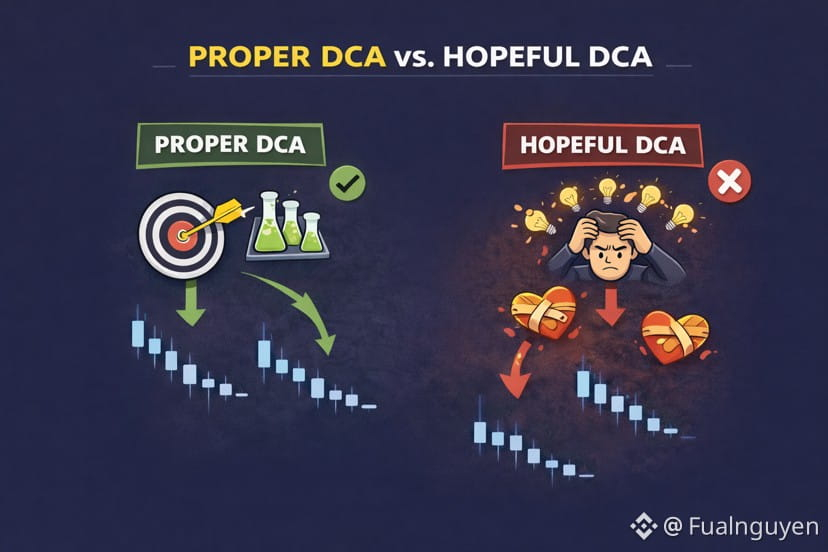
Proper DCA in a weakening market must be executed based on confirmation, not emotion. When the trend is weak and volatility remains high, position sizes should be small. Only when price demonstrates the ability to hold long-term support levels, volatility compresses, and the market stops making lower lows should exposure be increased. DCA volume matters more than DCA frequency, because deploying the largest capital when uncertainty is highest is simply another form of catching a falling knife.
Even if the market appears exhausted after an extended decline, that does not mean a bottom has formed. In this phase, patience matters more than bravery. Bottom-fishing is not about aggressive buying, but about observing, preserving capital, maintaining psychological resilience, and waiting until probabilities begin to shift in your favor. A bottom is only confirmed after it has passed, and those who survive long enough are the ones who get to participate in the next cycle.
Don’t catch a falling knife. Let the knife settle on the floor - then pick it up.
#Fualnguyen #LongTermAnalysis #LongTermInvestment