I have been looking for a way to save my files without relying on the big tech companies that seem to own everything we do online. I finally started using Walrus and it changed how I think about digital storage. You know how it is when you upload a photo to a normal cloud service and just hope they do not lose it or peek at it. This feels different because it is a decentralized secure blob store which is just a fancy way of saying it breaks your data into tiny pieces and scatters them across a bunch of different computers. I realized that I do not have to trust one single person or company anymore because the system is designed to work even if some of the nodes go offline or act up.
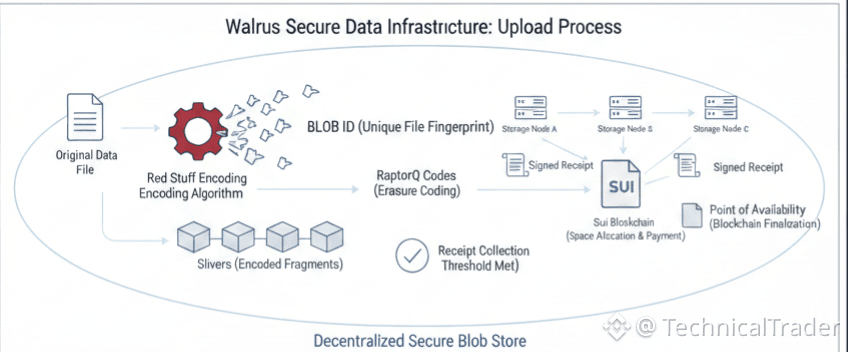
When I first tried to upload something I noticed the process is a bit more involved than just dragging and dropping a file. It starts with something called Red Stuff which sounds like a brand of soda but is actually an encoding algorithm. It takes my file and turns it into these things called slivers. I found out that the system also uses something called RaptorQ codes to make sure that even if some pieces get lost the whole file can still be put back together.
"The biggest lie in the cloud is that your data is ever truly yours."
That is the first thing I realized when I started diving into how this works. With this project I actually feel like I have control. After my computer finishes the encoding it creates a blob id which is basically a unique fingerprint for my file. Then I have to go to the Sui blockchain to buy some space. It is like paying for a parking spot for my data. I tell the blockchain how big the file is and how long I want it to stay there. Once the blockchain gives me the green light I send those little slivers of data out to the storage nodes.
I learned that these nodes are just independent computers sitting in different places. Each one takes a piece and then sends me back a signed receipt. I have to collect a specific number of these receipts to prove that my file is actually safe. Once I have enough I send a certificate back to the blockchain. This moment is what they call the point of availability. It is the exact second where I can finally breathe easy and delete the file from my own hard drive because I know it is living safely on the network.
"Storage is not just about keeping files but about proving they still exist."
Using this system makes you realize that most of our digital lives are built on pinky promises. With this project the blockchain acts like a manager that keeps everyone honest. If a node forgets my data or tries to delete it early the blockchain knows. There is a lot of talk about shards and virtual identities in the technical documents but as a user I just see it as a giant safety net. Even if a physical storage node is huge it might be acting as many smaller virtual nodes to keep things organized. It is just the way things are in this new kind of setup.
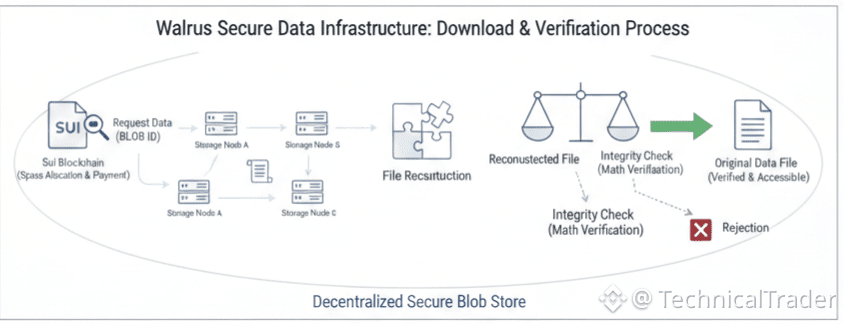
When I want my file back the process is surprisingly fast. I do not have to talk to every single node. I just ask a few of them for their slivers and once I have enough I can reconstruct the original file. The cool thing is that the math behind it makes sure that if the file I put together does not match the original fingerprint the system rejects it. This means no one can secretly swap my cat video for a virus without me knowing immediately.
"A system is only as strong as the math that keeps the nodes in line."
I used to worry about whether decentralized stuff would be too slow for regular use. But they have these things called aggregators and caches that help speed things up for popular files. If everyone is trying to download the same thing the system can handle the traffic without breaking a sweat. It feels like the internet is finally growing up and moving away from the old way of doing things where everything was stored in one giant warehouse that could burn down or be locked away.
"You should not have to ask for permission to access your own memories."
Every time I upload a new project or a batch of photos I feel a little more secure. It is not about being a computer genius or understanding every line of code in the Merkle trees or the smart contracts. It is about the reality of knowing that my data is not sitting on a single server in a basement somewhere. It is spread out and protected by a committee of nodes that have a financial reason to keep my stuff safe.
"True privacy is found in the pieces that no one person can read alone."
I like that I can go offline and the network just keeps humming along. The nodes are constantly listening to the blockchain and if they realize they are missing a piece of a file they go through a recovery process to fix it. It is like a self-healing library. As a consumer I just want my stuff to be there when I need it. This project gives me a way to do that while staying away from the typical gatekeepers of the web. It is a bit of a shift in how we think about the internet but it feels like the right direction for anyone who values their digital freedom.