
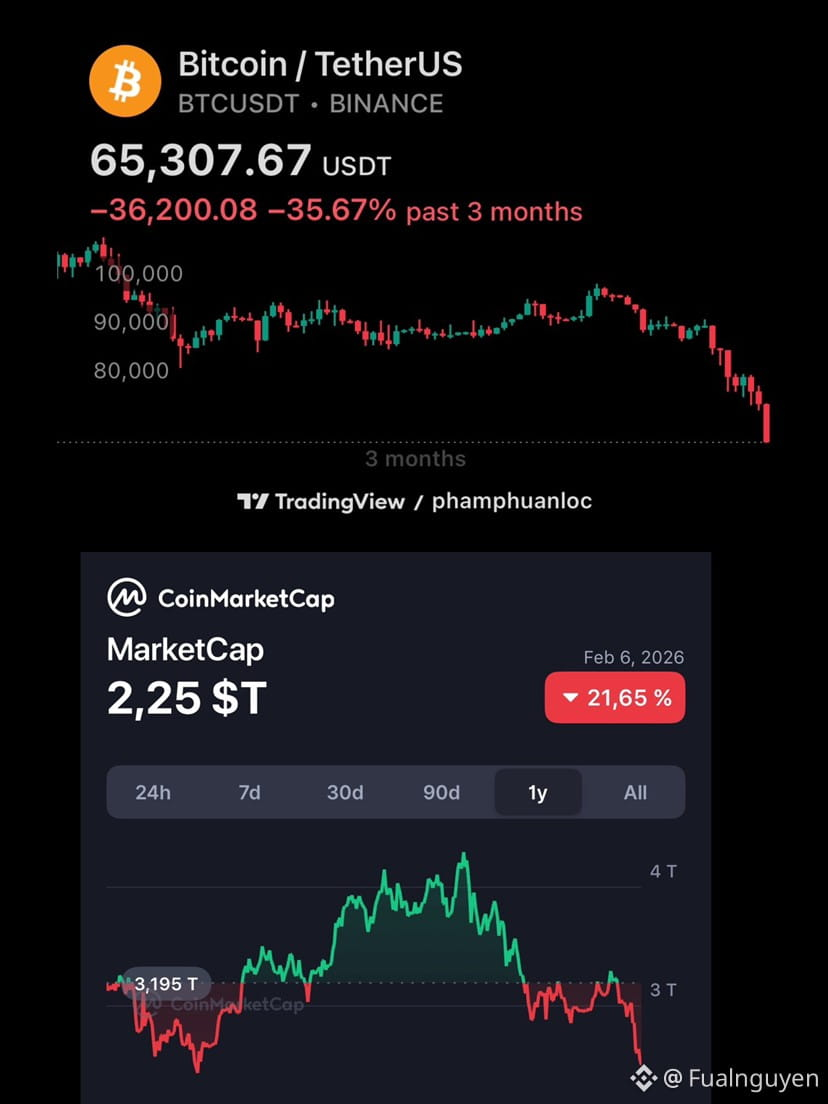



The past four months have been exhausting. Bitcoin kept breaking support, bouncing weakly, then selling off again. Every drop came with the hope of “this must be the bottom,” and every rebound failed to confirm a new trend. Many investors were right a few times early on, yet still ended up with heavy losses ==> Not because they were wrong, but because they were wrong too big.
In phases like this, the problem is no longer whether your analysis is right or wrong.
The real question is: How many times can you be wrong and still have capital left to continue?
That answer lies in position sizing.
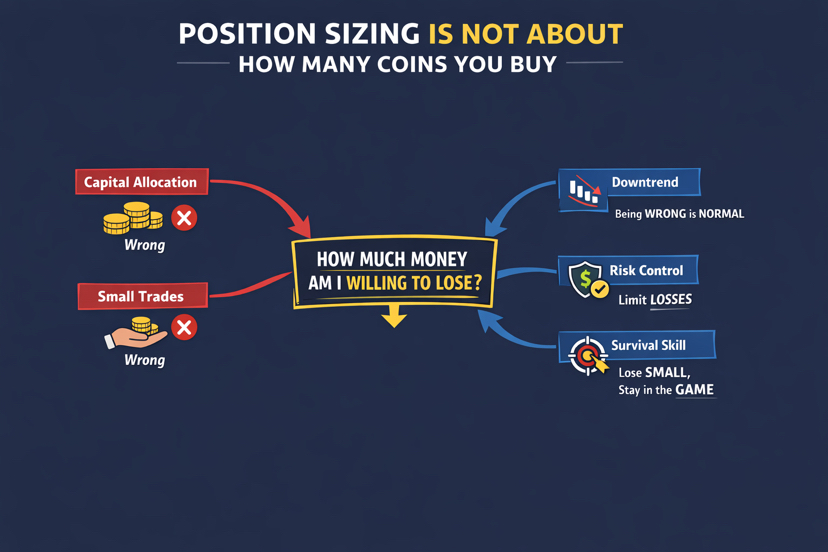
Position sizing is not about how many coins you buy. Most investors confuse position sizing with splitting capital neatly or buying smaller amounts “to be safe.” In reality, position sizing revolves around one single question: If this scenario is wrong, how much money am I willing to lose?
In a downtrend, being wrong is normal. Being wrong by a small amount is the skill.
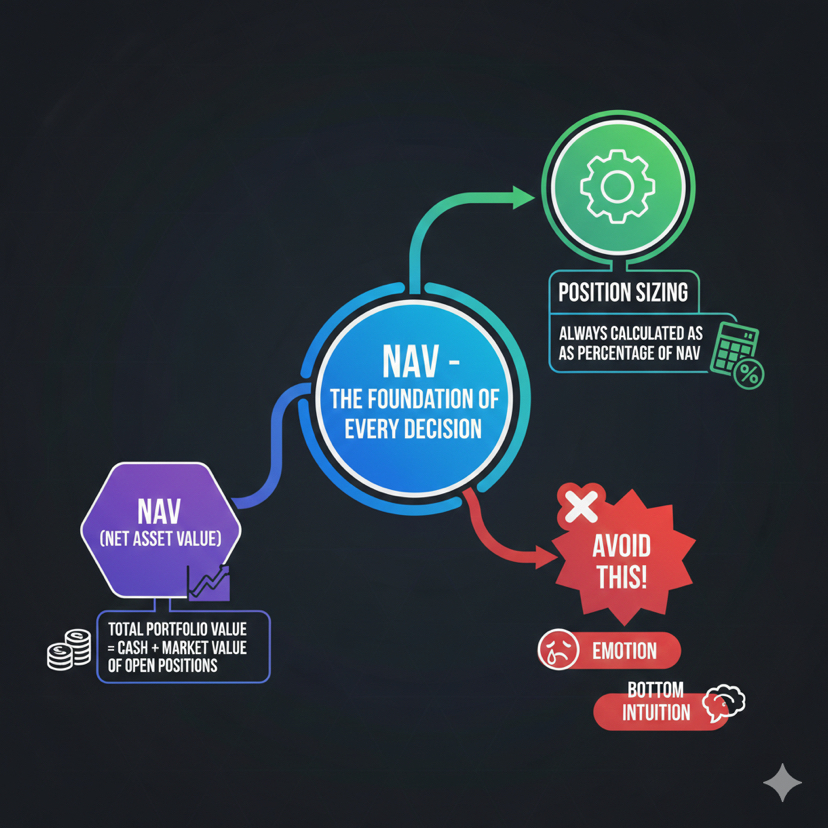
NAV - the foundation of every decision
NAV (Net Asset Value) is the total value of your portfolio at the current moment: cash plus the market value of all open positions. Position sizing must always be calculated as a percentage of NAV, not based on emotion or “bottom intuition.”
A survival rule:
Risk per decision ≤ 0.5%–1% of NAV
During bottom-hunting phases: 0.25%–0.5% of NAV
This ensures that: Multiple mistakes won’t knock you out of the game. Your psychology doesn’t collapse after a few bad trades
Three concepts that must be clearly separated
Position size: how much capital you allocate
Risk size: how much you can lose if you’re wrong
Exposure: how exposed you are to the market
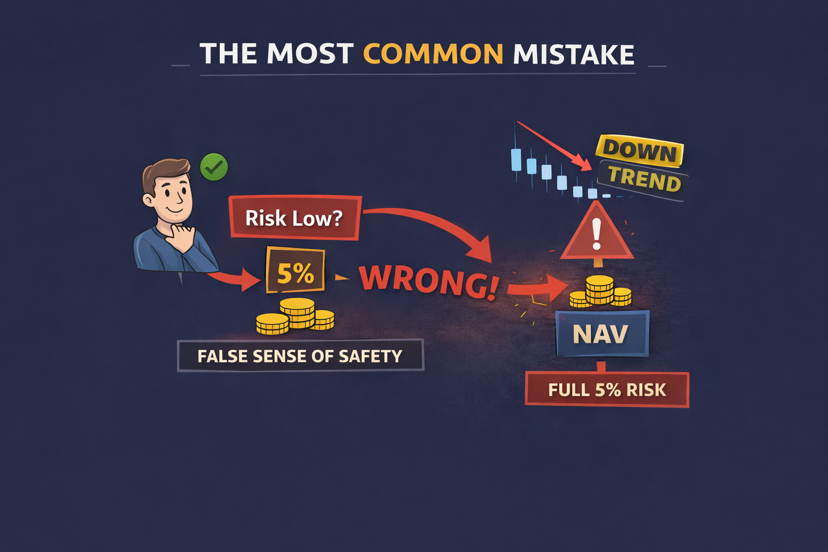
The most common mistake: “I only used 5% of my account, so the risk is low” ==> WRONG
Without defined risk limits, your risk equals that full 5% of NAV, which is huge in a downtrend.
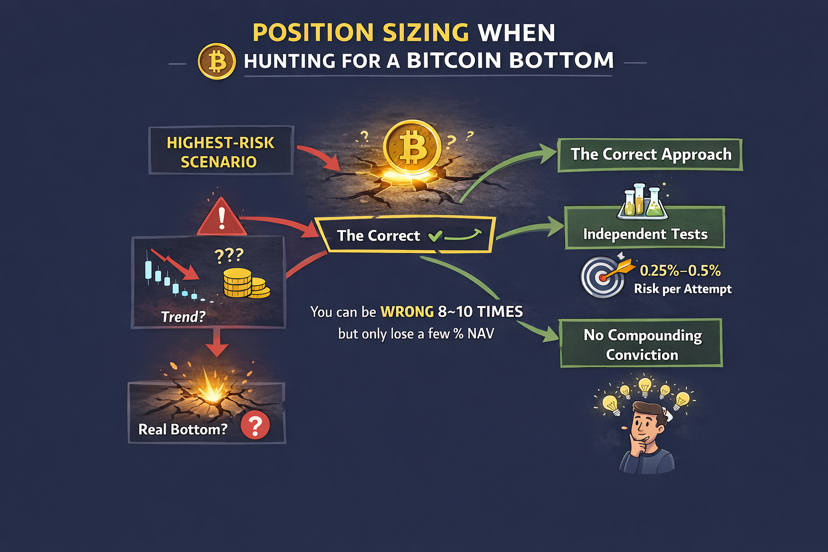
Position sizing when hunting for a Bitcoin bottom
Bottom-hunting is the highest-risk scenario because:
The trend is not confirmed
You only know the real bottom in hindsight
The correct approach:
Treat each entry as an independent experiment
Risk per attempt: 0.25%–0.5% of NAV
Never compound conviction
You can be wrong 8–10 times in a row and still lose only a few percent of NAV ==> while most investors mentally collapse after the third mistake.
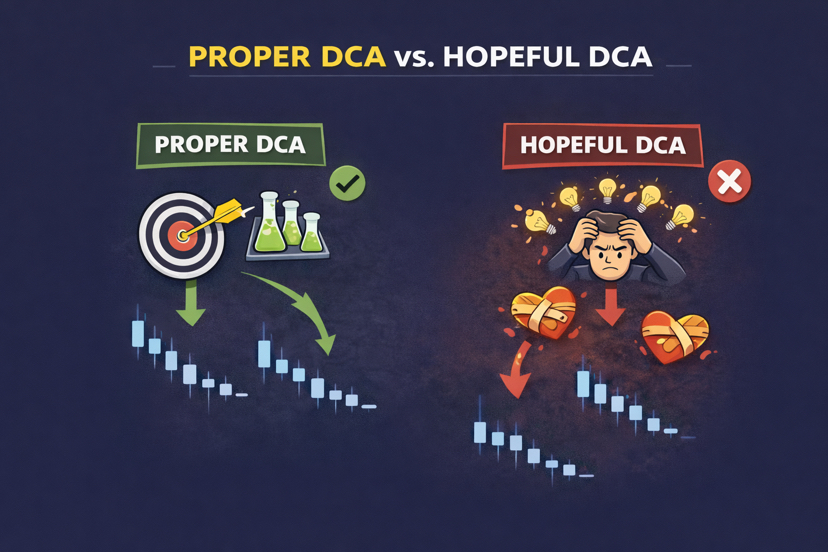
DCA is not risk-free
DCA in a downtrend is not wrong. DCA without risk control is the real danger. Principles:
Each DCA entry is a separate decision
Total risk of the entire DCA sequence ≤ 2%–3% of NAV
Never DCA just because “price is cheaper than yesterday”
Proper DCA is a strategy: DCA because you refuse to cut losses is hope disguised as discipline.

Cash is also a position
When the market lacks clear direction:
Holding 50%–80% in cash is not missing out
It is a defensive position
Cash allows you to:
Stay emotionally stable
Avoid forced holding through deep drawdowns
Have ammunition when a real bottom finally forms
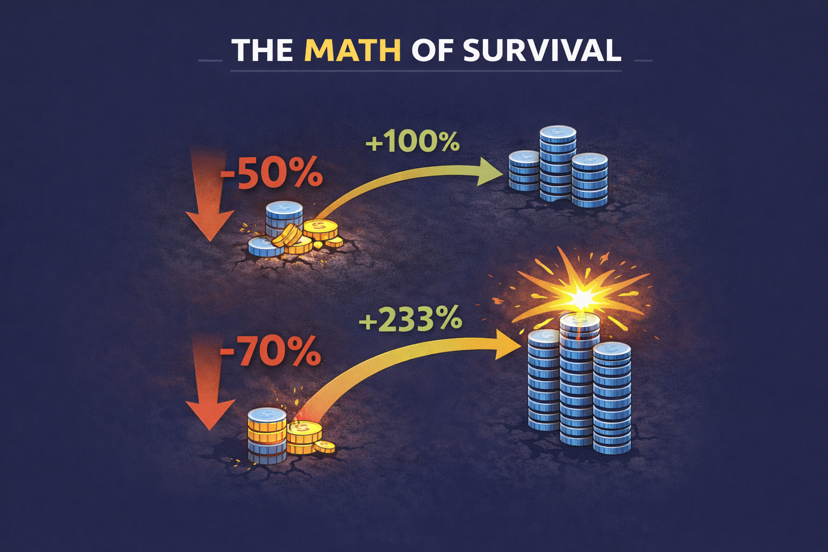
The math of survival
A 50% loss requires a 100% gain to break even
A 70% loss requires a 233% gain—almost impossible within one cycle
Good position sizing doesn’t help you win big. It prevents you from falling into an unrecoverable zone.

The mandatory questions before every trade
Before clicking buy, answer:
If I’m wrong, what percentage of my NAV do I lose?
If I’m wrong 5–10 times in a row, can I still stay in the game?
Is this trade truly worth that level of risk?
If you can’t answer these clearly → don’t enter the trade.
🚀🚀🚀 The market doesn’t kill you. Oversized positions do.
After four of Bitcoin bottom-hunting, the biggest lesson isn’t about calling the exact bottom ==> it’s about who still has capital and mental clarity when the real bottom finally appears.
Position sizing doesn’t make you smarter than the market. It keeps you alive long enough for the market to reward you.
#Fualnguyen #LongTermAnalysis #LongTermInvestment