

Storing Gaming Worlds on Walrus
Games today aren’t just products you buy and finish—they’re living, breathing worlds. Maps change, players build stuff, the environment evolves, and stories keep unfolding. With open worlds, user-created economies, and onchain mechanics becoming the norm, old-school storage just can’t keep up. Centralized servers? They struggle with scale, longevity, and trust. This is where Walrus steps in and really changes the game.
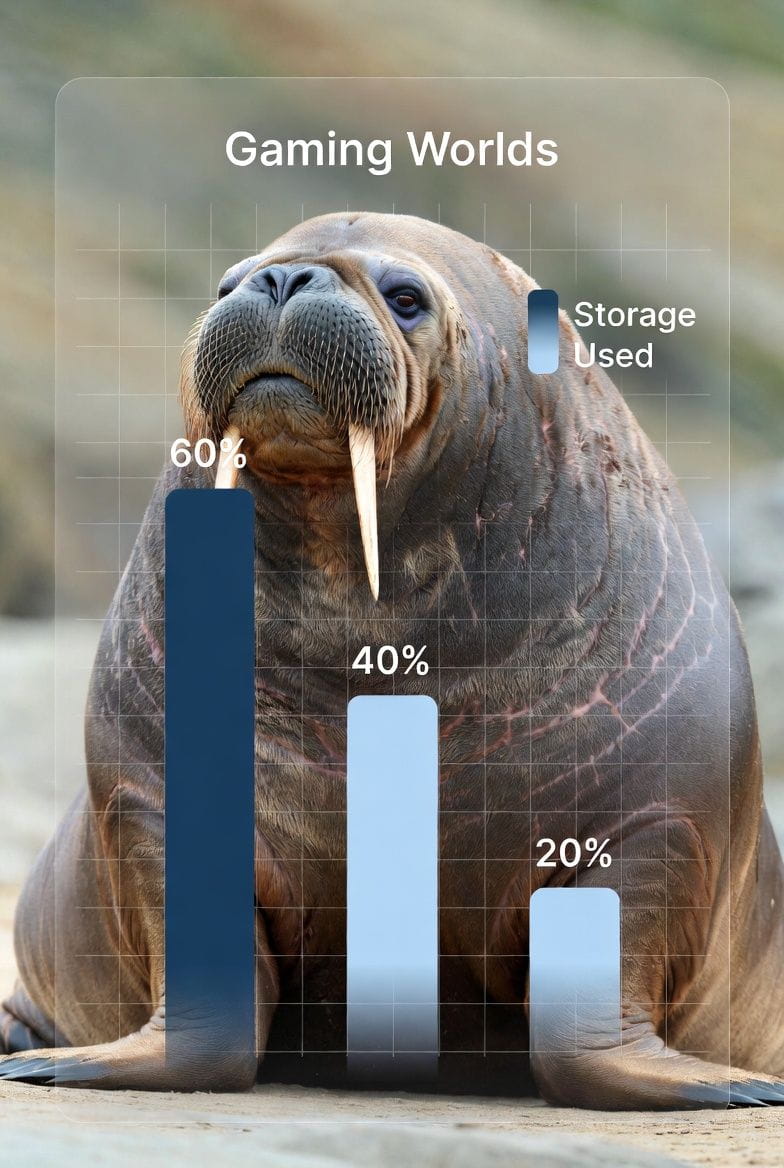
Walrus is built as a decentralized, programmable storage layer, tuned for heavy-duty, ever-changing data. For game developers, that means your worlds aren’t trapped in a studio’s servers or at risk if someone pulls the plug. Instead, whole environments—maps, assets, player histories, and all those shifting world states—can exist independently, outside any single company’s control, but still easy to access, update, and verify.
Keeping worlds alive is one of gaming’s biggest headaches. Massive multiplayer games need terrain data, NPC states, player creations, and environmental changes to be available all the time. Sure, cloud storage can handle the load, but it’s still a single point of failure, and those costs add up fast. With Walrus, developers stash world data as decentralized blobs, so the world sticks around even if the original team vanishes or the studio changes hands. It flips the script: instead of games as “services,” you get digital worlds with real continuity.
For sandbox and open-world games, Walrus unlocks something special—permanent player impact. Stuff players build—cities, monuments, weird art projects—can go straight onto Walrus. That means they’re part of the world’s official record, not just temporary pieces of a server. If someone builds a fortress today, it can still stand years from now, no matter what happens to the devs or the company. The data’s out there, durable and decentralized.
Asset scale is another beast. Games now run on giant textures, 3D models, soundtracks, cutscenes, and endless generated data. Onchain storage? Way too small. Centralized offchain? You’re back to trust issues. Walrus finds the sweet spot. It keeps bulky assets offchain, but makes sure they’re cryptographically verifiable and economically secured. Game clients and smart contracts can point to Walrus assets, knowing the files are legit and haven’t vanished.
This really matters for onchain games and Web3 economies. When your game logic runs onchain but your assets are offchain, storage becomes the weak link. Walrus lets developers anchor big assets and world states to a decentralized layer, while smart contracts handle who owns, updates, or accesses them. Think of land NFTs, where the terrain data lives on Walrus, and the rules about who can change it live in the smart contract. Clean and reliable.
Walrus also cracks open a new era for modding and community content. Mods, custom maps, skins, new stories—all that stuff can live on Walrus, without anyone needing a central server or company approval. Communities can keep building on the game, uploading fresh content that anyone can use. Developers can relax a bit, knowing the world’s getting richer without them having to police or host everything.
For studios, Walrus means less risk and less hassle. No more running huge storage backends just to keep old worlds online. Storage is handled at the protocol level, with clear incentives for keeping data available. Studios can finally focus on building great games and stories, instead of babysitting infrastructure.
Security gets a boost, too. Cheating and asset tampering usually happen because centralized storage is easy to poke holes in. With Walrus, data and assets are content-addressed and verifiable. If someone tries to sneak in changes, you can spot and stop it. That’s a win for fair play, whether you’re competing or cooperating.
At the end of the day, storing worlds on Walrus lines up with a bigger shift—games that last, worlds that players shape and revisit, not digital toys you toss when the servers die. These worlds become shared culture, places you can keep coming back to, building and exploring for years. Walrus gives developers the tech and the economics to make those worlds real and permanent.
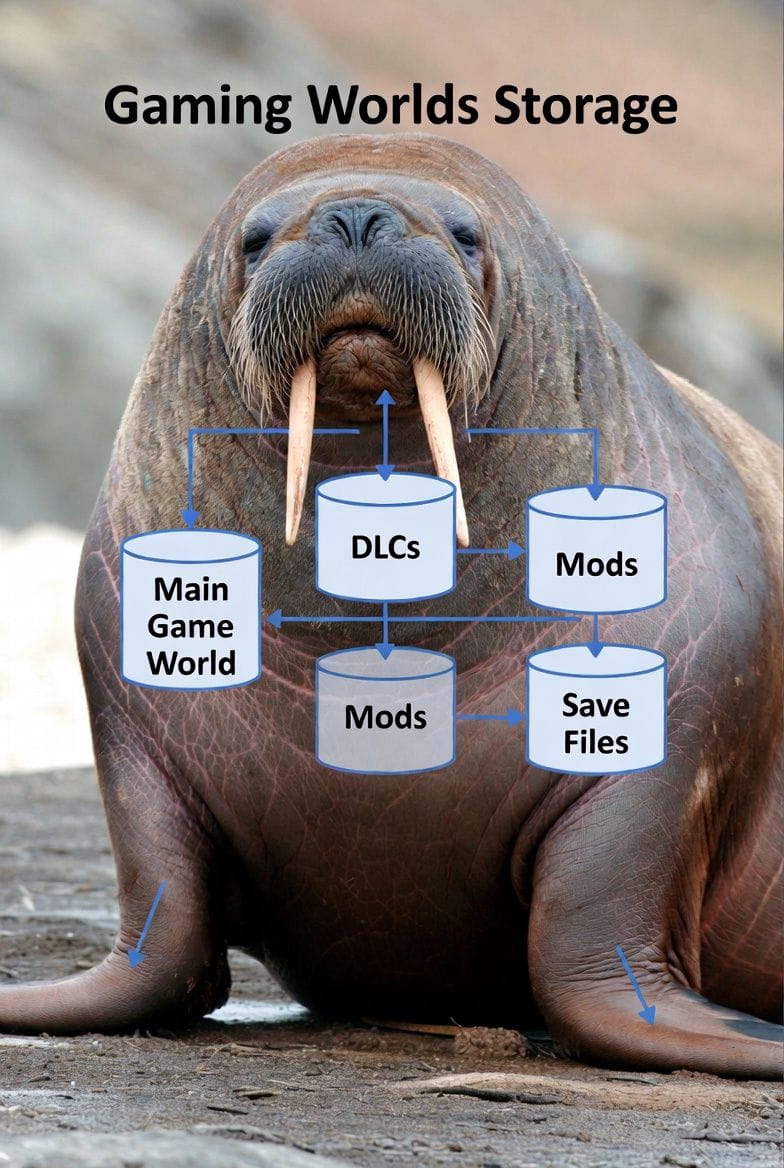
Bottom line: Walrus turns fragile, centralized games into tough, player-driven worlds. If you’re building the next wave of open, persistent, onchain games, Walrus isn’t just a storage tool—it’s the backbone for real digital permanence.@Walrus 🦭/acc #Walrus $WAL

